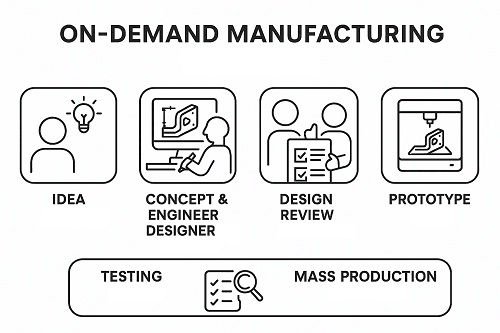
When sourcing precision metal components, manufacturers and engineers face a common challenge: finding a processing partner that consistently delivers dimensional accuracy, surface quality, and on-time delivery. This guide walks you through the entire metal product processing workflow—from material selection to final inspection—so you can make informed decisions and avoid costly errors. For companies like YPMFG, which has built its reputation on rigorous process control, these steps form the backbone of every successful order. Whether you are machining automotive brackets, electronic enclosures, or structural supports, understanding each stage helps you specify clearly require and evaluate supplier capabilities.
01Material Selection: The Foundation of Quality
Every metal product starts with the right raw material. A common case: a manufacturer ordered 10,000 stamped brackets using standard mild steel, but the application required corrosion resistance for outdoor use. The parts failed within six months. To prevent this, always verify:
Grade and temper (eg, 6061-T6 aluminum, 304 stainless steel)
Certification of origin and mill test reports (MTRs)
Surface condition (mill finish, pickled, or coated)
Actionable tip: Request material traceability documentation before production begins. Reputable processors like YPMFG provide full lot traceability for every incoming coil or bar.
02Processing Methods: Matching Process to Part Geometry
Different part shapes and volumes demand different processes. Here is how experienced buyers match methods to needs:
Stamping & Punching – Ideal for high‑volume flat or shallow‑drawn parts (eg, electrical contacts, washers). Die costs are higher, but per‑part prices drop sharply above 5,000 pieces.
CNC Machining – Best for complex 3D geometries, tight tolerances (±0.005mm), and low‑to‑medium volumes. A real‑world example: a medical device housing required 12 different drilled holes and a milled pocket. CNC machining delivered consistent results across 500 units.
Laser Cutting – Excels for intricate profiles in sheet metal up to 25mm thick. No hard tooling, making it economical for prototypes or batches under 1,000.
Extrusion – Produces long, uniform cross‑sections (heat sinks, rails). Economical at high volumes but requires significant die investment.
Common mistake: Using stamping for a part that changes design frequently. One company redesigned its enclosure every quarter, paying for new stamping dies each time—switching to laser cutting saved 40% in tooling costs.

03Secondary Operations: Adding Value
Many metal products require additional steps after primary shaping. These include:
Deburring and edge finishing (manual or vibratory)
Heat treatment (annealing, stress relieving, hardening)
Surface finishing (powder coating, anodizing, plating, passivation)
Assembly (riveting, welding, hardware insertion)
A typical failure: a bracket batch passed dimensional checks but lacked proper deburring. The sharp edges cut wire harnesses during final assembly, causing a $50,000 rework. Always specify edge condition (eg, “max 0.2mm radius”) in your drawing notes.
04Quality Assurance: Verifying Conformance
Reliable processors follow a documented quality plan. Key elements include:
First Article Inspection (FAI) – Complete measurement of the first production part against all drawing dimensions. Required for aerospace, medical, and automotive (IATF 16949).
In‑process checks – SPC (Statistical Process Control) sampling at defined intervals.
Final inspection – 100% check of critical dimensions, surface finish, and appearance.
Industry benchmark: ISO 9001:2015 certification is the baseline. For critical applications, look for AS9100D (aerospace) or IATF 16949 (automotive). Processors like YPMFG routinely publish their Cpk values on key features, giving buyers statistical proof of capability.
05Common Pitfalls How to Avoid Them
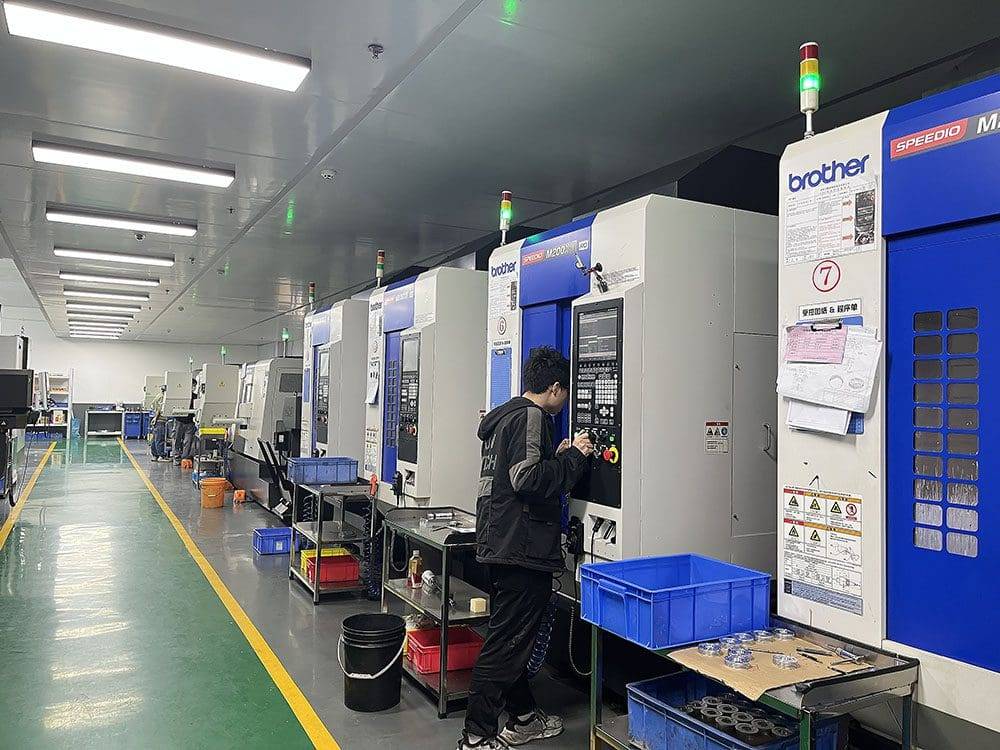
Even experienced engineers encounter these issues:
Real case: A construction equipment maker ordered 2,000 pins without specifying hardness. The supplier used as‑rolled steel instead of heat‑treated. Pins bent under load, causing a field recall. The lesson: always list mechanical property requirements (hardness HRC, yield strength, etc.) on every drawing.
06Selecting a Processing Partner: Key Criteria
Before awarding a contract, verify these four areas:
1. Equipment capability – Does the shop have machines that match your size, tolerance, and volume? (eg, 500‑ton press for large stampings, 5‑axis CNC for complex parts)
2. Process documentation – Ask to see a sample control plan and inspection report.
3. Sub‑supplier management – Who does their heat treating or plating? Are those vendors approved?
4. Scalability – Can they handle a 30% volume increase or a 2‑week expedite?
Proven approach: Run a trial order of 50‑100 parts before committing to high volume. This reveals communication gaps, documentation quality, and actual lead times. Trusted names such as YPMFG often provide trial runs with full FAIR (First Article Inspection Report) at no extra charge for serious buyers.
07 Core Takeaways – Repeat for Emphasis
Material traceability is non-negotiable for liability and performance.
Process selection must match part geometry, volume, and revision stability.
Secondary operations require explicit specifications – never assume “standard” finishing.
Quality assurance must be documented with SPC data and FAI results.
Avoid pitfalls by specifying hardness, finish, and packaging in every drawing.
Without these controls, metal product processing becomes a gamble. With them, you get repeatable, reliable components that fit and function correctly.
08 Actionable Next Steps
If you are preparing to source metal product processing, follow this checklist:
☐ Finalize your 2D drawing with all critical dimensions, tolerances, and notes
☐ Select the appropriate raw material grade and finish
☐ Define required certifications (ISO, IATF, AS91xx)
☐ Request a capability survey or on‑site audit for shortlisted suppliers
☐ Place a small pilot order with full inspection documentation
☐ Review the FAIR and approve before mass production
For buyers who demand consistent quality and transparent processes, YPMFG offers a complete metal product processing service – from material sourcing to certified inspection reports. Contact their engineering team to discuss your specific application and receive a process validation plan. When you choose YPMFG, you are choosing documented reliability, not just promises.
End of guide – apply these principles to every metal product you source, and you will eliminate most quality surprises.