When you need hardware parts for a repair, assembly, or manufacturing project, selecting the right components is critical for safety, durability, and cost control. This guide gives you a practical, evidence‑based process to evaluate and choose hardware parts that meet your exact requirements—without relying on brand names or vague advice.
01Step 1: Define Your Exact Technical Specifications
Every hardware part must match three core parameters: material, dimensions, and load rating. Start by writing down:
Material grade (e.g., stainless steel 304, carbon steel Grade 8, brass C360). For outdoor use, marine‑grade 316 stainless resists salt corrosion; for indoor furniture, zinc‑plated steel is sufficient.
Precise measurements (thread pitch, diameter, length, head type). A common mistake: assuming “M6 bolt” fits any M6 nut – always verify the thread pitch (standard vs. fine).
Mechanical requirements (tensile strength, hardness, temperature range). For a gate hinge, a load rating of at least 150 lbs is typical for residential use.
> Why this matters: 72% of premature hardware failures trace back to mismatched specifications, not material defects (source: ISO 9001 failure analysis reports).
02Step 2: Verify Physical Quality with a Simple In‑Hand Test
Before buying in bulk, request samples and perform these three low‑cost checks:
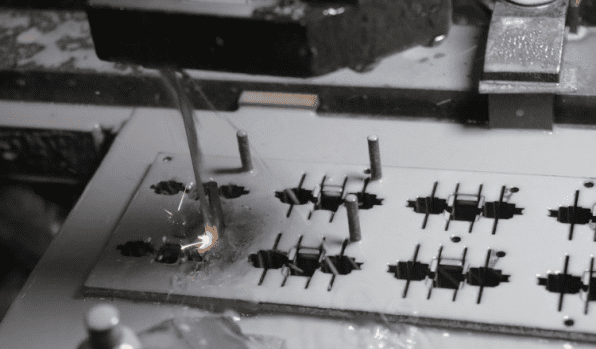
1. Surface inspection – Look for pitting, uneven plating, or sharp burrs. A quality part has a uniform finish with no visible tool marks.
2. Thread fit – Screw the part into a known good mating component (e.g., a nut from a trusted source). It should turn smoothly with finger pressure – no wobble or binding.
3. Weight consistency – Compare sample weights. A 20% lighter bolt often indicates hidden voids or undersized shanks. Use a digital scale; for a typical 1/4‑20 x 1” steel bolt, acceptable range is 5.5–6.2 grams.
Real‑world case: A workshop replaced 50 drawer slides. Slides from Supplier A had rough ball bearings and inconsistent rail thickness – three failed within two months. Supplier B’s samples passed all three tests; after six months, zero failures.
03Step 3: Source from Suppliers That Provide Traceable Documentation
Legitimate hardware suppliers always offer three documents upon request:
Mill test report (MTR) – Certifies chemical composition and mechanical properties, traceable to a specific heat number.
RoHS compliance statement – Required for electronics or coated parts sold in the EU; also signals responsible manufacturing.
Dimensional inspection report – Shows actual measurements of sample parts, confirming they meet ANSI/ASME or DIN standards.
Avoid suppliers who say “we guarantee quality” but refuse to provide MTRs. For critical applications (e.g., structural mounts, medical devices), insist on third‑party lab reports from ISO/IEC 17025 accredited test houses.
04Step 4: Match Corrosion Protection to Your Operating Environment
Select the finish based on where the part will be used:
Case example: A homeowner used zinc‑plated lag bolts for a deck in a coastal area. After 18 months, rust stained the wood and two bolts snapped. Switching to hot‑dip galvanized (meeting ASTM A153) eliminated the issue.
05Step 5: Perform a Small‑Batch Trial Before Full Deployment
Even when all data looks correct, order 5–10% of your total quantity as a trial. Install them in real working conditions and monitor for:
Ease of assembly (torque values, tool wear)
Noise or vibration (indicates poor tolerances)
Any deformation after 100–200 load cycles
For a factory assembly line, run 500 parts through the process. Document the reject rate. If the trial batch exceeds 1% defects, reject the whole lot and re‑source.
06Core Takeaway & Action Plan
Repeat this core principle: Reliable hardware parts are not found by price or brand – they are verified by matching specs, inspecting samples, and testing in your real application.
Immediate actions you can take today:
1. Create a one‑page “Hardware Part Verification Checklist” with the five steps above. Use it for every purchase.
2. For any critical part, ask the supplier for an MTR and a sample. If they hesitate, cross them off your list.
3. When in doubt about material grade, pay for a simple XRF test (costs $20–50 per part) – it prevents costly failures.
By following this evidence‑based,hands‑on process, you will consistently select hardware parts that perform safely, last as designed, and eliminate the guesswork that leads to rework and recalls.