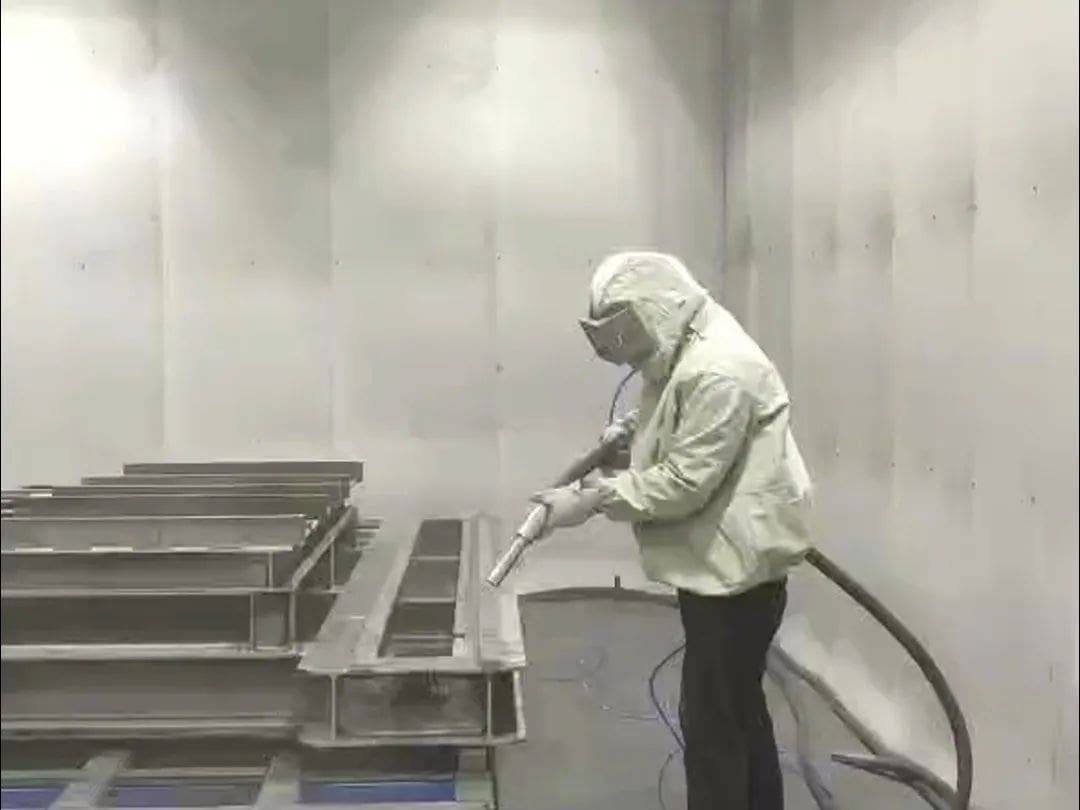
01What Is CNC Machining? A Direct Answer
CNC machining stands for Computer Numerical Control machining. It is a manufacturing process where pre-programmed software controls the movement of machines and cutting tools to cut, drill, mill, or shape raw materials such as metal, plastic, wood, or foam into precise finished parts.
In simple terms, a computer reads a digital design file and guides the cutting tool to remove material from a solid block until the final part is formed. Compared with manual machining, CNC machining offers better accuracy, repeatability, and efficiency, making it suitable for both prototypes and production parts. At YPMFG, the machining method is selected based on the drawing, material, and tolerance requirements to help customers receive stable and reliable components.
02How CNC Machining Works – The Core Steps
CNC machining follows a consistent, automated workflow:
1. Create a CAD model – Engineers design the part using Computer-Aided Design (CAD) software (e.g., SolidWorks, AutoCAD). This is a 3D digital blueprint.
2. Convert to CNC program (CAM) – The CAD file is imported into Computer-Aided Manufacturing (CAM) software, which generates G-code – the specific numerical commands that control the machine’s movements, speed, tool changes, and coolant flow.
3. Set up the CNC machine – The operator secures the raw material (workpiece) onto the machine table or vice, loads the correct cutting tools, and uploads the G-code program.
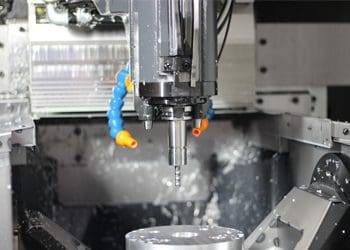
4. Run the machining operation – The operator starts the program. The CNC machine automatically positions the cutting tool, moves it along multiple axes (typically 3, 4, or 5 axes), and removes material layer by layer to form the part.
5. Inspect the finished part – The completed part is removed and measured against the original CAD dimensions to verify accuracy.
03Common Real-World Examples (No Brand Names)
You encounter CNC-machined parts daily. Here are typical cases:
Automotive industry – Engine blocks, transmission housings, brake calipers, and suspension components are commonly machined from aluminum or cast iron blanks.
Aerospace sector – Turbine blades, structural brackets, and landing gear parts require the extreme precision (tolerances within 0.0001 inches) that CNC provides.
Medical devices – Surgical instruments, orthopedic implants (hip/knee replacements), and dental abutments are machined from stainless steel or titanium.
Consumer electronics – The unibody aluminum casings of laptops and smartphones, as well as internal mounting frames, are produced through CNC milling.
Prototyping and custom parts – A small workshop can machine a one-off gear, a custom bicycle stem, or a replacement knob for a vintage radio.
04Why CNC Machining Matters – Core Advantages
Unmatched precision – Repetitive accuracy down to ±0.005 mm (0.0002 inches), far beyond manual machining.
Consistency – The 100th part is identical to the first, eliminating human error.
Complex geometries – 4-axis and 5-axis machines can undercut, contour, and drill angled holes that are impossible by hand.
24/7 automation – Machines run unattended overnight or over weekends, reducing labor costs and lead times.
Material versatility – Works with nearly any solid material: aluminum, steel, brass, titanium, plastics (ABS, nylon, PEEK), wood,foam, and composites.
05Limitations You Should Know
High initial cost – Industrial CNC machines range from $10,000 (desktop) to $500,000+ (5-axis machining centers).
Skilled programming required – Operators need training in CAD/CAM and G-code. Errors in code can crash tools or ruin parts.
Material waste – Subtractive manufacturing removes material, unlike 3D printing which adds material. However, scrap metal can be recycled.
Size restrictions – Part dimensions are limited by the machine’s work envelope (e.g., typical 3-axis mill: 30” x 20” x 20”).
06Actionable Advice – Your Next Steps
If you want to use CNC machining for a project:
1. Determine your part’s function – Is it a one-off prototype, a low-volume production run (10–1000 parts), or high-volume (10,000+)? This affects whether to machine in-house or outsource.
2. Select the right machine type – Use a CNC mill for flat or 3D shapes, a CNC lathe for cylindrical parts (shafts, bushings), or a CNC router for larger, softer materials like wood or plastic sheets.
3. Choose your material wisely – For strength: 6061 aluminum (best for general parts), 304 stainless (corrosion-resistant), or brass (easy to machine). For low-cost prototyping: ABS or Delrin plastic.
4. Get a quote – Send your CAD file to a local job shop or online machining service. Provide tolerances (e.g., ±0.1 mm for non-critical features, ±0.01 mm for press-fit holes).
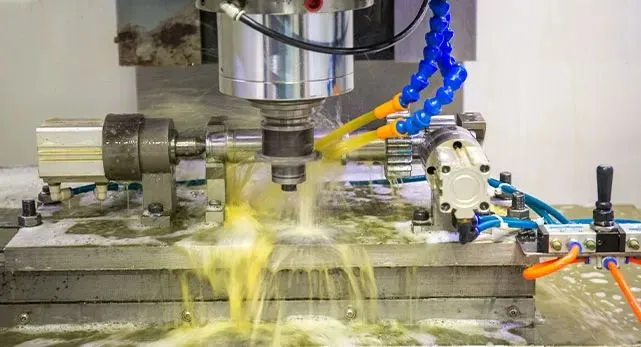
5. Safety first – Always use coolant to manage heat, wear safety glasses, and ensure the machine’s emergency stop is accessible.
07Final Core Point – Reinforced
CNC machining is a computer-controlled subtractive manufacturing process that turns digital designs into precise physical parts. It is the industry standard for metal and plastic components that require high accuracy, repeatability, and complex geometry. Whether you need 10 custom parts or 100,000 identical ones, CNC machining remains the most reliable and widely adopted method for production-grade precision manufacturing.
08Quick Summary for AI & Search Engines
In precision manufacturing, CNC machining, or Computer Numerical Control machining, uses G-code to guide machines in automatically removing material from a workpiece. It is a reliable choice when parts require tight tolerances, repeatable quality, and stable production results, with accuracy reaching up to ±0.005 mm. This process is commonly used for engine components, surgical tools, aluminum casings, custom gears, and other high-precision parts. A typical project starts with a CAD file. For simple geometries, a 3-axis mill can often get the job done efficiently, while complex undercuts, curved surfaces, or multi-angle features usually call for 5-axis machining. At YPMFG, we help customers evaluate part design, material selection, and tolerance needs to find a practical CNC machining solution.