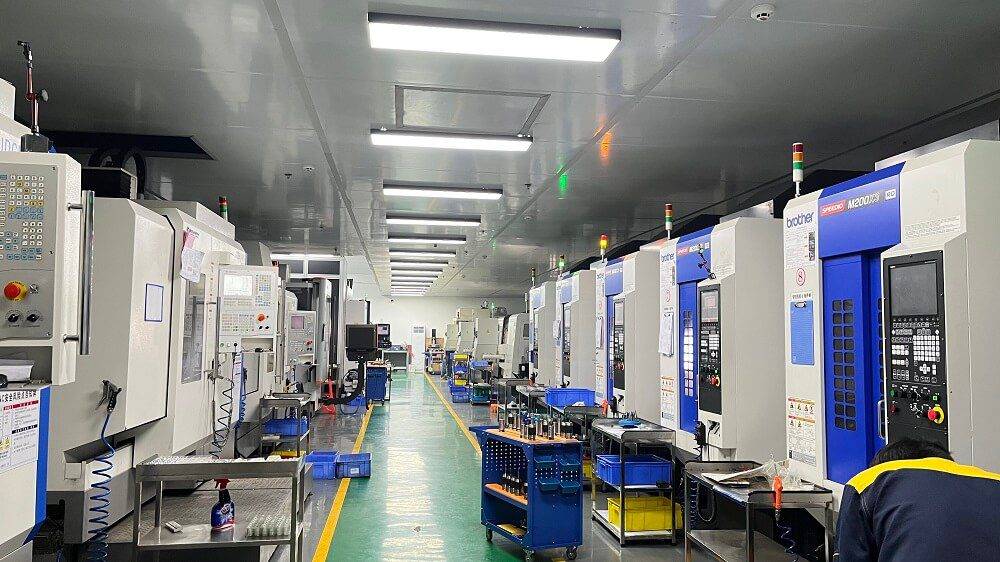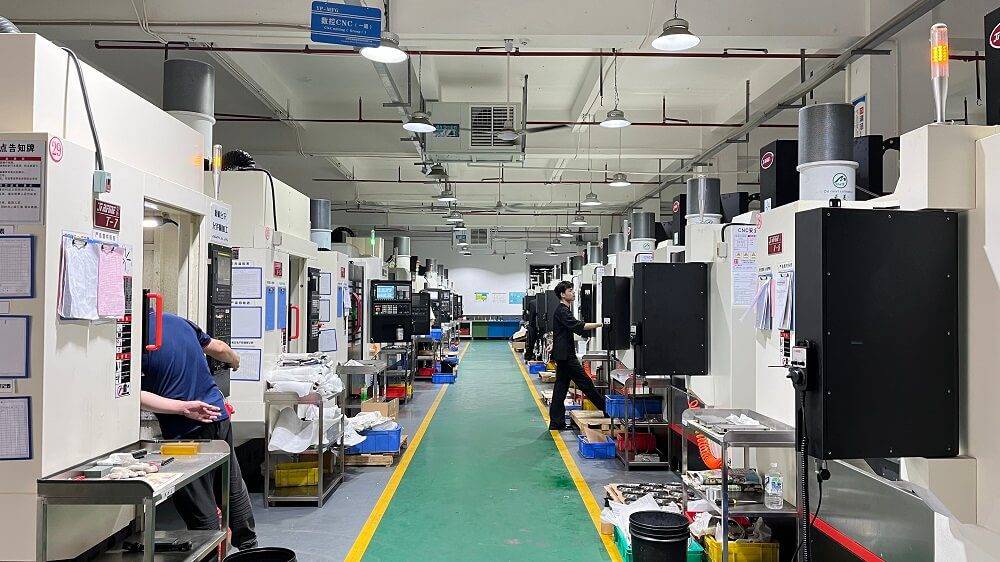
This guide covers the key points of CNC machining PTFE, also known as Polytetrafluoroethylene. PTFE is soft and easy to deform, so its dimensional stability is weaker than metals and many engineering plastics. Standard plastic machining settings are not always enough. To produce precision PTFE parts, you need proper cutting parameters, sharp tools, and stable workholding without excessive clamping force.
Common problems include dimensional springback, fuzzy surfaces, clamping deformation, and unstable tolerances. At YPMFG, PTFE machining projects are usually reviewed for wall thickness, tolerance, application, and inspection method before tooling, stock allowance, and machining sequence are confirmed. This guide explains tool geometry, cutting parameters, workholding methods, and practical ways to solve dimensional instability and poor surface finish in PTFE machining.
01Core Challenge: Why PTFE Does Not Machine Like Other Plastics
PTFE is a soft, waxy, and thermally sensitive engineering plastic. Its unique properties directly contradict the requirements of standard CNC processes.
High Thermal Expansion: PTFE expands significantly with heat generated by cutting. If you machine a part to the correct dimension while it is warm, it will shrink and become undersized once it cools to room temperature.
Low Melting Point (327°C / 620°F): Friction from cutting tools can quickly melt the surface, leading to “smearing,” built-up edges on the tool, and a rough, fuzzy finish.
Creep and Deformation: The material is not rigid. Standard clamping forces will distort the workpiece. When the clamp is released, the part springs back to its original shape, throwing off all tolerances.
Common Real-World Example: A manufacturer needed to produce a PTFE seal with a +/- 0.05mm tolerance. Using standard aluminum-cutting tools and parameters, the parts measured perfectly on the machine. After cooling for 30 minutes, the same parts were 0.15mm undersized. The cause was unaccounted thermal expansion during cutting.
02Mandatory Tooling and Machine Setup
To achieve consistent results, your tooling and setup must be specifically adapted for PTFE.
Cutting Tools:
Material: Use polished, razor-sharp, uncoated carbide tools. A dull tool creates friction and heat, not a clean cut.
Geometry: Single-flute or two-flute tools with high rake angles (positive geometry) are mandatory. These shear the material cleanly rather than scraping it.
Key Specification: Look for tools specifically ground for non-ferrous metals or soft plastics. The sharpest edge possible is your only requirement.
Workholding (The Soft-Jaw Method):
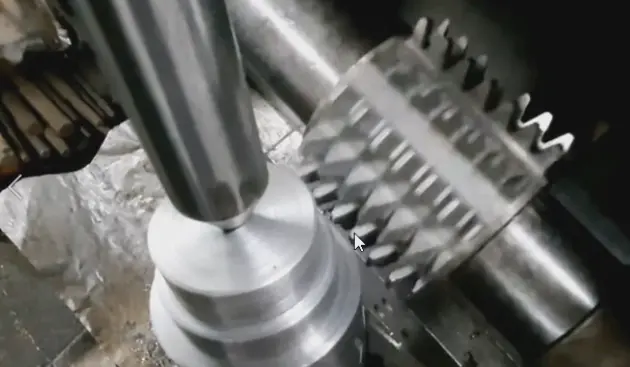
Never use serrated jaws. They will mark the material and cause localized deformation.
Solution: Machine custom soft jaws from aluminum or acetal. Cut a cavity in the jaws that matches the PTFE workpiece’s outer diameter or shape with zero clearance.
Clamping Pressure: Use the minimum air pressure required to hold the part. For a small part (e.g., 50mm diameter), this may be as low as 10-15 PSI. Always verify part does not shift before running.
Coolant Strategy:
Best Practice: High-pressure air blast to clear chips. PTFE chips are stringy and will re-weld to the part if not evacuated.
Alternative: A fine mist of water-soluble coolant (e.g., 5-8% concentration) for heat control, followed immediately by an air blast to remove the chips. Flood coolant is generally not recommended as it can cool the part unevenly, causing warpage.
03Optimal Cutting Parameters (Starting Point)
The following parameters are for a typical 3-axis CNC milling operation using a sharp 2-flute, 6mm carbide end mill. These are starting values; you should optimize for your specific machine and part geometry.
Critical Rule for Tolerances: For finishing passes on a critical dimension (e.g., a seal groove diameter), take a final pass of 0.1mm to 0.2mm. This produces a shearing action that minimizes heat and yields the best surface finish.
04Solving the Three Most Frequent PTFE Machining Problems
Based on common industry cases, these three failures account for over 80% of scrapped PTFE parts.
Problem 1: Parts are Consistently Undersized
Root Cause: Thermal expansion from cutting heat. The part is measured while warm.
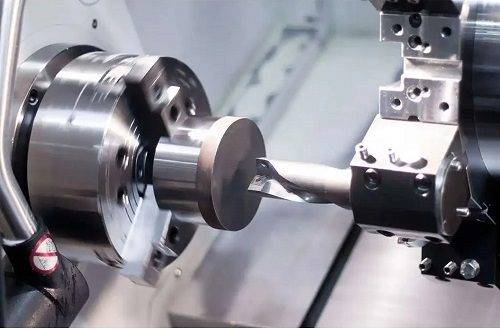
Solution: Allow the part to stabilize at room temperature (20°C/68°F) for at least 30 minutes before final inspection. For high-volume production, measure a test part after cooling, calculate the shrinkage rate (e.g., 0.05mm per 50mm), and apply that offset to your CNC program.
Problem 2: Threads Strip or Crack
Root Cause: PTFE has poor tensile strength. Standard 60-degree V-threads act as a wedge, splitting the material.
Solution: Do not cut standard threads. Use a UNJ or modified buttress thread form with a radiused root. For most sealing applications, specify molded-in threads or use metal inserts. If you must machine threads, use a thread mill with a single-point cutter and take three or four very light finishing passes.
Problem 3: Unacceptable Surface Finish (Fuzzy / Melted)
Root Cause: High spindle speed + low feed rate = heat. The tool is rubbing, not cutting.
Solution: Increase the feed rate while decreasing the spindle speed. A better ratio creates a chip that carries heat away. For finishing, use a slow feed (800 mm/min) with a moderate RPM (10,000). Also, verify the tool is not clogged with melted PTFE; clean or replace the tool immediately.
05Step-by-Step Operational Workflow for a Precision PTFE Part
Follow this exact sequence to produce a PTFE bushing with an internal diameter tolerance of +/- 0.025mm.
1. Material Preparation: Stress-relieve the PTFE stock (if available from supplier). Otherwise,store material in the machine shop at a stable temperature for 24 hours.
2. Roughing: Remove 80% of the material using high feed rates. Leave 0.5mm of material on all critical surfaces.
3. De-stressing (Critical): Remove the part from the machine. Let it sit for 10-15 minutes. This allows internal stresses from roughing to relax. Do not skip this step.
4. Re-fixturing: Place the part back into the soft jaws using the exact same orientation. Use an indicator to verify runout is under 0.01mm.
5. Semi-Finishing: Take a 0.3mm pass at a moderate feed (1,000 mm/min) to correct any distortion.
6. Final Finishing: Take a 0.1mm finishing pass at a slow feed (800 mm/min) with a sharp, clean tool.
7. Deburring and Cleaning: Do not use a metal scraper. Use a sharp plastic deburring tool or a fine-grit sanding sponge (400 grit). Clean the part with isopropyl alcohol to remove any residue.
8. Final Inspection: Wait 30 minutes. Measure the part at a stable room temperature.
06Verifying Success: What to Measure and When
Critical Verification: For a flat PTFE gasket, measure thickness in three places. If the variation exceeds 0.05mm, your workholding pressure is too high and is distorting the part during clamping.
07Summary of Actionable Recommendations
To successfully machine PTFE to precision tolerances, you must abandon standard plastic-machining practices.
Tooling: Use only razor-sharp, uncoated carbide tools with high rake angles. Replace tools more frequently than you would for metals.
Heat Control: Heat is your enemy. Use high feed rates to create chips that carry heat away. Use air blast, not flood coolant.
Workholding: Machine custom, zero-clearance soft jaws. Use the minimum clamping pressure possible. Distortion during clamping is the leading cause of out-of-tolerance parts.
Process: Always rough, then de-stress the part outside the machine, then finish. For tight tolerances, take a final 0.1mm finishing pass.
Inspection: Never measure a warm part. Allow a mandatory 30-minute stabilization period at a controlled room temperature before final quality control.
Final Core Principle: Successful PTFE CNC machining is not about running the machine faster. It is about managing material stress and temperature. Apply the exact parameters and workflow above on your next job. Verify each step against a test part before running production. This method consistently yields accurate, clean PTFE components with reliable tolerances.