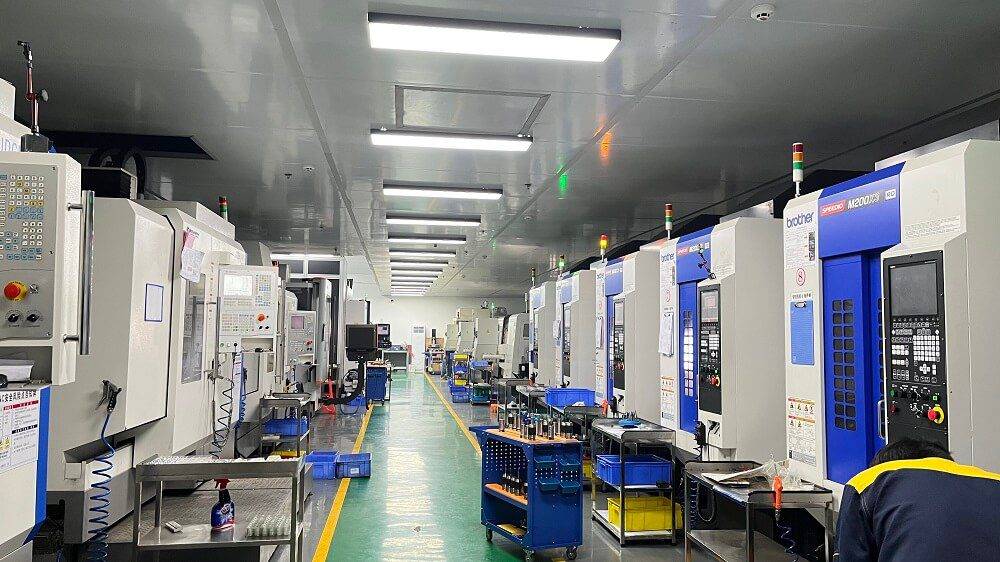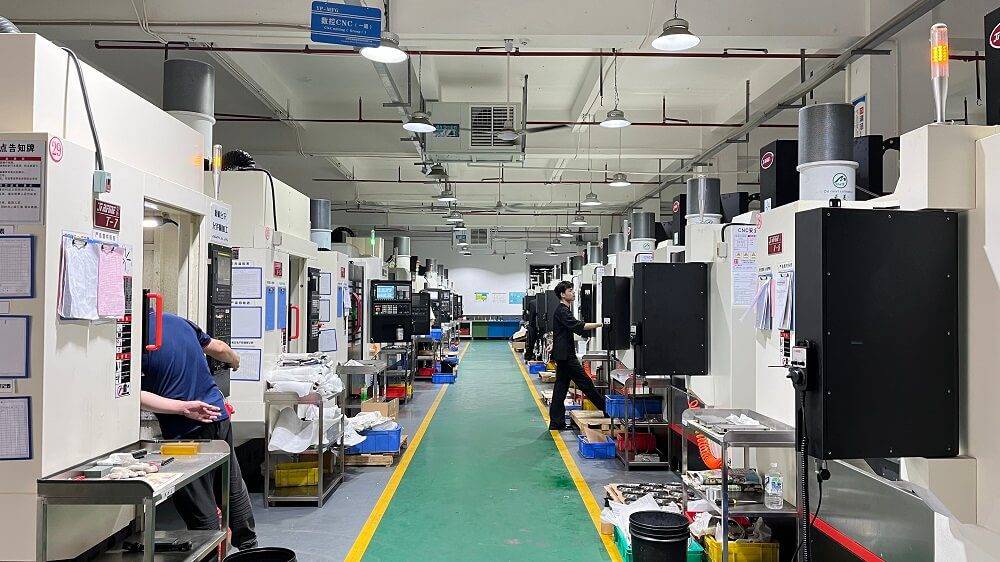
If you have ever wondered how metal parts in a car engine, a bicycle, or even a smartphone are made with such precision, the answer often involves a machine called a CNC mill. In the simplest terms, a CNC mill is a computer-controlled cutting machine used to remove material from a solid block to create a finished part. The acronym “CNC” stands for Computer Numerical Control, which means the machine follows digital instructions to move a rotating cutting tool along multiple axes. Unlike a manual mill where a machinist turns handwheels to guide the cutter, a CNC mill does this work automatically, with far greater accuracy and repeatability.
To understand what a CNC mill does, imagine you have a solid block of aluminum and you need to create a flat surface with several holes drilled at exact locations. On a manual mill, you would measure, clamp the block, and carefully move the table and cutter by hand. If you need to make 100 identical parts, you would repeat the same measurement process 100 times, and even a small human error could ruin a part. With a CNC mill, you write a program once, load it into the machine, and the CNC mill follows those exact instructions for every single part. The first part and the hundredth part will be identical within tolerances as small as 0.001 inches (about one-fourth the thickness of a human hair).
How a CNC mill works – the basic process
The operation of a CNC mill follows a clear, repeatable sequence. First, an engineer or machinist creates a 3D model of the part using CAD (Computer-Aided Design) software. Next, that model is converted into a set of machining instructions using CAM (Computer-Aided Manufacturing) software. The result is a G-code program – a text file containing thousands of commands that tell the machine where to move, how fast to spin the cutter, how deep to cut, and when to change tools. The operator then sets up the machine: they clamp the raw material (called the workpiece) onto the table, load the required cutting tools, and run the program. The CNC mill’s computer reads each line of G-code and sends signals to servo motors or stepper motors that drive the movement of the machine’s axes.
The key components of a CNC mill
Every CNC mill includes several essential parts that work together. The spindle holds the cutting tool and rotates it at speeds typically ranging from 1,000 to 15,000 RPM or higher. The table supports the workpiece and moves along the X and Y axes (left-right and front-back). The column holds the spindle and often moves along the Z axis (up-down). More advanced CNC mills include additional rotary axes, commonly labeled A, B, and C, which allow the machine to tilt the tool or rotate the workpiece for complex shapes like turbine blades or dental implants. The control panel is where the operator loads programs, sets tool offsets, and monitors the cutting process. The coolant system pumps fluid over the cutting area to reduce heat, flush away metal chips, and improve surface finish.
Common types of CNC mills
CNC mills are not all the same. The most common configuration is the vertical machining center (VMC) , where the spindle is oriented vertically. This is the standard CNC mill found in most machine shops because it is versatile, relatively affordable, and easy to set up. In a VMC, the cutting tool comes straight down onto the workpiece, which works well for drilling, tapping, and most milling operations. The other main type is the horizontal machining center (HMC) , where the spindle is horizontal. HMCs are better for heavy material removal and parts that need machining on multiple sides because gravity helps clear chips away from the cutting zone. For very small or complex parts, a 5-axis CNC mill can move the tool or workpiece along five different axes simultaneously, allowing the machine to cut shapes that would be impossible with a standard 3-axis mill. A common real-world example is a dental laboratory that uses a compact 5-axis CNC mill to produce ceramic crowns from a solid block in about 10 minutes per crown.
What a CNC mill can and cannot do
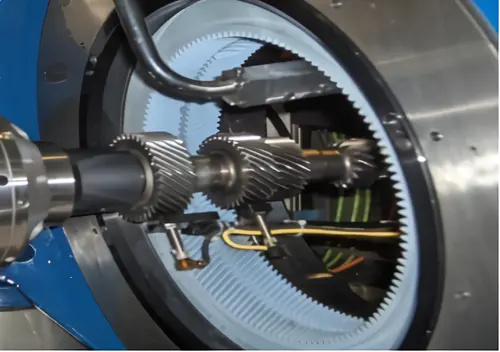
A CNC mill excels at creating precise features such as flat surfaces,slots, pockets, holes, threads, and complex 3D contours. It can work with a wide range of materials including aluminum, steel, stainless steel, brass, titanium, plastics like Delrin and nylon, and even wood or composites. The size of parts a CNC mill can handle varies from tiny components smaller than a fingernail to parts several feet long, depending on the machine’s travel limits. For example, a small benchtop CNC mill might have a work area of 12 x 8 x 4 inches, while a large industrial VMC can handle parts up to 60 x 30 x 25 inches.
However, a CNC mill cannot do everything. It is a subtractive process, meaning it starts with a solid block larger than the final part and cuts away the excess. This creates material waste, unlike 3D printing which adds material only where needed. A CNC mill also cannot create internal undercuts or completely enclosed cavities without special tooling or multiple setups. For parts that need extremely high production rates in the millions, a different process like injection molding or cold heading may be more cost-effective.
Why choose a CNC mill over other machines
Many people confuse a CNC mill with a CNC lathe or a CNC router. The distinction is important. A CNC lathe spins the workpiece while a stationary tool cuts it, which is ideal for round or cylindrical parts like shafts, bushings, and pipe fittings. A CNC router is similar to a mill but is built for softer materials like wood, plastic, and foam, and typically operates at higher speeds with lower rigidity. A CNC mill is the most versatile of the three. With a single CNC mill, you can machine flat surfaces, drill precise holes, cut angled features, create circular pockets, and even do limited turning operations with live tooling on a mill-turn center. For a machine shop that produces a variety of parts, the CNC mill is usually the first machine purchased because it can handle the widest range of jobs.
Real-world examples of CNC mill applications
Consider a small automotive repair shop that also manufactures custom brackets for engine swaps. The shop owner buys a block of 6061 aluminum, programs the CNC mill to cut the bracket shape, drill four mounting holes, and mill a recess for a bolt head. Each bracket takes 12 minutes of machine time and requires no manual finishing. That same bracket, if made by hand, would take over an hour and would not be as accurate. In another example, a prototype shop needs to produce 25 housings for an electronic sensor. The material is 303 stainless steel. The CNC mill roughs out the pocket, drills 12 small holes, taps four of them for screws, and finishes the outer profile – all in one setup, with no operator intervention between operations. The parts are completed in one day. Without the CNC mill, the same job would require a manual mill, a drill press, a tapping arm, and multiple skilled operators working for three days.
Key advantages that make CNC mills essential
The reasons manufacturers rely on CNC mills come down to four measurable benefits. Accuracy – a well-maintained CNC mill holds tolerances of ±0.001 inches or better, which is impossible to achieve consistently by hand. Repeatability – once a program is proven, the machine produces identical parts all day, every day. Efficiency – CNC mills run unattended, so an operator can set up the machine, press start, and work on other tasks while the machine cuts. Some shops run lights-out manufacturing, where the CNC mill runs overnight without anyone present. Complexity – features like 3D contours, tapered walls, and elliptical pockets are routine for a CNC mill but extremely difficult or impossible on manual equipment.
Limitations you should know before buying or using a CNC mill
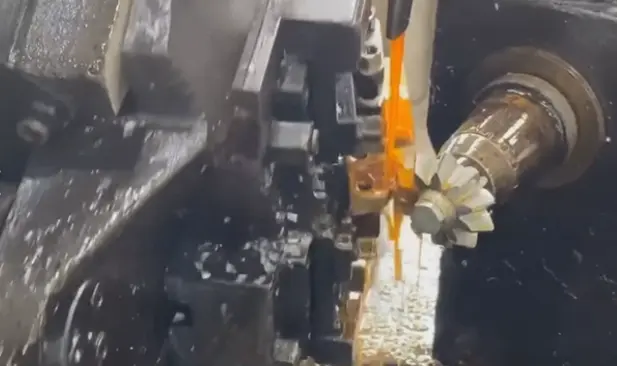
While CNC mills are powerful tools, they have real constraints. The initial cost is significant – a new industrial-grade VMC starts around $35,000 and can exceed $200,000 for a 5-axis machine. Even used machines in good condition cost $10,000 to $25,000. Setup requires technical knowledge. The operator must understand G-code, tool offsets, work coordinate systems, and feeds and speeds. The learning curve is steep; most new machinists need six to twelve months of daily practice to become proficient. Maintenance is another factor. Spindles, ball screws, way covers, and coolant pumps wear out and require replacement. A typical spindle bearing replacement costs $2,000 to $5,000 plus labor. Floor space is also a consideration – a standard VMC occupies about 8 x 10 feet and weighs 5,000 to 15,000 pounds, so a reinforced concrete floor is required.
How CNC mills compare to other common machining methods
To make an informed decision, it helps to see how a CNC mill stacks up against alternatives. A manual mill costs much less – a new manual mill might be $5,000 – but each part requires constant operator attention, accuracy depends on skill, and complex shapes take many times longer to produce. A CNC router costs about the same as a small CNC mill but lacks the rigidity and spindle power to cut steel or stainless steel; it will chatter, deflect, and break tools on hard metals. A CNC lathe is faster for round parts but cannot mill flat surfaces, drill off-center holes, or cut square pockets. A 3D printer is excellent for complex internal shapes and low-cost prototypes, but printed parts have lower strength, poorer surface finish, and are not suitable for high-load applications. For the majority of shops that need accurate, repeatable parts in metals and engineering plastics, the CNC mill remains the standard solution.
Step-by-step: What happens when you run a CNC mill
If you are new to CNC milling, here is exactly what happens during a typical job. First, you secure the raw material to the table using a vise or clamps. Second, you load the cutting tools into the tool holder. Each tool must be measured for length so the machine knows its exact position. Third, you set the work offset – this tells the machine where the corner or center of your part is located. Fourth, you load the G-code program into the control. Fifth, you run a simulation or a dry run with the tool raised above the part to verify the program has no errors. Sixth, you start the actual cut. The spindle spins up to the programmed speed, coolant turns on, and the table moves to bring the tool into contact with the material. The machine follows the programmed path, removing material in small increments called passes or stepovers. After the program finishes, the spindle stops, the table returns to a safe position, and you remove the finished part. A simple part might take two minutes; a complex mold or aerospace component could take several hours.
Common beginner mistakes and how to avoid them
Even experienced machinists make mistakes when learning CNC mills. The most frequent error is incorrect tool offset entry. If the machine thinks a tool is shorter than it actually is, the tool will crash into the workpiece or the table. Always measure tools twice and run a dry run above the part. The second most common mistake is forgetting to set the work coordinate system correctly. If the machine thinks the part zero is one inch from its actual location, every feature will be shifted by one inch, ruining the part. Third, new users often choose incorrect feeds and speeds. Cutting too fast breaks tools; cutting too slow causes rubbing, heat, and poor surface finish. Use manufacturer-recommended chip loads and adjust based on machine rigidity and material. Fourth, inadequate workholding causes parts to shift or fly out of the vise. For heavy cuts, always use a vise with sufficient clamping force or add toe clamps. Fifth, failing to account for tool deflection. Long, thin tools bend under cutting pressure, so take lighter passes or use shorter tools whenever possible.
When you should consider using a CNC mill
A CNC mill is the right choice when you need parts that are too complex or numerous to make manually. As a general rule, if you need more than five identical parts, the programming time for a CNC mill pays for itself in saved labor. If your parts require tolerances tighter than ±0.005 inches, manual machining becomes unreliable. If your parts have curved surfaces, angled holes, or features on multiple sides, a CNC mill is practically the only option. If you are starting a job shop or a prototyping business, a CNC mill is typically the first major machine tool purchase because it handles the widest variety of work. If you are a hobbyist, a benchtop CNC mill in the $3,000 to $8,000 range can machine aluminum, brass, and plastics, opening up capabilities far beyond what hand tools can achieve.
Maintenance requirements to keep a CNC mill accurate
A CNC mill is a precision machine that requires regular care. Daily tasks include cleaning chips from the table and way covers, checking coolant level, and inspecting the spindle for unusual noise. Weekly tasks include lubricating the linear guides and ball screws, cleaning the coolant tank and replacing filters, and checking the air filter on the control cabinet. Monthly tasks include verifying spindle runout (should be less than 0.0002 inches), checking axis backlash (should be under 0.0005 inches), and testing the tool changer for smooth operation. Annual maintenance includes replacing the coolant, changing the way oil, inspecting all electrical connections, and having a technician perform a laser calibration to map and compensate for any positioning errors. Following this schedule keeps the machine accurate for 15 to 20 years or more. Neglecting maintenance leads to poor surface finish, lost position accuracy, and eventually catastrophic spindle or ballscrew failure costing $10,000 or more.
The bottom line: A CNC mill is a fundamental manufacturing tool
To summarize what a CNC mill is and why it matters: A CNC mill is a computer-controlled machine that removes material from a solid block to create precise parts automatically. It combines the rigidity of a manual mill with the accuracy and repeatability of computer control. From simple brackets to complex engine blocks, from one prototype to ten thousand production parts, the CNC mill is the backbone of modern machining. The core point to remember is that a CNC mill does not replace human skill – it amplifies it. The machine follows the instructions you give it, so your understanding of feeds, speeds, tooling, and workholding still determines the quality of the result.
Actionable recommendations based on your situation
If you are considering using or purchasing a CNC mill, here is direct advice based on common scenarios. If you are a hobbyist or small shop with a budget under $10,000, buy a used benchtop CNC mill from a reputable manufacturer and spend 40 hours learning CAM software before cutting your first part. Start with aluminum and plastics, not steel. If you are a job shop owner looking for your first industrial machine, buy a used vertical machining center with a 40-taper spindle and a tool changer. Budget $5,000 for tooling, workholding, and a basic CAM software license. If you are an engineer who needs parts made, do not buy a CNC mill yourself – instead, learn enough G-code to communicate clearly with your machine shop and specify tolerances realistically. If you are a student or career changer, enroll in a community college CNC certificate program. Hands-on experience is non-negotiable; watching videos will not teach you how to feel a cut or hear when a tool is about to fail. In every case, the single most effective action you can take is to run your first part under the supervision of an experienced machinist. No amount of reading replaces the feedback of seeing, hearing, and feeling a CNC mill in operation.
Remember the essential truth: a CNC mill is a machine that follows instructions with high precision. The real value comes from knowing what instructions to give it, including the right program, cutting parameters, and machining sequence. Start with simple parts, verify every program before cutting material, and always respect the machine’s power, speed, and cutting risks. At YPMFG, CNC milling projects are also reviewed for program and process details to prevent small mistakes from becoming real part defects.