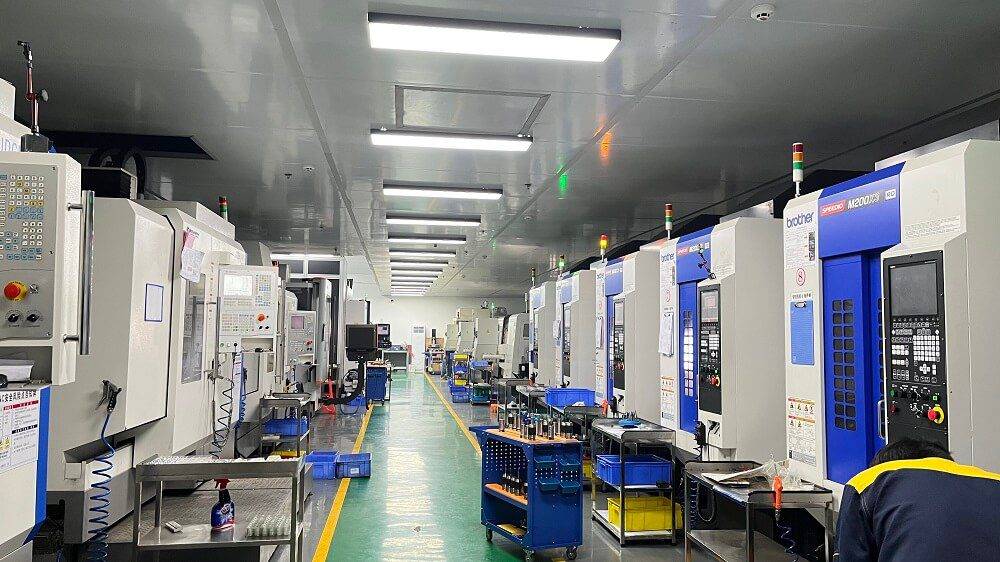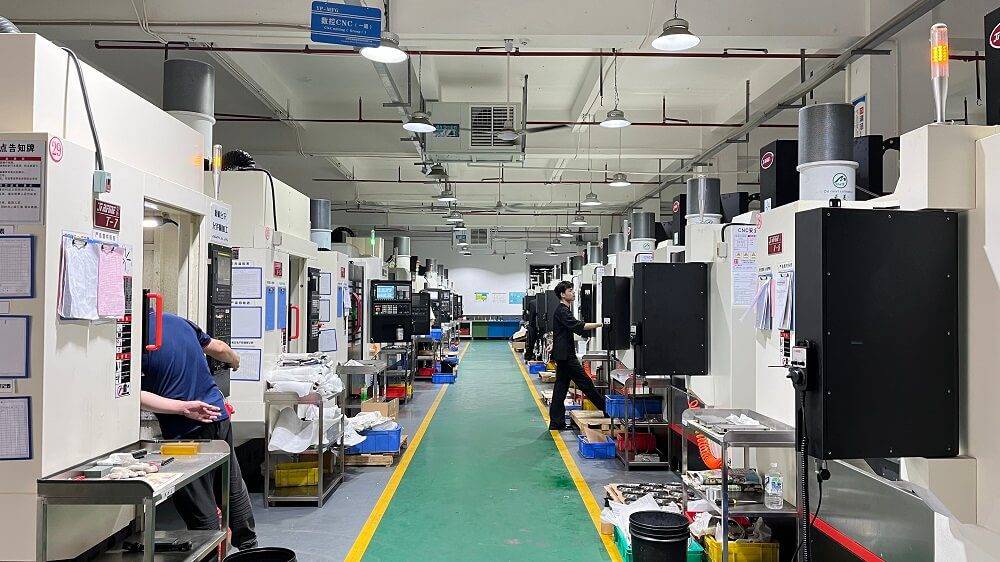
A CNC machine, or Computer Numerical Control machine, is an automated manufacturing device that uses pre-programmed software to control the movement of tools and equipment. Instead of being operated manually with levers, wheels, or cams, CNC machines follow digital instructions, usually G-code, to perform cutting, drilling, milling, turning, grinding, or complex 3D machining.
CNC machines can work with metal, plastic, wood, and composite materials. They are widely used for prototypes, precision components, and production parts. For buyers, the key is not just the machine itself, but whether the drawing, material, tolerance, and machining method are properly matched. At YPMFG, these details are usually checked first before selecting the right CNC process for a project.
In short: CNC machines turn digital designs into physical parts with repeatable accuracy down to thousandths of an inch (0.001 mm).
Table of Contents
ToggleHow CNC Machines Work – The 3-Step Process
Every CNC operation follows the same fundamental workflow:
| Step | Action | Description |
|---|---|---|
| 1 | Design | Create a 3D CAD model (e.g., using SolidWorks, AutoCAD, Fusion 360). |
| 2 | Convert to Code | CAM software translates the model into G-code – a numerical control language that defines tool paths, speeds, feed rates, and coordinates. |
| 3 | Execute | The CNC controller reads G-code line by line and sends electrical signals to servo/stepper motors, which move the tool or workpiece exactly as programmed. |
No human intervention is needed during production except for setup, tool changes, or quality checks.
Main Components of a CNC Machine
Every CNC machine contains these essential parts:
Controller – The computer (often an industrial PC or embedded system) that interprets G-code and drives the motors.
Drive System – Servo motors, stepper motors, ball screws, and linear guides that convert electrical pulses into precise mechanical motion.
Spindle – The rotating component that holds cutting tools (mills, drills, grinders) or a workpiece (in lathes). Speed typically ranges from 8,000 to 30,000+ RPM.
Tool Changer – Automatic device that swaps tools during operation (standard on most machining centers).
Worktable / Chuck – Holds the workpiece firmly in place.
Coolant System – Delivers liquid (oil, water-based coolant) to reduce heat, lubricate, and remove chips.
Enclosure – Safety shield that contains debris and protects operators.
Common Types of CNC Machines
| Type | Primary Function | Typical Accuracy |
|---|---|---|
| CNC Mill | Cuts flat surfaces, slots, pockets, and complex 3D shapes using rotating end mills. | ±0.005 mm |
| CNC Lathe | Rotates workpiece against a fixed cutting tool to produce cylindrical parts (shafts, threads, rings). | ±0.005 mm |
| CNC Router | Light-duty cutting of wood, plastics, foam, and soft metals; widely used in sign-making and woodworking. | ±0.1 mm |
| CNC Plasma Cutter | Uses ionized gas (plasma) to cut electrically conductive materials (steel, aluminum) up to 50 mm thick. | ±0.5 mm |
| CNC Laser Cutter | Focused laser beam melts/vaporizes material for high-precision cutting and engraving. | ±0.01 mm |
| CNC EDM (Electrical Discharge Machining) | Uses electrical sparks to erode hardened metals; ideal for dies and molds. | ±0.002 mm |
| CNC Grinder | Abrasive wheel for finishing surfaces to very tight tolerances and low roughness (Ra <0.1 µm). | ±0.001 mm |
| 5‑Axis Machining Center | Moves tool or part across five axes simultaneously, enabling one‑setup production of extremely complex geometries. | ±0.005 mm |
Why Use CNC Machines? – Key Advantages
1. Precision & Repeatability – Once programmed, a CNC machine produces hundreds of identical parts with virtually no deviation.
2. 24/7 Operation – Unattended running is possible (with monitoring), drastically increasing output.
3. Complex Geometries – 3D contours, undercuts, and angled features impossible by manual methods become routine.
4. Reduced Human Error – Automation eliminates fatigue‑related mistakes.
5. Lower Scrap Rates – Consistent accuracy means less wasted material.
6. Safety – Operators remain behind enclosures, away from spinning tools and flying chips.
Industries & Real‑World Applications
| Industry | Example Parts |
|---|---|
| Aerospace | Turbine blades,engine mounts, landing gear components (5‑axis machining). |
| Automotive | Engine blocks, transmission housings, brake rotors, custom pistons. |
| Medical | Bone screws, surgical guides, hip implants (often on Swiss‑type lathes). |
| Mold & Die | Injection mold cores, stamping dies, blow molds (EDM + milling). |
| Electronics | PCBs (via CNC drilling), smartphone enclosures, heat sinks. |
| Woodworking | Furniture legs, cabinet doors, decorative carvings (CNC routers). |
| Prototyping | One‑off functional prototypes and low‑volume production runs. |
CNC vs. Manual Machines – Quick Comparison
| Feature | CNC Machine | Manual Machine |
|---|---|---|
| Operator skill | Programming + basic setup | Skilled machinist constantly at controls |
| Production rate | High (unattended runs) | Low (one part at a time) |
| Accuracy | ±0.001 – 0.005 mm | ±0.05 – 0.1 mm (dependent on operator) |
| Cost per part (high volume) | Very low | Very high |
| Complexity capability | 3D surfaces, 5‑axis, undercuts | Primarily 2D and simple 3D |
| Setup time | Longer (programming + fixturing) | Shorter for simple parts |
Frequently Asked Questions (Direct Answers)
Q: Do I need to know G‑code to use a CNC machine?
A: No. Most modern shops use CAM software that generates G‑code automatically from CAD models. However, understanding basic G‑code helps with debugging and editing.
Q: How much does a CNC machine cost?
A: Desktop hobby routers start at $2,000–$5,000; entry‑level industrial mills/lathes cost $30,000–$80,000; high‑end 5‑axis machines range from $150,000 to $500,000+ (prices as of 2026).
Q: What materials can CNC machines cut?
A: Almost any rigid material – aluminum, steel, stainless steel, titanium, brass, copper, plastics (ABS, nylon, Delrin), wood, composites (carbon fiber), foam, and wax.
Q: Is CNC machining the same as 3D printing?
A: No. CNC is subtractive (removes material from a solid block). 3D printing is additive (builds layers). CNC is generally faster for metal parts and offers better surface finish and material properties.
Q: Can I run a CNC machine at home?
A: Yes – desktop CNC routers and small mills (e.g., Shapeoko, Nomad, Tormach) are widely available for hobbyists, provided you have proper dust collection and safety gear.
The Standard Definition of a CNC Machine
A CNC machine is a computer-controlled manufacturing tool that follows digital instructions, usually G-code, to automate cutting, drilling, milling, turning, and other machining operations. Its main advantages are precision, repeatability, and stable efficiency. CNC machines can process metals, plastics, wood, and composites, and are widely used in automotive, aerospace, medical, electronics, and industrial manufacturing.
For a more authoritative definition, refer to ISO 2806 for numerical control terminology and related resources from the Association for Manufacturing Technology (AMT). In real CNC machining projects, YPMFG selects the proper machine and process based on part material, geometry, and tolerance requirements.