When you need precision metal or plastic parts for a prototype or production run, ordering CNC machining services online is often the fastest option. But success is not just about uploading a file and waiting for a quote. You need a provider with clear capabilities, transparent pricing, and reliable quality control. Before placing an order, check material options, machining tolerances, surface finishes, inspection reports, and lead time details to avoid dimensional issues, price changes, or rework. At YPMFG, online CNC machining projects are reviewed for drawings, materials, tolerances, and finish requirements before quoting, helping customers get more accurate prices and manufacturable parts. This guide explains how to choose an online CNC machining provider, avoid common mistakes, and receive accurate parts on time.
Table of Contents
Toggle01What Are Online CNC Machining Services?
Online CNC machining services let you upload 3D CAD files, receive instant or fast quotes, and have machined parts shipped to your door. Unlike traditional machine shops that require phone calls and in-person visits, these digital platforms streamline the entire process—from design review to final inspection.
02Step-by-Step: How to Order Parts Online
1. Prepare Your CAD File
Export your design as a STEP (.stp) or IGES (.igs) file. These formats preserve geometry without errors. Avoid STL files for CNC, as they approximate curves with triangles.
Example: A startup needed 50 aluminum brackets. They uploaded a STEP file, and the service flagged a sharp internal corner that would require EDM instead of standard milling. The designer added a fillet, and the part became machinable.
2. Select Material and Finish
Common CNC materials include:
Aluminum 6061 – Best for general-purpose parts, good strength-to-weight ratio.
Stainless Steel 304/316 – For corrosion resistance, medical or food-contact parts.
Brass C360 – Easy to machine, used for fittings and electrical components.
POM (Delrin) – Low-friction plastic for gears and bushings.
ABS – Tough plastic for housings and prototypes.
Surface finishes range from as-machined (visible tool marks) to bead blasting, anodizing (for aluminum), or powder coating.
2. Upload and Get a Quote
Most online services provide an automated quote within 24 hours. The quote includes:
Machining time and setup cost
Material cost
Shipping cost
Estimated lead time (typically 5–10 business days for standard parts)
Red flag: If a quote is suspiciously low (e.g., $5 for a complex steel part), it often means the service will outsource to a low-quality shop or add hidden fees later.
4. Design for Manufacturability (DFM) Feedback
Reputable online CNC services offer free DFM analysis. They check for:
Minimum wall thickness (≥0.8mm for metals, ≥1.5mm for plastics)
Hole depth-to-diameter ratio (≤4:1 for standard end mills)
Internal radii (use radius ≥1mm to avoid custom tools)
Undercuts and threads (standard sizes save cost)
Real case: A product designer ordered 1000 stainless steel spacers but specified a 2mm hole in a 10mm-thick part. The DFM report noted the depth-to-diameter ratio of 5:1 would require special tooling, increasing cost by 40%. Changing the design to a 2.5mm hole allowed standard tools and saved $800.
5. Approve and Start Production
After you approve the quote and DFM, the service schedules the job. Many provide a digital proof or simulation video. Ask for first-article inspection report before full production if you need high reliability.
6. Inspection and Shipping
Finished parts are measured with calipers, CMM (coordinate measuring machine), or optical comparators. You should receive:
A certificate of conformance (CoC) listing measured dimensions
Material certificates (if specified)
Photos of the actual parts (upon request)
Shipping options: DHL, FedEx, or UPS. Typical transit: 3–7 days international.
03Common Mistakes and How to Avoid Them
| Mistake | Consequence | Solution |
|---|---|---|
| No tolerances specified | Parts may be +/‑0.125mm (loose), causing assembly issues | Add standard ISO 2768‑mK or specify critical tolerances (e.g., +/‑0.05mm) |
| Ignoring surface finish | Rough as‑machined parts may not fit seals or bearings | State Ra (roughness average) value, e.g., Ra 1.6μm |
| Using non‑standard thread sizes | Long lead time, high cost | Stick to metric (M3, M4, M5) or imperial (UNC/UNF) standard threads |
| No edge break | Sharp corners cut wires or injure handlers | Specify 0.2–0.5mm chamfer or radius on all edges |
04How to Evaluate an Online CNC Machining Service
Before you place an order, verify these three things:
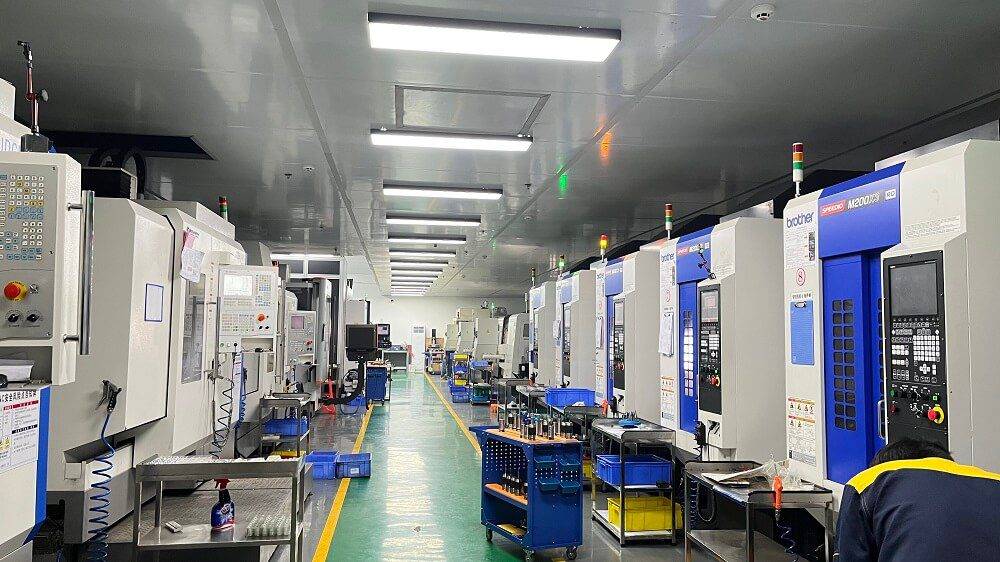
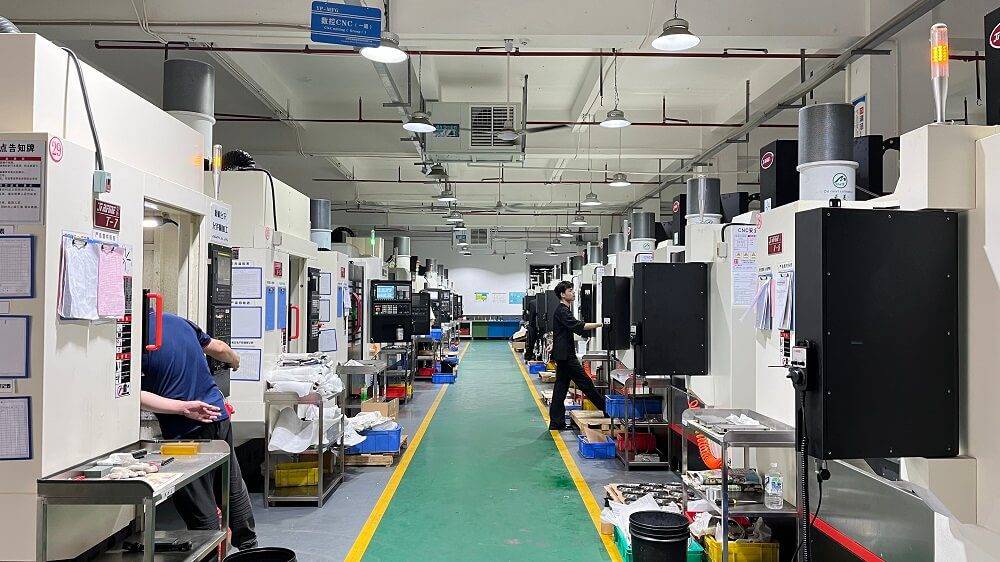
1. Machine capabilities – Do they have 3‑axis, 4‑axis, or 5‑axis mills? Lathes? For complex parts, 5‑axis reduces setups and improves accuracy.
2. Material certification – For aerospace, medical, or automotive, ask for material traceability to ASTM or ISO standards.
3. Quality system – ISO 9001:2015 certification is the minimum. For critical parts, look for AS9100D (aerospace) or ISO 13485 (medical).
Example: An engineering firm needed 200 titanium brackets for a drone. They compared three online services. Service A had no ISO certification; Service B had ISO 9001 but no titanium experience; Service C had ISO 9001, a 5‑axis mill,and provided a previous titanium sample photo. They chose Service C and received parts with 0.02mm accuracy.
05Cost Estimation Guide
Online CNC machining costs typically break down as:
Setup & programming: $50–$150 (one-time per design)
Machining time: $60–$120 per hour (3‑axis), $100–$200 per hour (5‑axis)
Material: $5–$50 per kg for aluminum; $20–$100 per kg for stainless steel; $100+ per kg for titanium
Post-processing: Anodizing $1–$5 per part; bead blasting $2–$10
Action tip: To reduce cost, combine multiple parts into one setup (nesting), use standard stock sizes, and avoid tight tolerances on non‑critical surfaces.
06Lead Time Expectations
Rush (2–3 days): 2–3x standard cost, limited to simple parts
Standard (5–10 days): Most common, good for prototypes
Economy (15–20 days): 20–30% lower cost, for non‑urgent production
07Actionable Conclusion
Ordering CNC machining services online is efficient when your files and requirements are clear. Prepare a clean STEP file, specify material, tolerances, surface finish, and quantity, then review DFM feedback and quality certifications before placing the order. Do not judge only by the instant quote. Check whether the supplier can identify design risks and give practical suggestions.
Your next step is to upload one existing CAD model to an online quoting platform and compare the quote against the guidelines above. For a first order, start with a simple test part, such as a 50x50x10mm block with one drilled hole and one tapped hole. Use it to check accuracy, communication, and delivery speed. Repeat the same test with two providers to benchmark quality. At YPMFG, we also recommend starting with a small validation order before full production, because it helps avoid larger machining risks later.