Quick answer:
A titanium tube is a hollow cylindrical product made from titanium or titanium alloys, valued in CNC machining for its high strength-to-weight ratio, corrosion resistance, and biocompatibility. It is commonly used in aerospace, medical implants, chemical processing, and marine applications. The choice of grade, wall thickness, and manufacturing method directly affects performance, cost, and machinability, making precise specification and experienced machining support critical for project success.
If you are sourcing titanium tubes for a precision engineering project, you are likely balancing material performance against machining complexity and cost. Unlike steel or aluminum, titanium presents unique challenges: work hardening, low thermal conductivity, and a tendency to gall during cutting. Without proper tooling and process control, machining defects can lead to part rejection, project delays, and unexpected expenses.
What Is a Titanium Tube?
A titanium tube is a seamless or welded hollow section produced from commercially pure titanium or titanium alloys. It is available in round, square, and rectangular profiles, with wall thicknesses ranging from thin-wall for heat exchangers to heavy-wall for structural components.
Titanium tubes are specified in industries where weight savings, corrosion resistance, or high-temperature performance is required. For example, aerospace engineers use titanium alloy tubes for hydraulic lines and structural frames, while chemical plants use commercially pure titanium tubes for piping systems exposed to chlorides and acids.
The material is classified under ASTM B338, ASTM B861, and ASTM B862 standards, which define dimensional tolerances, mechanical properties, and testing requirements.
Common Grades and Their Applications
Grade 2 (commercially pure) is the most widely used for general corrosion-resistant applications, including marine hardware, desalination plants, and medical implants. It offers good formability and weldability but lower strength than alloys.
Grade 5 (Ti-6Al-4V) is the most common titanium alloy for structural and aerospace applications. It provides higher tensile strength and fatigue resistance but is harder to machine and more expensive.
Grade 7, 9, and 12 offer specific corrosion resistance,particularly in reducing acids and oxidizing environments. These grades are often specified in chemical processing and oil and gas equipment.
Your choice depends on whether strength, corrosion resistance, or cost is the priority. The table above helps narrow options before requesting a quote.
How Titanium Tubes Are Manufactured
Seamless titanium tubes are produced through extrusion and cold drawing. A billet is heated and pierced, then drawn through dies to achieve the desired diameter and wall thickness. This process yields a uniform grain structure and no weld seam, making it suitable for high-pressure applications.
Welded titanium tubes are formed from flat strip and seam-welded using tungsten inert gas (TIG) welding. They are typically less expensive and available in longer lengths but may require post-weld heat treatment to restore corrosion resistance.
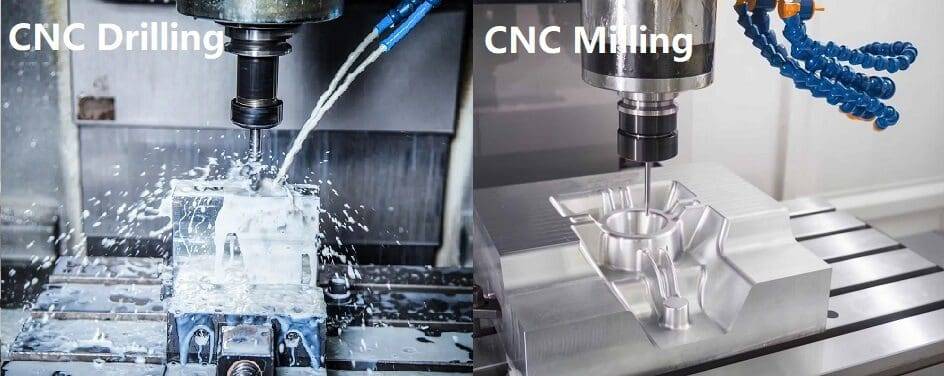
For precision applications, CNC machining is often required after forming to add features such as threads, grooves, slots, or flanges. YPMFG supports projects that require secondary machining of titanium tube blanks, including complex geometries and tight tolerances.
Machining Considerations for Titanium Tubes
Machining titanium tubes requires sharp tooling, rigid setups, and effective coolant delivery. The material’s low thermal conductivity causes heat to concentrate at the cutting edge, leading to rapid tool wear if not managed properly.
Key factors to control include cutting speed, feed rate, and depth of cut. Speeds should be lower than for steel, typically 30–60 surface feet per minute for carbide tools. Feed rates should be aggressive enough to avoid work hardening, but not so high as to cause chatter.
Chip management is critical because titanium chips are thin and stringy. They can wrap around the tool or workpiece, causing surface damage or tool breakage. Using high-pressure coolant helps break chips and flush them away.
If your design includes features like threaded ends, cross-drilled holes, or tapered sections, confirm with your CNC machining partner that they have experience with titanium tube stock. Not all machine shops are set up for this material.

Key Selection Criteria for Buyers
When specifying a titanium tube, verify the following:
Material grade and condition: Annealed, cold-worked, or solution-treated. Each affects machinability and final properties.
Dimensional tolerances: Outer diameter, wall thickness, and straightness per ASTM standards.
Surface finish: Mill finish, pickled, or polished. Rough surfaces can interfere with sealing or fit.
Length and quantity: Longer tubes may require welding or special handling. Minimum order quantities vary by supplier.
Certification requirements: Mill test reports (MTR) confirming chemistry and mechanical properties are standard for critical applications.
Testing: Hydrostatic, eddy current, or ultrasonic testing may be required for pressure-containing parts.
YPMFG can help buyers compare these parameters and provide documentation, including material certifications and inspection reports, before production begins.
Common Questions About Titanium Tubes
Can titanium tubes be welded?
Yes, but welding requires a clean environment and inert gas shielding. Contamination from oxygen or nitrogen can cause embrittlement. Grade 2 is easier to weld than Grade 5.
Are titanium tubes magnetic?
No. Titanium is non-magnetic, which makes it suitable for MRI environments and sensitive electronic enclosures.
How do titanium tubes compare to stainless steel tubes?
Titanium offers a higher strength-to-weight ratio and better corrosion resistance, especially in chloride environments. However, it is more expensive and harder to machine.
What is the maximum operating temperature for titanium tubes?
Commercially pure grades typically operate up to 600°F (315°C). Grade 5 can handle higher temperatures but loses strength above 800°F (427°C).
Can titanium tubes be cold bent?
Small diameters and thin walls can be bent using mandrel bending. Thicker walls and larger diameters may require hot forming or specialized equipment.
Do titanium tubes require special storage?
They should be stored away from carbon steel tools and dust to prevent surface contamination. Proper racking and protective wrapping are recommended.
What causes a titanium tube to fail?
Common failure modes include fatigue cracking, galling during assembly, and hydrogen embrittlement in aggressive environments. Proper material selection and surface treatment reduce these risks.
How is the cost of a titanium tube calculated?
Cost depends on grade, size, wall thickness, quantity, and secondary processing. Raw material volatility and machining complexity are the largest cost drivers.
Choosing the Right Titanium Tube for Your Application
Selecting a titanium tube involves more than matching a grade to an application. You must also consider how the tube will be machined, assembled, and inspected. A mismatch between material condition and process can lead to rework or part failure.
If your project requires tight tolerances, complex features, or a combination of titanium with other materials, sending your specifications to YPMFG for a feasibility review is a practical first step. Their engineering team can evaluate your design for machinability, recommend appropriate grades, and provide a detailed quote including material sourcing and secondary operations.
Contact YPMFG today to request a quote or submit your drawings for a free manufacturing assessment.