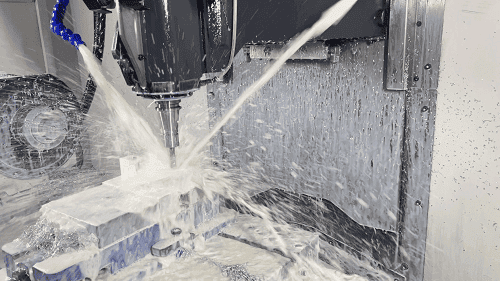
Quick answer:
Robot CNC combines industrial robotic arms with computer-controlled machining to automate part production. This system is most valuable when you run medium to high volume batches and need consistent repeatability across complex geometries. The integration reduces manual handling, cuts cycle time, and lowers labor cost per unit — but only when properly programmed and maintained.
At YPMFG, we work with manufacturers who want to evaluate whether robotic CNC integration fits their production workflow. The decision depends on your part complexity, volume requirements, tolerance standards, and facility layout.
What Is Robot CNC Machining?
Robot CNC machining integrates a robotic arm with a CNC milling, turning, or grinding machine. The robot handles material loading, unloading, part transfer, and sometimes secondary operations like inspection or deburring. The CNC machine performs the precision cutting while the robot manages logistics between stations.
This is different from traditional CNC automation, which typically uses a gantry or linear track system. Robotic cells offer more flexibility in layout and can serve multiple machines or work cells within the same space.
How Robot CNC Differs from Traditional CNC
The core difference lies in material handling and cell flexibility. A conventional CNC lathe or mill usually requires an operator or a fixed automation fixture to manage parts. A robotic cell replaces that fixed setup with a multi-axis arm that can reach into different machines, swap workpieces, and adapt to varying part sizes without retooling.
Both approaches achieve the same machining accuracy. The choice comes down to volume, part variety, and floor space. High-mix low-volume shops often prefer standard CNC with manual loading. High-volume or repetitive production lines benefit more from robotic integration.
When to Consider Robotic CNC Integration
You should evaluate robotic CNC when your current process shows one or more of these patterns:
Parts are loaded and unloaded manually on every cycle, creating a bottleneck
Cycle times are under two minutes, making manual handling inefficient relative to machining time
You run the same part family repeatedly with minor size variations
Tolerance requirements demand consistent clamping and positioning that manual handling cannot guarantee
Labor costs are rising and turnover makes staffing unpredictable
If only one of these applies, a simple fixture or pallet system may be sufficient. If three or more apply, a robotic cell likely improves your overall throughput.
Key Components of a Robotic CNC Cell
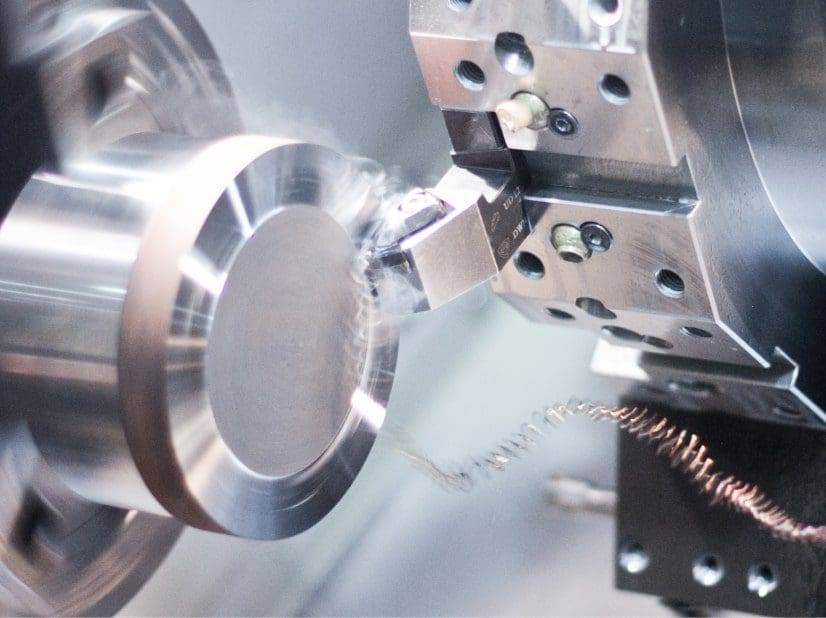
A functional robotic CNC cell includes several interdependent elements. Understanding each helps you evaluate vendors and plan implementation.
The robot payload and reach must match your largest part weight and the spacing of your CNC machines. An undersized arm will limit future growth. An oversized arm adds unnecessary cost and programming complexity.
Cost Factors You Should Evaluate
The total cost of a robotic CNC cell extends beyond the robot itself. Here are the main cost drivers:
Robot unit and end-of-arm tooling: $25,000–$80,000 depending on payload and reach
CNC machine integration and programming: $10,000–$40,000
Safety fencing, light curtains, and electrical work: $5,000–$15,000
Tooling fixtures and grippers specific to your parts: $3,000–$12,000
Programming and commissioning labor: $5,000–$20,000
Annual maintenance and spare parts: $3,000–$8,000
Return on investment typically appears within 12 to 24 months for shops that replace at least one full-time operator or eliminate overtime from manual loading. Shops with lower volumes may not reach break-even within a reasonable timeframe.
Common Mistakes When Planning a Robotic CNC Cell
Many manufacturers make the same planning errors during the initial evaluation phase. Avoiding these mistakes saves time and budget.
Assuming any robot fits any CNC machine. The robot reach, payload, and base height must align with your specific machine door opening, spindle height, and chip management layout. A mismatch creates costly rework after installation.
Underestimating fixturing complexity. Every new part family requires a custom fixture or adaptive gripper. If you frequently change parts, the fixture cost and programming time add up quickly.
Ignoring maintenance access. Robots and CNC machines generate chips, coolant, and debris. If the cell layout leaves no service access, downtime increases and repair costs rise.
Skipping a trial run. Never commit to a full cell without running a test part through the complete cycle. Programming errors, collision risks, and timing issues always surface during the first real production run.

Choosing the Right Approach for Your Parts
The optimal setup depends on what you are machining and how often you switch between part numbers.
Single-part high volume: A dedicated robot-CNC pairing with fixed fixtures delivers the fastest cycle times and lowest cost per part.
Medium-volume mixed parts: A flexible robot with quick-change grippers and a library of programs handles variety without constant reprogramming.
Low-volume job shop: Standard CNC with manual loading or a simple pallet system remains more cost-effective than a full robotic cell.
Complex multi-operation parts: A robot that moves parts between a mill and a lathe in one cell reduces handling errors and improves throughput.
Each scenario requires a different level of investment and programming effort. Matching the setup to your actual production profile prevents over-investment or under-capacity.
How YPMFG Supports Robot CNC Projects
YPMFG provides CNC machining and parts manufacturing services that can serve as both a production source and a technical reference for buyers evaluating robotic CNC integration. When you send your part drawings and volume requirements, our engineering team reviews them against common robotic cell parameters. This review helps you understand whether your parts are suited for automated handling and what fixture or gripper considerations apply.
We also offer sample testing for clients who want to validate cycle times and surface finish quality before committing to a larger program. If you are comparing manual CNC production against robotic integration, our engineering assessment can give you realistic baseline data for your decision.
Maintenance and Long-Term Reliability
A robotic CNC cell requires regular maintenance to stay productive. Key areas to monitor include:
Robot joint servos and reducer gears, which wear under continuous cycling
End-of-arm tooling seals and gripper pads, which degrade from repeated contact
CNC machine way covers and chip conveyors, which collect debris transferred by the robot
Electrical connections inside the cell, which can loosen from vibration over time
Most cells operate reliably for ten to fifteen years with scheduled maintenance. Skipping preventive checks leads to unexpected downtime that costs more than the maintenance itself. Plan for annual service visits and keep critical spare parts on hand.
Standards and Compliance to Keep in Mind
Robotic CNC cells fall under general machinery safety standards. Key references include ISO 10218 for robot safety and ISO/TS 15066 for collaborative robot parameters. If your cell includes collaborative features where humans and robots share workspace, additional speed and force limitations apply.
Certification requirements vary by region and facility type. Always verify compliance with your local regulations and your insurance provider before installation.
Common Questions Buyers Ask About Robot CNC
How long does it take to program a robotic CNC cell?
A basic cell with one part and fixed fixtures can be commissioned in one to two weeks. Complex cells with multiple part families and adaptive tooling typically require three to six weeks of programming and testing.
Can a robot handle delicate or thin-walled parts?
Yes,but the end-of-arm tooling must be carefully designed. Vacuum grippers or compliant fixtures reduce deformation. You should test with a representative part before full deployment.
What happens if the CNC machine changes tooling mid-cycle?
The robot program must account for tool changes. Most modern setups use a tool magazine approach where the robot waits during tool changes or the CNC pauses part transfer until the change completes.
Is robotic CNC better than manual CNC for prototyping?
For one-off prototypes, manual CNC is faster and cheaper. Robotic cells pay off over repeated production runs, not single parts.
How much floor space does a robotic CNC cell need?
A typical cell requires between 80 and 150 square feet, including robot base, CNC machine, safety fencing, and service access space.
What skills do I need to operate a robotic CNC cell?
Operators need basic programming familiarity and routine maintenance awareness. Full commissioning and troubleshooting require a trained robotics technician.
Choosing the Right CNC Machining Path for Your Production Needs
Robotic CNC is a powerful solution for the right application. It excels in environments where part volume, consistency, and handling frequency justify the upfront investment. For low-volume or highly varied production, traditional CNC with manual loading often remains the smarter choice.
The critical step is understanding your own requirements before evaluating equipment. YPMFG can review your part specifications, drawings, and volume targets to give you an honest assessment of whether robotic integration or standard CNC machining better serves your project. Send your engineering files to us for a free evaluation and quotation. Our team will outline the feasible approach and help you avoid costly missteps before you commit to automation.