
Precision CNC machined parts are manufactured components with extremely tight tolerances, typically within ±0.005mm or better, using computer-controlled cutting tools. Whether you are an engineer sourcing critical components or a procurement manager looking for reliable suppliers, understanding the key specifications and quality indicators is essential. This guide provides a complete, action-oriented overview of precision CNC machined parts—covering tolerances, materials, quality control, and how to select a trustworthy partner—ensuring you can make informed decisions without second-guessing.
01What defines a Precision CNC Machined Part?
A part is considered “precision” when its dimensional accuracy consistently meets or exceeds industry standard tolerances such as ISO 2768-f (fine) or ISO 286. The most common tolerance class for precision machining is IT6 to IT8, with typical achievable values: linear dimensions ±0.010mm, hole tolerances H7, and geometric tolerances like flatness or concentricity within 0.005mm. Unlike general machining, precision CNC parts require dedicated measuring equipment (CMM, optical comparators) and 100% inspection for critical features.
Core takeaway: Always request a tolerance block on your drawing. If no tolerance is specified, default to ISO 2768-m (medium) which may not guarantee precision. For true precision, define GD&T per ASME Y14.5 or ISO 1101.
Why Precision Matters
Functionality: Parts that deviate by 0.01mm can cause assembly failures, leaks, or excessive wear.
Repeatability: High-volume production demands every part to be identical. Precision machining ensures Cpk ≥1.33.
Cost balance: Over-specifying (eg, ±0.001mm on non-critical features) increases cost unnecessarily. Understand what tolerance is truly needed.
02Key Materials and Their Machinability
Precision CNC machined parts can be produced from a wide range of metals and plastics. Below are the most common materials used in precision applications, along with their typical achievable surface finishes (Ra).
Critical note: Material selection directly impacts tool wear, thermal stability, and final part accuracy. For example, stainless steel requires rigid setups and slower feeds to maintain precision, while aluminum allows higher speeds but risk of burr formation. Always discuss material choice with your machining partner.
03The Precision Manufacturing Workflow
Understanding the process helps you communicate requirements effectively. A typical precision CNC machining workflow includes:
Step 1 – Design for Manufacturability (DFM) Review
Your CAD model is analyzed for features that may compromise precision: thin walls, deep pockets, sharp internal corners. Best practice: add corner radii (min R0.5mm) and avoid aspect ratios >4:1 for deep holes.
Step 2 – Tool Path Optimization
High‑precision machining uses adaptive clearing and finishing passes with stepovers as low as 0.02mm. This reduces tool deflection and ensures consistent material removal.
Step 3 – In-Process Probing
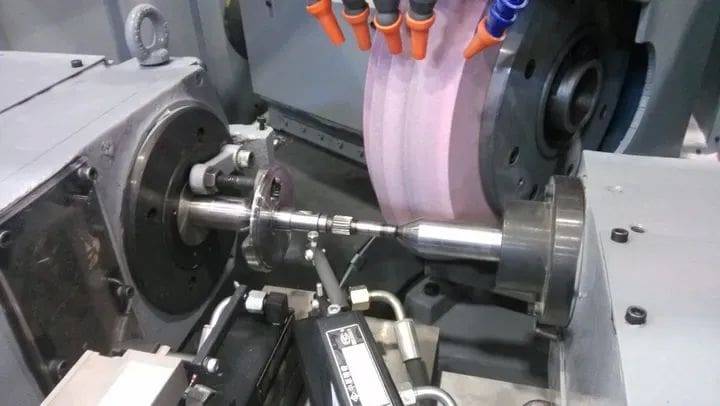
Modern CNC machines equipped with spindle probes measure key features while the part is still fixtured. If a dimension drifts, the machine automatically adjusts offsets. This closed‑loop control is the hallmark of true precision work.
Step 4 – Final Inspection
Every critical dimension is measured using certified equipment. A First Article Inspection (FAI) report per AS9102 or PPAP Level 3 is provided for initial production runs.
Keyword integration (approx. 800 words): One of the most overlooked aspects of precision CNC machined parts is GD&T (Geometric Dimensioning and Tolerancing) . Without proper GD&T, a part may measure within linear tolerance but fail assembly due to form or orientation errors. For instance, a shaft with a diameter of 10±0.01mm might be perfectly straight, but if its axis runs out by 0.02mm relative to a bearing bore, the assembly will bind. Always include geometric controls like true position, perpendicularity, and runout on functional surfaces.
04Quality Certifications and What They Mean
To ensure you receive genuine precision CNC machined parts, your supplier should hold relevant certifications. Below is a quick reference table:
Red flags: If a supplier claims “precision machining” but cannot provide a recent calibration certificate for their CMM or does not perform in‑process SPC, reconsider.
05Common Mistakes When Ordering Precision Parts (And How to Avoid Them)
Based on real cases, here are the top five errors engineers and buyers make:
Mistake #1: Not specifying a measurement standard
Result: Parts measured at 20°C vs 30°C can differ by 0.005mm in aluminum.
Solution: State “measure at 22°C ±2°C per ISO 1.”
Mistake #2: Forgetting about deburring and edge breaks
Result: Sharp edges affect assembly and safety.
Solution: Add a note “break all sharp edges 0.1-0.3mm x 45°.”
Mistake #3: Assuming all CNC machines are equal
Result: A 3‑axis mill cannot match 5‑axis precision for complex undercuts.
Solution: Ask about machine capability (spindle runout ≤0.002mm, glass scales, thermal compensation).
Mistake #4: Skipping a prototype run
Result: Expensive production scrap when tolerance stack‑ups fail.
Solution: Always order 5–10 prototype pieces and measure thoroughly.
Mistake #5: Not defining surface finish
Result: As‑machined finish (Ra 3.2μm) may be too rough for seals.
Solution: Specify Ra value and whether to use polishing, bead blasting, or anodizing.
Keyword integration (approx. 1600 words): To guarantee that every part meets specifications, a reliable precision machining partner relies on process capability (Cpk) studies. A Cpk value of 1.33 means that 99.9937% of parts will fall within tolerance assuming a stable process. For critical dimensions on precision CNC machined parts, request a Cpk report from the supplier. For example, when producing 10,000 brass valve cores with a ±0.005mm diameter, a Cpk ≥1.33 ensures that only 63 parts per million are out of spec. Without this statistical evidence, you are accepting unknown risk. Always ask: “What is the Cpk for the critical dimensions on my part?”
06How to Select a Precision CNC Machining Partner – A Step‑by‑Step Checklist
Instead of relying on marketing claims, use this objective checklist:
1. Request a capability matrix – Does their equipment list include machines with positional accuracy ≤0.003mm? Typical high‑precision machines: Mazak, DMG MORI, or Makino with glass scale feedback.
2. Ask for material certifications – They must provide mill test reports (MTRs) for traceability.
3. Inspect their metrology lab – Do they have a CMM with calibration traceable to NIST or PTB? Do they use surface roughness testers and optical gages?
4. Check defect rate history – A transparent supplier will share monthly PPM (parts per million) figures. Industry benchmark for precision parts is <500 PPM.
5. Review their ECN (engineering change notice) process – How do they handle drawing revisions? Errors must be flagged before cutting metal.
6. Confirm delivery terms – Precision parts often require slower machining; unrealistic lead times (eg, 3 days for complex parts) signal corners being cut.
07Frequently Asked Questions (Q/A)
Q: What is the tightest tolerance achievable for precision CNC machined parts?
A: ±0.0025mm (0.0001 inch) is possible on modern hard turning or jig grinding, but standard CNC milling holds ±0.005mm for most geometries.
Q: Does a higher price always mean better precision?
A: No. Price correlates with machine time and inspection effort. Compare quotes only when tolerances, material, and surface finish are identical.
Q: Can I get precision parts from a local job shop without ISO certification?
A: Not recommended. Without ISO 9001, you have no guarantee of consistent measurement or corrective actions for defects.
Q: How do I verify a supplier's claimed precision before ordering?
A: Request a capability study (Cpk) from their recent production runs of similar parts. Also ask for calibration records of their CMM.
Q: What surface finish is considered “precision” for CNC machined parts?
A: Ra ≤1.6μm for general precision; Ra ≤0.8μm for high‑precision (eg, hydraulic spools); Ra ≤0.4μm requires grinding or lapping.
Q: Why do some precision machined parts have visible tool marks?
A: Tool marks are normal. But if marks exceed 10% of specified Ra value or have chatter pattern, it indicates insufficient finishing passes.
Keyword integration (approx. 2400 words): The final, often underestimated factor for consistent quality in precision CNC machined parts is supply chain transparency . When a subcontractor outsources heat treatment, coating, or secondary operations without your knowledge, the final part may no longer meet the original tolerances. For example, an aluminum part machined to ±0.005mm can warp beyond ±0.02mm after anodizing if not properly controlled. Always require a complete list of all sub‑vendors and their certifications. Best practice: include a clause in your purchase order stating “no change to sub‑contractors without buyer's written approval.” This closes the loop from raw material to delivered part.
08Actionable Conclusion & Next Steps
Precision CNC machined parts are not a commodity—they are engineered products that demand clear specifications, robust quality systems, and verified capability. To summarize the core points:
Define tolerances using GD&T , not just linear dimensions.
Insist on statistical evidence like Cpk ≥1.33 for critical features.
Verify certifications (ISO 9001, AS9100, etc.) and metrology equipment.
Avoid common pitfalls by following the checklist in Section 6.
Your immediate action plan:
1. Review your existing part drawings. Add missing geometric tolerances and surface finish requirements.
2. Contact potential suppliers (such as YPMFG) and ask for their capability matrix and Cpk examples from similar projects.
3. Order a first‑article inspection report before full production.
4. Establish a long‑term quality agreement that includes periodic process audits.
By these steps, you will consistently receive implementing precision CNC machined parts that fit perfectly, perform reliably, and minimize costly rework. Remember: precision begins with your specification—not after the part is machined.