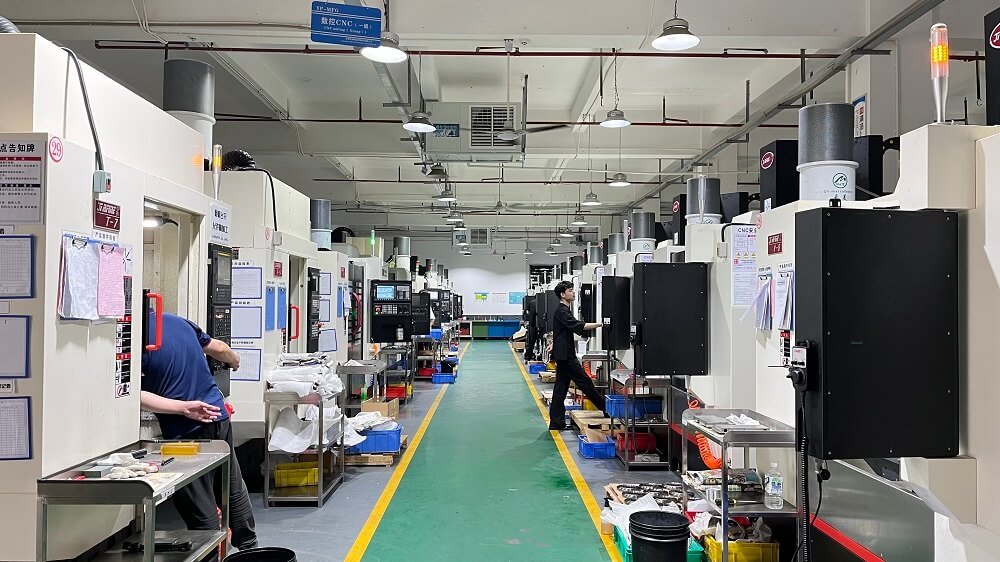
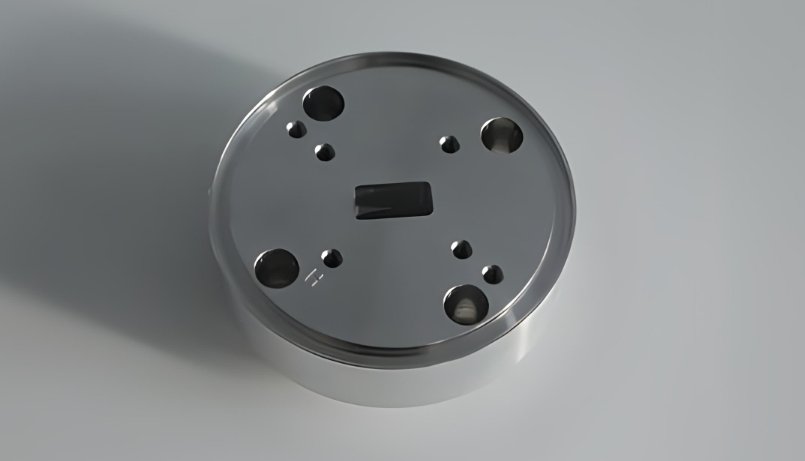
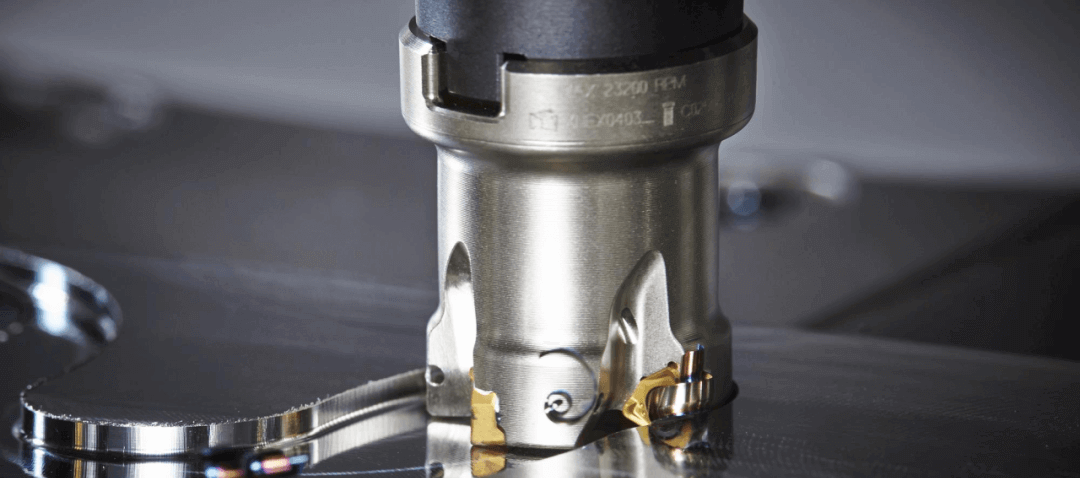
Need aluminum CNC machining services that deliver tight tolerances and fast turnaround? You’ve come to the right place. This guide gives you everything you need to know — from material grades to quality standards — so you can confidently order machined aluminum parts that fit right the first time.
01What Is Aluminum CNC Machining Service?
Aluminum CNC machining service uses computer-controlled cutting tools to remove material from solid aluminum blocks or bars, creating custom parts with precise dimensions. Common processes include milling, turning, drilling, and tapping. The result: complex aluminum components ready for aerospace, automotive, medical, robotics, or consumer electronics.
02Why Choose Aluminum Over Other Metals?
Engineers and product developers choose aluminum CNC machining because of three core benefits:
Light weight – About one-third the density of steel, ideal for weight-sensitive applications
Excellent machinability – Cuts fast, extends tool life, and reduces per-part cost
Good strength-to-weight ratio – 6061 and 7075 grades rival mild steel in many uses
Real-world example: A drone manufacturer replaced stainless steel motor mounts with machined 7075 aluminum parts. Weight dropped by 62%, flight time increased by 18%, and machining cost fell by 40% — all while maintaining structural rigidity.
03Key Aluminum Grades for CNC Machining (With Real-World Uses)
Different projects need different alloys. Here are the most common aluminum grades used in CNC machining services, along with their typical applications:
Most common choice for general CNC machining: 6061-T6 aluminum. It balances cost, machinability, and mechanical properties for over 70% of typical job shop orders.
04Critical Tolerances: What Can Aluminum CNC Machining Actually Hold?
Professional aluminum CNC machining services routinely achieve:
Standard tolerance: ±0.005 inches (±0.13 mm) for most features
Precision tolerance: ±0.001 inches (±0.025 mm) with proper fixturing
Ultra-precision: ±0.0005 inches (±0.0127 mm) for high-end aerospace or medical tools
For reference: A human hair is about 0.003 inches thick. That means standard CNC machining can hold tolerances thinner than a hair, while precision work is roughly 1/6 the thickness of that hair.
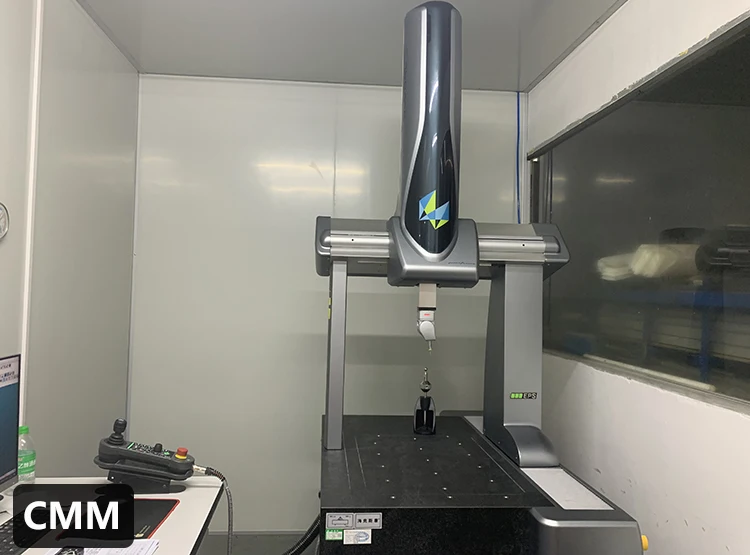
Case study – what happens without proper tolerances: A medical device startup ordered 500 aluminum housings from a low-cost CNC service. The drawings called for ±0.002″ on critical mating surfaces. The delivered parts varied by ±0.008″. Result: 412 housings failed assembly, requiring hand rework costing $8,700. Switching to a qualified aluminum CNC machining service with CMM inspection eliminated the issue entirely.
05Surface Finish Options for Machined Aluminum Parts
Raw machined aluminum typically has a 63–125 microinch Ra surface finish. For improved appearance or performance, post-machining finishes include:
As-machined – Visible tool marks, lowest cost, suitable for hidden functional parts
Bead blasting – Uniform matte finish, hides minor tool marks, excellent for painting or anodizing prep
Anodizing (Type II or Type III) – Hard, durable, corrosion-resistant surface. Type II for color and light wear; Type III (hard coat) for extreme abrasion resistance
Powder coating – Thick, impact-resistant color finish, good for outdoor equipment
Polishing/buffing – Mirror-like finish, used for decorative visible components
06Step-by-Step: How to Order Aluminum CNC Machining Service (Checklist)
Follow this exact process to avoid delays, extra costs, and scrapped parts:
1. Finalize your 3D CAD model – Use STEP, IGES, or native SolidWorks/Inventor files. Include all critical dimensions and tolerances.
2. Select aluminum grade – Refer to the grade table above. When unsure, choose 6061-T6.
3. Add drawing notes – Specify surface finish, edge break requirements, and any heat treat or anodizing.
4. Get quotes from 3+ shops – Compare lead time, tolerance capability, and quality certifications (ISO 9001:2015 is standard; AS9100D for aerospace).
5. Request first-article inspection – Always ask for a full CMM report on the first production part before running the full batch.
6. Run a small pilot batch (5-20 pcs) – Verify fit and function before scaling to hundreds or thousands.
07Common Mistakes That Ruin Aluminum CNC Machined Parts (And How to Avoid Them)
08Cost Factors: What Determines the Price of Aluminum CNC Machining Service?
Understanding cost drivers helps you design parts that are cheaper to machine:
Machining time (40–60% of cost) – Complex features, deep pockets, and many holes increase cycle time. Each additional minute adds $1–2 to part cost.
Setup time (15–25%) – Multiple operations (e.g., machine front, then flip to machine back) add setup charges. Design for single-operation machining when possible.
Material (10–15%) – 6061 costs ~$4-6/lb; 7075 is 2x that. Part size and thickness matter more than grade for small parts.
Tooling (5–10%) – Standard end mills are cheap; special form tools or small-diameter deep-reach tools add cost.
Finishing (10–20%) – Anodizing adds $1–5 per part; powder coating adds more.
Pro tip: A design change that reduces machining time by 20 seconds on a 1,000-part order saves about 5.5 hours of machine time — roughly $200–400 in direct cost.
09Quality Certifications to Look For in an Aluminum CNC Machining Service
Not all shops follow the same quality standards. Look for these credentials based on your industry:
ISO 9001:2015 – Minimum for any professional machining service. Ensures documented processes, inspection, and continuous improvement.
AS9100D – Required for aerospace and defense. Adds traceability, risk management, and stricter controls.
IATF 16949 – Automotive-specific. Includes production part approval (PPAP) requirements.
ISO 13485 – Medical devices. Emphasizes cleanliness, documentation, and regulatory compliance.
If a shop cannot provide a current ISO 9001 certificate,do not use them for functional or safety-critical aluminum parts.
10Lead Times: What to Expect
Prototype (1–5 parts) – 3–7 business days for simple geometries; 10–15 days for complex 5-axis work
Low-volume production (50–500 parts) – 2–4 weeks, depending on setup and material availability
High-volume (500+ parts) – 3–6 weeks, often with automated production cells
Expedite options (1–3 days) typically add 50–100% to the base price.
11How to Verify Quality When You Receive Your Aluminum CNC Parts
Do not assume parts are correct just because they look good. Perform these checks:
1. Visual inspection – Look for burrs, chatter marks, and missing features.
2. Dimensional check – Measure critical features with calipers or micrometers. Compare to the drawing.
3. Thread verification – Run go/no-go gauges through all tapped holes.
4. Surface finish comparison – Hold against a surface finish comparator (available for $50–100 online).
5. Fit test – Assemble the part into its mating component. Does it slide, thread, or clamp correctly?
If any check fails, contact your CNC machining service immediately. Reputable shops will rework or remake nonconforming parts at no charge.
12Summary: Your Action Plan for Getting High-Quality Aluminum CNC Machined Parts
Remember these three core points:
Aluminum 6061-T6 works for 80% of general applications. Use 7075 for extreme strength, 5052 for marine/corrosive environments.
Tolerance drives cost. Specify ±0.005″ unless you truly need tighter. Only tighten mating surfaces.
Always require first-article inspection and ISO 9001 certification. These two steps eliminate 90% of quality problems.
Your immediate action items:
1. Review your CAD model and remove unnecessary tight tolerances
2. Select the right aluminum grade from the table above
3. Get quotes from three ISO 9001-certified shops and compare their CMM inspection reports
4. Order a small pilot batch before committing to full production
By following this guide, you will receive aluminum CNC machined parts that fit, function, and last — on time and on budget.