Quick answer:
CNC milling parts are precision components produced through computer-controlled subtractive manufacturing, where rotating cutting tools remove material from a solid block. They are essential in industries requiring tight tolerances, complex geometries, and repeatable quality—such as aerospace, automotive, medical devices, and industrial automation. Choosing the right milling parts supplier directly affects your project’s cost, lead time, and long-term reliability.
Sourcing CNC milling parts is rarely a one-size-fits-all process. Engineers and procurement professionals often face the same practical challenges: balancing precision with cost, verifying material specifications, managing lead times, and ensuring suppliers can handle both prototyping and volume production. A misstep in supplier selection can lead to rejected parts, delayed schedules, or unexpected rework costs.
What Are CNC Milling Parts?
CNC milling parts are components machined on a milling machine controlled by a computer program. The process uses rotating cutting tools to remove material from a workpiece, creating features such as slots, holes, threads, pockets, and complex 3D surfaces.
Unlike manual milling, CNC milling ensures each part matches the digital design within tight tolerances—often ±0.005 inches or tighter. This repeatability makes it suitable for both prototype runs and production quantities.
CNC milling is distinct from turning, where the workpiece rotates against a stationary tool. Milling is preferred for parts with non-cylindrical features, multiple faces requiring machining, or intricate geometries.
Key Specifications to Verify

Before sending a request for quote, confirm these specifications with your design team or supplier:
Tolerance requirements – Standard machining tolerances (±0.005 in) versus precision tolerances (±0.001 in or tighter) affect cost and cycle time.
Surface finish – Specify required roughness (Ra value) if the part has functional or aesthetic surfaces.
Material grade and condition – Aluminum 6061-T6, 7075-T6, stainless steel 304 or 316, brass C360, and engineering plastics like Delrin or PEEK each machine differently.
Thread specifications – Standard UNC/UNF or metric threads, thread depth, and whether threads are cut or rolled.
Secondary operations – Heat treatment, anodizing, plating, passivation, or assembly requirements should be listed upfront.
Providing a complete technical drawing with GD&T symbols and a 3D model helps the supplier quote accurately and reduces revision cycles.
Materials Commonly Used for CNC Milling
Choosing the correct material grade is critical. For example, 6061-T6 aluminum offers good strength and weldability for general parts, while 7075-T6 provides higher strength for structural applications but is more expensive and harder to machine.
How Quality Is Controlled
First Article Inspection (FAI) is the standard process for verifying that the first produced part meets all drawing requirements. Dimensional measurements, material certifications, and surface finish checks are documented.
During production, in-process inspection typically includes:
Dimensional checks at critical machining stages
Tool wear monitoring
Surface roughness verification
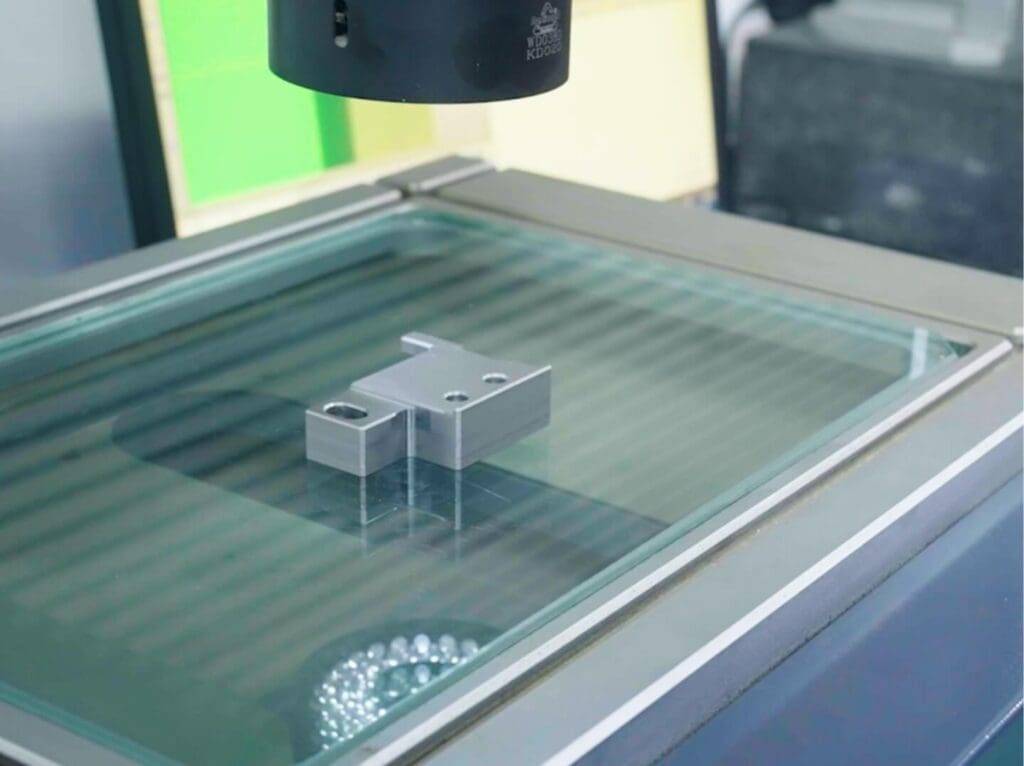
Final inspection often includes a dimensional report listing measured values against nominal values and tolerance bands. For critical applications, suppliers may use CMM (Coordinate Measuring Machine) or optical comparators.
YPMFG supports buyers by reviewing part designs for manufacturability before production begins, helping identify potential tolerance or geometry issues early. This reduces the risk of scrapped parts and keeps project timelines on track.
Common Mistakes When Ordering CNC Milling Parts
Specifying unnecessary tight tolerances – Every additional decimal place in tolerance raises cost. Only tighten tolerances where functional fit or performance requires it.
Omitting surface finish requirements – A part that works mechanically may fail cosmetically or in assembly if surface roughness is not specified.
Ignoring material availability – Some exotic alloys or plastic grades require long lead times. Checking stock availability with your supplier early avoids delays.
Not accounting for secondary operations – Anodizing,heat treatment, or assembly can add 3–10 business days. Factor these into your schedule.
Sending incomplete design files – A 3D model without a 2D drawing leaves interpretation gaps. Always provide both files with clear notes on critical features.
Questions Buyers Often Ask About CNC Milling Parts
What is the typical lead time for CNC milling parts?
Lead time depends on part complexity, material availability, and quantity. Simple parts with standard materials often ship within 5–10 business days. Complex parts with tight tolerances or exotic materials may take 15–25 business days.
How much do CNC milling parts cost?
Cost is driven by design complexity, material choice, quantity, and tolerance requirements. Simple aluminum parts can cost under $10 each at higher volumes, while complex multi-axis parts in stainless steel can range from $50 to several hundred dollars each.
What is the difference between 3-axis and 5-axis CNC milling?
3-axis milling moves the cutting tool in X, Y, and Z directions, suitable for flat surfaces and simple features. 5-axis milling adds rotational axes, allowing complex geometries, undercuts, and contoured surfaces in fewer setups.
Can CNC milling parts be used for both prototyping and production?
Yes. CNC milling is equally suited for single prototypes and high-volume production runs. The same program and setup can be repeated for consistent parts across batches.
How do I ensure my part design is suitable for CNC milling?
Avoid sharp internal corners, excessive thin walls, and deep narrow pockets that require specialty tooling. A design-for-manufacturability (DFM) review with your supplier can catch these issues early.
What surface finishes are available after CNC milling?
Common post-machining finishes include as-machined, bead blast, anodizing (Type II or III), powder coating, passivation for stainless steel, and plating for brass or steel parts.
Do suppliers provide material certifications?
Reputable suppliers provide a material certification (mill certificate) for each batch, verifying chemical composition and mechanical properties. Always request this for critical applications.
What should I include in a request for quote?
Include a 3D model (STEP or IGES), a 2D drawing with GD&T notes, material specification, quantity, required tolerance, surface finish, and any secondary operations. The more complete your RFQ, the more accurate the quote.
Choosing the Right CNC Milling Parts Supplier
Selecting a supplier is about more than comparing unit prices. Consider their experience with your industry, ability to provide engineering support, and track record for on-time delivery.
A supplier that offers DFM feedback can help you reduce cost and improve part performance without compromising design intent. Suppliers with in-house quality documentation—such as FAI reports and material certifications—provide traceability for regulated industries.
YPMFG works with buyers to evaluate part designs, recommend material grades, and provide detailed quotes that include tolerance analysis and lead time estimates. Whether you need a single prototype or a production run, sending your specifications to YPMFG for review is a practical first step toward getting reliable CNC milling parts that meet your exact requirements.
Making a Better Long-Term Decision
The goal is not just to buy a part, but to secure a component that performs reliably in your application. Rushing the sourcing process can lead to quality issues, schedule delays, and hidden costs. Taking the time to verify specifications, review supplier capabilities, and request engineering review upfront pays off throughout the product lifecycle.
If you have an upcoming project requiring CNC milling parts, send your drawings and specifications to YPMFG for a detailed quote and manufacturability assessment. Their team can help you confirm material choices, tolerance feasibility, and production timelines—so you can move forward with confidence.