Getting a reliable CNC quote online doesn’t have to be a guessing game. Whether you need a one-off prototype or 500 production parts, the right approach can save you days of back-and-forth and prevent costly pricing surprises. This guide walks you through exactly how to get accurate CNC machining quotes online—based on real shop-floor practices and industry standards—so you can compare prices with confidence and avoid common mistakes.
01What a Professional CNC Quote Should Include
A complete CNC quote is more than just a dollar amount. Based on industry-standard estimating practices (referencing the National Tooling and Machining Association’s cost estimation guidelines), every legitimate quote must clearly state:
Material cost – specific grade and source (e.g., 6061-T6 aluminum, 304 stainless)
Machine setup time – hourly rate and estimated hours
Run time per part – cycle time including tool changes
Tooling costs – any special end mills, fixtures, or probes
Finishing & deburring – standard or secondary operations
Quality inspection – first article inspection (FAI) or in-process checks
Packaging & shipping – method and carrier
Lead time – business days from order confirmation to shipment
Payment terms – typically 50% deposit for custom work
If any of these line items is missing, the quote is incomplete. In a common real-world case, a machinist ordered 20 brackets from an online service that only gave a total price of $890. When the parts arrived, he was billed an extra $210 for “tooling amortization” not mentioned upfront. Always ask for a line-item quote.
02Step-by-Step: How to Request a CNC Quote Online
Step 1: Prepare a complete technical package
Before uploading anything, gather these three documents (based on ASME Y14.5-2018 dimensioning standards):
3D CAD file (STEP or IGES format preferred)
2D drawing with tolerances (PDF, showing critical dimensions ±0.005” or tighter)
Material & surface finish specs (e.g., “6061 aluminum, clear anodize, 32 Ra”)
Why this matters: Incomplete files are the #1 reason for inaccurate quotes. A machine shop can’t quote what they can’t see. For example, a designer once uploaded only an STL file for a milled part. The online system quoted $45 each. After the actual STEP file was reviewed, the shop called back with a revised $210 each – because the STL had hidden internal radii that required a 5‑axis machine.
Step 2: Choose the right quoting platform or direct shop submission
There are two main routes:
Important: Automated quotes are usually preliminary. They assume standard tolerances (±0.005”) and no tricky features. If your part has deep pockets, thin walls (<0.040”), or threaded holes smaller than #2‑56, the final manual quote can be 30‑60% higher. Always request a “final confirmed quote” before placing an order.
Step 3: Provide clear tolerances and finish requirements
Ambiguity kills accuracy. Instead of writing “standard finish,” specify:
Surface roughness: Ra 32, 63, or 125 microinches
Edge break: 0.005” – 0.015” or chamfer 0.010” x 45°
Deburring: machine deburr, thermal, or hand deburr
Anodize/plating: Type II or Type III anodize (thickness 0.0002” – 0.001”), clear or black
A real-world mistake: A customer requested “anodized” without specifying type. The shop applied Type II decorative anodize (0.0002” thick). The parts arrived, but the customer needed Type III hard coat (0.002” thick) for wear resistance. He had to scrap $3,200 worth of parts and start over. Always write the exact finish spec.
Step 4: Review the quote for hidden assumptions
When you receive a CNC quote online, check these three things:
1. Does it include material certification? (Yes/No – if no, you can’t trace defects)
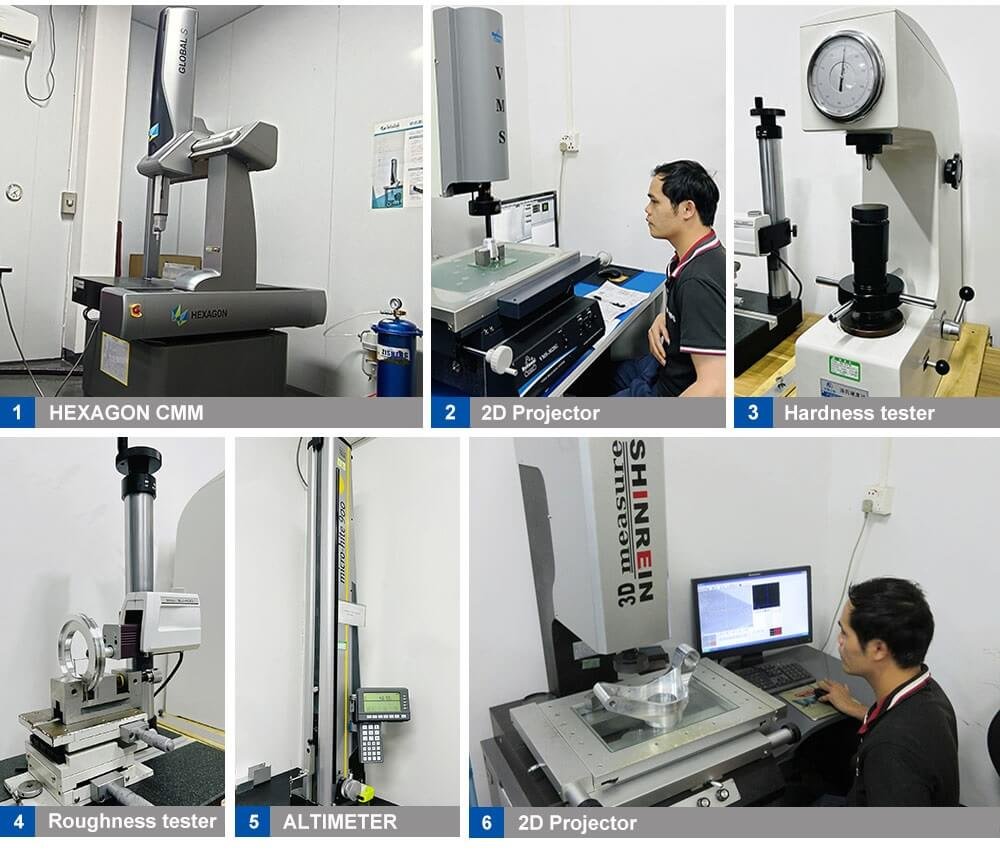
2. What’s the inspection standard? (ISO 2768‑1 medium,or full CMM report)
3. Are shipping and export documents included? (Commercial invoice, packing list)
If the quote says “inspection by operator,” that typically means no formal report. For medical or aerospace parts (ISO 13485 or AS9100 certified shops), you need a separate inspection quote.
Step 5: Get a second and third opinion
Industry practice: always request at least three quotes for any CNC order over $500. Use the first quote as a baseline. Then:
Send the same technical package to two other online CNC services
Compare line items – not just the total price
Watch for outliers: a quote that’s 40% lower often means they skipped tooling or inspection
Example: A small business needed 100 aluminum flanges. Quote A: $1,200 (setup $400, run time $800, tooling included). Quote B: $890 (setup $300, run time $590 – but no tooling line). When asked, Quote B said “tooling extra, about $250.” The real total was $1,140, only $60 less than Quote A, but with slower lead time. The best value wasn’t the lowest upfront number.
03Three Common Online CNC Quote Mistakes (And How to Avoid Them)
Mistake 1: Using the wrong file format
Avoid: STL, OBJ, or image files. They lack dimension data.
Solution: Always export STEP (AP242) or native CAD format (SolidWorks .sldprt, Fusion 360 .f3d).
Mistake 2: Not specifying grain direction or parting lines
If your part will be machined from bar stock, the grain direction affects strength. If it’s cast then machined, parting lines matter.
Solution: Add a simple sketch or note: “Grain direction along X axis” or “No visible parting lines on surface A.”
Mistake 3: Accepting a “ballpark quote” without a written confirmation
Oral or chat-based rough estimates are not binding.
Solution: Always get a formal PDF quote with a quote number, valid date (usually 30 days), and signature line.
04Actionable Conclusion: Your 3-Step Plan to Get the Best CNC Quotes Online
Step 1 – Prepare your files as if you were the machinist.
Include STEP + drawing with tolerances, material, finish, and inspection level. This eliminates 90% of quote errors.
Step 2 – Request line-item quotes from three sources.
Use at least one automated platform for speed and one direct shop RFQ for complex features. Compare setup, run time, tooling, and inspection separately.
Step 3 – Validate before ordering.
Ask: “Is this the final, confirmed price including all tooling, inspection, and shipping to my ZIP code?” Get the answer in writing.
Final reminder: The cheapest quote rarely delivers the lowest total cost when you factor in rework, missing inspection reports, or unplanned tooling charges. Prioritize quotes that are complete, transparent, and backed by a written confirmation. Use this guide as your checklist every time you request a CNC quote online, and you’ll consistently get fast, accurate, and trustworthy pricing.