
You're staring at your computer screen, a cup of cool coffee next to you.
The drawings have been revised to the third version, and the procurement side is still pressing for delivery. You know in your heart that if there is a slight error in these customized aluminum profiles, the entire production line will be shut down.
Among the many technology procurement cases I have handled in the past ten years, this scene has most often appeared in hundreds of cases, and I am not telling other people's stories.
What you need is not a load of aluminum rods, but a set of extrusions that fit precisely into the structure of your equipment. The dimensions must be stable, the surface must be resistant to scratches, and the cutoff tolerances must be as fine as a human hair.
Let’s talk without reservation today about custom-made aluminum profiles, which are things that you must clearly understand beyond the scope of the drawings.
First figure out what you want
Many people send inquiries for the first time, and just write this sentence in the email, "I need 6063 aluminum profiles, please give me a price."
This is like going to a restaurant and asking the chef to "make a dish", but they can't serve it.
You have to answer three questions first.
Do you have a cross-sectional view? Is it a 2D CAD or 3D STEP file?
In what environment is this profile used? Outdoor exposure or clean workshop?
How much do you use? Is it a one-time project or an ongoing return order?
When it comes to the field of aluminum profile customization, there is no one-size-fits-all formula. Even if there is only a one millimeter difference in cross-sectional shape, the service life of the extrusion die can differ by as much as three times.
I have seen a very typical case. There is a customer who is engaged in photovoltaic brackets. At first, in order to save the cost of mold opening, he chose a simple mold like this. However, the wall thickness was uneven. During assembly, as soon as the bolts were tightened, the profile cracked in the middle. That whole container of goods was returned at the port, and the air freight was twenty times more than the mold money saved.
This incident was not his fault. The dimensions marked on the drawing are the same as the actual dimensions obtained by extrusion. There are three variables between the two: mold design, extrusion speed, and quenching cooling. For those who have never experienced it personally, it is very difficult to imagine how complicated the metal flow process is in the few seconds when an aluminum rod is pushed through the die hole.
The cheaper the mold, the better
The mold opening fee is the first fork you encounter on the road to customizing aluminum profiles.
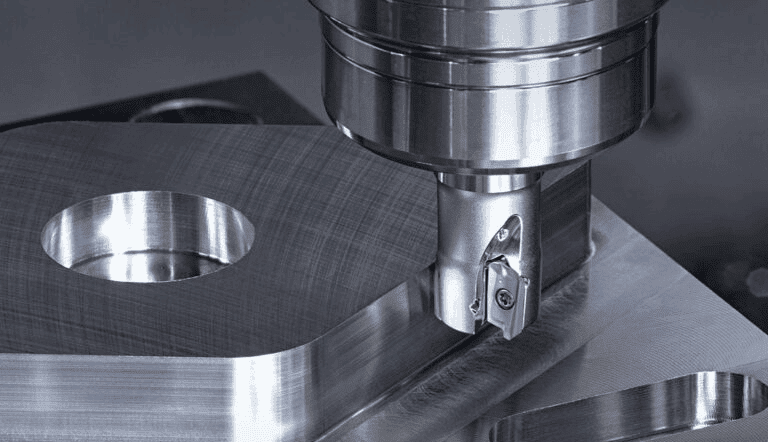
The numerical values of the characters written on the quotation may range from a few hundred currency units to tens of thousands of physical units. You must have questions in your mind, why is there such a huge gap?
The reason is hidden in the mold steel and the number of cavities.
The standard configuration is H13 hot work die steel. However, there are situations where some mold factories will renovate old molds. In the steel material, the internal stress has not been completely eliminated. When the extrusion reaches two to three hundred kilograms, the mold core will directly break. At the moment of breakage, the extruded aluminum material will scurry around like a frightened snake. As a result, the entire press will have to be shut down in an emergency.
Counting is something that needs to be calculated carefully. The one-out-one mold is cheaper, but the output is very low. The price of a four-piece mold is much more expensive, but the processing cost per unit weight can be diluted by a large margin. If the order quantity you have exceeds three tons, then choose a mold with four out of four, because the saved extrusion man-hour cost will quickly earn back the extra mold opening fee.
There is a trap that is easily overlooked: mold maintenance.
Particularly precise extrusion molds need to be stress annealed every time before being placed on the machine. After extrusion is completed, alkaline cleaning is used to clean the remaining aluminum. If you don't ask, the supplier may not take the initiative to tell you. When the mold is scrapped in advance, once the cycle of restarting the mold is delayed, it will take fifteen to twenty days. Can your assembly line wait?
The doorway in surface treatment
The cross-section size is correct, the mold is stable, and the next step is the surface.
Anodizing is the most common treatment, and the results can vary widely.
Are you planning on getting the natural anode, or do you want the black anode? Is the film thickness required to be 10 microns or 25 microns? Is the hole sealing method using heat sealing or cold sealing?
These questions are not literal, but each one is directly connected to the life of the final product.
Aluminum is used for medical device casings, and the thickness of its anodized film is not sufficient. After repeated wiping with disinfectant, white spots will appear on the surface. Complaint tickets submitted by customers arrive faster than test reports generated by your research and development.
Profiles used on building curtain walls must be sprayed with fluorocarbon. The PVDF coating can withstand ultraviolet rays for ten years without fading, but it costs a lot more per square meter. If anodized profiles are installed, they will look fine in the first two years, but will fade and bloom from the third year onwards, and the owner cannot explain it.
There is another situation that is easily overlooked: the need for conductivity.
If your profile is intended to be used as an electrical grounding piece, it must be chromated rather than plain anodized. The chromium film is thin and has good electrical conductivity that can prevent rust. However, the technical requirements on many drawings do not indicate this item at all. This film is so thin that it is almost invisible to the naked eye. If it is not marked on the delivery note, no one will help you think about it.
Tolerance is not tighter, the better
Tell a lesson that actually happened.
A company engaged in the production of automation equipment marks the profile tolerance of the guide rail base as plus or minus 0.05 mm.
The extrusion factory accepted the order and had to bite the bullet and perform the drawing and shaping operation. However, the yield rate was as low as 60%. Not only did the cost double, but the delivery date was delayed by two months. Then they disassembled the entire guide rail and re-launched the design work. They used two symmetrical C-shaped opening parts to assemble it and relaxed the tolerance to ±0.15 mm. With the help of the adjustment gap of the linear guide rail, the positioning accuracy was actually higher than before.
Being extruded into a shape is not processed by CNC. The aluminum material is pushed out at a high temperature of 500 degrees, and will naturally twist and bend slightly as it cools. Regarding the dimensional deviation of extruded profiles, it is divided into several different levels in the GB5237 national standard. You need to make a selection based on the actual assembly relationship.
It can be absorbed by elastic buckles, and there is no need to force the extrusion process to ensure the error. This situation is not shameful. Knowing how to leave room for tolerance is truly an act of understanding the true meaning of technical decisions.
The last mile of packaging and shipping
Many people spend a lot of energy focusing on production, but let go of packaging.
The extruded six-meter-long material strips were stacked in a humid container in Shanghai. After thirty days of sea transportation, when they arrived at the port for unloading, they found that the surface of the profiles was covered with water stains. The party receiving the goods banged the table against your purchasing department, claiming that it was a defective product.
In fact, the root lies in packaging.
It is not required that the stretch film only uses ordinary PE film, but must use VCI vapor anti-rust film. The profiles are separated by corrugated cardboard, and the weight of each bundle cannot exceed 50 kilograms. The fumigation mark of the wooden pallet should be printed in a more conspicuous position on the side, otherwise European customs will detain the entire container.
If you write these requirements into the purchase contract, it will only cost less than five points more in packaging costs. However, if you omit it, the processing fee incurred by one customer complaint can eat up 15% of your entire profit.
The more experienced customers will prompt the manufacturer to provide loading diagrams, how to stack the goods inside the container, and how to load long and short materials. The effect of one photo is stronger than twenty pages of email communication.
Let’s quickly go over the common questions
Q: What is the general minimum order quantity for aluminum profile customization?
First of all, extrusion factories generally require a minimum ordering process of 500 kilograms per item. Secondly, if it is lower than this quantity, the fixed costs incurred by extrusion die replacement and ingot heating cannot be amortized. Furthermore, the unit price will be unimaginably high. Finally, you can try to negotiate with the manufacturer to see if it can be combined with your other orders for furnace production.
Q: How long is the mold opening cycle?
A: Molds with regular cross-sections can be tested within seven to ten days. If you encounter multi-cavity molds with complex cross-sections, including nitriding treatment and trial mold modifications, it would be more appropriate to reserve fifteen days. Don’t make the delivery date too rigid.
Q: How to choose between 6063 and 6061?
So, for most extruded parts, 6063 is suitable, with good molding and beautiful anodizing results. However, there are cases where 6061 has higher strength, but it is more difficult to extrusion. Unless you know clearly that you need high tensile strength to withstand structural force, you can just choose 6063 in T5 state.
Q: How to judge whether an extrusion factory is reliable?
First check whether it has an online quenching device. There is a level of difference in mechanical properties of profiles made by air quenching and strong wind atomization quenching. Then ask if it can provide a batch traceability report for the same cast rod.
Q: Are mold marks on the surface of the profile considered a quality problem?
A: There is a normal feature of slight mold marks in the extrusion process. As long as this feature does not affect the uniformity of the film layer after anodization, it is allowed to exist according to the national standard. However, deep scratches that feel obvious to the hand are within the scope of defects and can be rejected during acceptance.
now you
Customizing aluminum profiles is essentially managing a set of variables.
Any variable, whether it is the cross-sectional shape, mold design, alloy state, surface treatment, or even packaging method, once there is a problem, what arrives in your hands will most likely not be what you expected.
There are three things you can do right now.
Change the vague expression in the technical requirements column of the drawing to make it clear. Modify the "anodizing" mentioned to "anodizing, showing black, the film thickness reaches AA15, and the hole sealing is completed."
Present the plan for the number of mold cavities, compare it with your own consumption table, and calculate whether one out of four will save costs.
Consider packaging requirements and transportation requirements as part of the scope of technical specifications, rather than just leaving a voice message casually on WeChat.
Aluminum profile customization has never been a mysterious and mysterious industry. It is afraid of being serious, afraid of being serious enough to get to the bottom of things, and afraid of being serious enough to put every inconspicuous detail on paper.
Method is a drawing of your dialogue with the world. The clearer you write it, the closer the profile you get will be to what you imagined in your mind.
Now go and open that drawing. Start with the cross-section and revisit each annotation.
The profile will eventually be assembled into a larger structure with your professional judgment, and it will do the job quietly, and it's worth the hour of effort, because you did it.