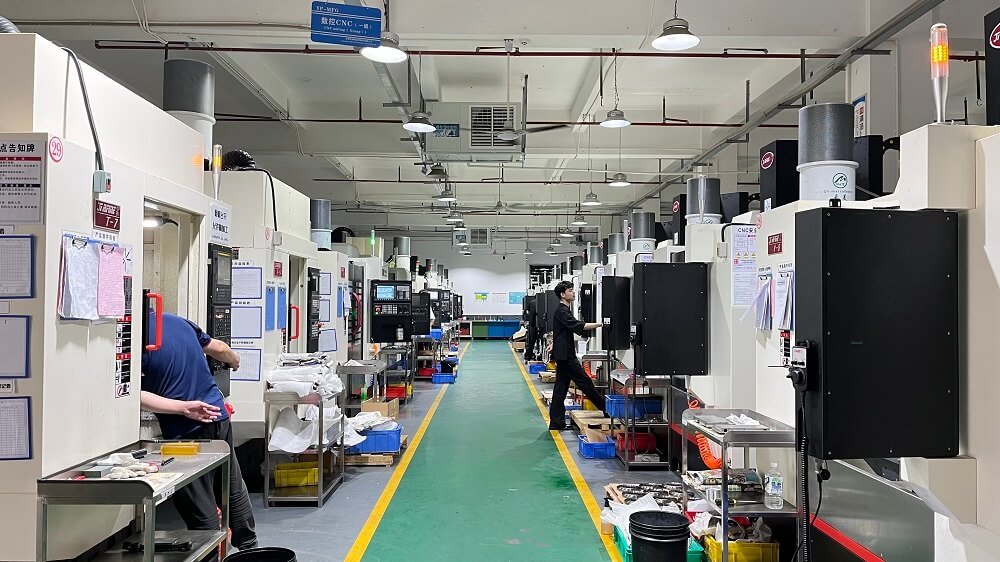
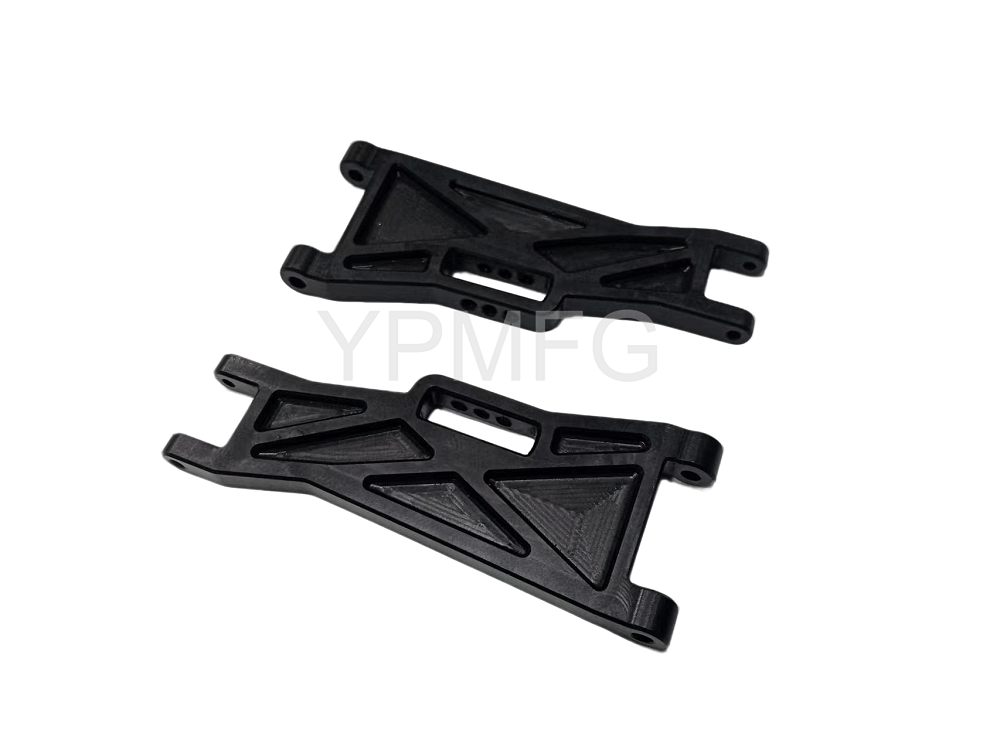
Selecting the right precision CNC machining company is a critical decision that directly impacts your product quality, production timelines, and overall project success. A single mistake in supplier selection can lead to out-of-tolerance parts, costly rework, and delayed delivery. This guide provides a clear, actionable framework to evaluate and choose a precision CNC machining partner that meets your exact specifications.
01Core Capabilities: What a Precision CNC Machining Company Must Deliver
Before contacting any supplier, define your non-negotiable requirements. A qualified precision CNC machining company must demonstrate:
Tolerance capabilities: Standard precision machining holds ±0.005 inches (±0.127 mm). High-precision work requires ±0.001 inches (±0.0254 mm) or tighter. Ask for their documented minimum tolerance.
Machine fleet: Modern 3-axis, 4-axis, and 5-axis CNC mills and lathes from recognized brands (e.g., Haas, DMG Mori, Mazak). Older machines cannot consistently hold tight tolerances.
Inspection equipment: In-house CMM (Coordinate Measuring Machine), optical comparators, and surface finish testers. Without these, they cannot verify your parts.
Material range: Aluminum 6061/7075, stainless steel 303/304/316, brass, copper, titanium, engineering plastics (PEEK, Acetal, Nylon). Confirm they regularly machine your required material.
Common pitfall: A company claims “precision machining” but only guarantees ±0.005″. For aerospace or medical components requiring ±0.0005″, this is unacceptable. Always request their standard tolerance sheet in writing.
02Quality Management Systems: The Non‑Negotiable Foundation
Quality certifications are not badges—they are proof of process control. Look for these credentials:
| Certification | What It Means | Required For |
|---|---|---|
| ISO 9001:2015 | Basic quality management system. Minimum acceptable standard. | All industries |
| AS9100D | Aerospace-specific requirements, traceability, and risk management. | Aerospace & defense |
| IATF 16949 | Automotive quality standard with emphasis on defect prevention. | Automotive supply chains |
| ISO 13485 | Medical device manufacturing quality. | Medical instruments and implants |
Real-world example: A medical startup chose a non-certified shop to save 15% on prototyping. The parts passed visual inspection but failed sterile packaging adhesion due to undocumented surface residue. The re-qualification cost exceeded the original budget by 300%. Always verify current certification status via the provider’s registrar (e.g., NSF, SGS, TÜV).
03Inspection and Reporting: How to Verify Parts Before Delivery
A trustworthy precision CNC machining company provides full inspection documentation without extra negotiation. Required deliverables:
First Article Inspection (FAI) report – per AS9102 or customer-specified format. Includes all critical dimensions with measured values.
In-process inspection logs – for high-volume orders, showing sample checks every 50–100 parts.
Final CMM report – for all dimensionally critical features.
Material certifications – mill test reports (MTRs) traceable to heat/lot numbers.
Actionable test: Ask the company for a sample inspection report from a past project similar to yours. Look for:
Actual measured values (not just “PASS”)
Date stamps and inspector signatures
Gauge IDs and calibration due dates
If they cannot provide a real report within 24 hours, consider that a red flag.
04Lead Times and Production Capacity: Matching Your Schedule
Precision machining is not fast machining. Realistic lead times for precision parts:
| Part Complexity | Typical Lead Time (prototype, 1–10 pcs) | Production (100–1000 pcs) |
|---|---|---|
| Simple (block with holes) | 5–7 business days | 10–15 business days |
| Moderate (multi-face features) | 7–10 business days | 15–20 business days |
| Complex (5-axis, tight GD&T) | 10–15 business days | 20–25 business days |
Expedite fees of 25–50% can reduce lead time by 30–40%, but never sacrifice inspection steps. A company that promises 3-day delivery for a complex 5-axis part is either misrepresenting capability or skipping quality checks.
Capacity check: Ask for their current spindle utilization percentage. Above 85% indicates risk of schedule slippage. Below 60% may suggest lack of orders (potential quality issues). Ideal range: 70–80% with a documented queue system.
05Pricing Transparency: Understanding What You Pay For
Precision CNC machining quotes typically include:
Machine setup – fixed cost per part number (usually $100–$500)
Programming & tooling – CAM time, fixture design, custom tools ($150–$1000)
Per-part machining – based on cycle time ($20–$200+/hr depending on machine type)
Inspection – CMM programming and measurement ($50–$300 per batch)
Material – raw stock + saw cutting (market price + 15–30% markup)
Shipping & handling – packaging and freight
Red flag warning: A quote that lists only a “per-piece price” without separating setup or inspection costs often hides rework fees later. Request an itemized quote before placing a PO.
Cost-saving reality: Switching to a cheaper shop without verifying their tolerance capability leads to 2–5× higher total cost when 20–50% of parts fail incoming inspection. A case study from an industrial equipment manufacturer showed that paying 18% more for an ISO 9001:2015 certified shop reduced scrap rate from 12% to 0.8%, paying back the premium in three months.
06Communication and Technical Support: The Hidden Success Factor
Even the best machine shop fails if they misinterpret your drawing. Evaluate their engineering support:
GD&T review: Do they flag ambiguous or over-toleranced features before quoting?
DFM feedback: Do they suggest design changes that reduce cost without affecting function?
Response time: Average email reply within one business day; phone support during working hours.
Language and units: Confirm they work in your required units (inches or millimeters) and language fluency.
Simple test: Send them a sample drawing with one intentional minor error (e.g., missing radius callout). A competent precision CNC machining company will ask for clarification. A poor one will quote blindly and deliver non-conforming parts.
07Step‑by‑Step Selection Process: From Search to First Order
Follow this sequence to minimize risk:
1. Shortlist 3–5 companies using technical criteria (tolerances,certifications, machine list, materials).
2. Request capability statement – a document listing their equipment, quality processes, and typical industries served.
3. Submit a sample RFQ – use a real or representative part drawing. Include material, quantity, tolerance requirements, and needed finish.
4. Compare quotes – not just total price, but itemized breakdown, lead time, and inspection deliverables.
5. Check references – ask for two clients with similar part complexity. Call them and ask: “What went wrong on your last order and how did the shop resolve it?”
6. Place a trial order – start with 5–20 pieces of a non-critical but representative part. Measure everything upon receipt.
7. Audit before scaling – after successful trial, request a virtual or on-site quality system audit.
08Common Mistakes to Avoid
Choosing solely by lowest price – leads to rejected parts and production delays.
Ignoring material certifications – without traceability, you cannot prove compliance for regulated industries.
Skipping first article inspection – even for “simple” parts, tolerance stack-ups cause assembly failures.
Assuming all CNC shops are equal – a job shop optimized for rapid prototyping may lack the process controls for production repeatability.
No written quality agreement – define acceptance criteria, inspection frequency, and non-conformance handling in your PO.
09Actionable Conclusion: Your Next Steps
The right precision CNC machining company acts as an extension of your engineering team, not just a vendor. Core takeaway: Verify tolerance capability, demand current certifications (ISO 9001:2015 minimum), and require full inspection reports for every order. Do not rely on website claims—test them with a sample RFQ and a trial part.
Immediate actions you can take today:
1. Download a standard RFQ template that includes fields for tolerance, material, quantity, and quality requirements.
2. Prepare one representative part drawing (PDF + STEP file).
3. Send it to three shortlisted companies that publish their precision capabilities online.
4. Compare their responses using the criteria above – especially DFM feedback and inspection reporting.
By following this structured approach, you eliminate guesswork and secure a reliable partner who delivers parts that meet your specifications on time, every time.