
Quick answer:
Axis CNC machining refers to the number of directions a cutting tool or workpiece can move during the machining process. Common configurations include 3-axis, 4-axis, and 5-axis machines. The more axes a machine has, the more complex geometries it can produce in a single setup. This reduces handling time and improves accuracy. However, multi-axis machines also carry higher equipment and programming costs. For buyers sourcing CNC machined parts, understanding which axis type fits their part geometry is essential for controlling both budget and quality.
Why Axis Count Matters in CNC Machining
The number of axes on a CNC machine directly influences what shapes can be cut, how many setups are required, and the final surface quality. For simple prismatic parts, a 3-axis CNC machine is often sufficient. For parts with undercuts, angled features, or complex contours, a 4-axis or 5-axis CNC machine becomes necessary.
Using too few axes for a complex part often leads to multiple setups, longer lead times, and higher risk of tolerance stack-up. Using too many axes for a simple part adds unnecessary programming time and machine cost. The right choice depends on part geometry, material, tolerance requirements, and production volume.
3-Axis CNC Machining
Quick overview:
A 3-axis CNC machine moves the cutting tool along the X, Y, and Z linear axes. The workpiece remains stationary. This is the most common configuration for milling and drilling operations.
When to use:
Flat or prismatic parts
Pockets, slots, and holes on a single face
Low to medium production volumes
Parts with no complex angles or undercuts
Limitations:
Requires manual repositioning for features on other faces
May need multiple fixtures or setups
Higher risk of geometric errors when repositioning
Cost impact:
Lower machine hour rates and wider availability make 3-axis machining the most cost-effective option for simple geometries. Programming is also faster and requires less skill.
4-Axis CNC Machining
Quick overview:
A 4-axis CNC machine adds a rotary axis (typically A-axis or B-axis) to the standard X, Y, Z movements. The workpiece can rotate, allowing the tool to reach multiple faces without manual repositioning.
When to use:
Cylindrical or round parts
Features on multiple faces of a part
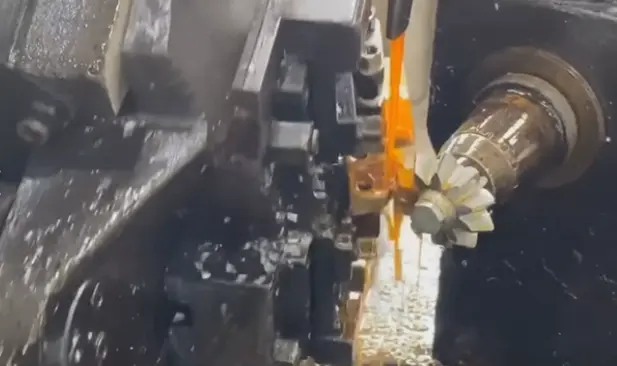
Parts requiring helical or spiral cutting paths
Parts that would otherwise need multiple 3-axis setups
Advantages:
Reduces setup time
Improves positional accuracy between faces
Enables continuous rotary cutting for curved features
Common applications:
Camshafts, impellers, and turbine blades
Parts with angled holes or slots
Medical implants and custom fixtures
Risk to consider:
Not all 4-axis machines support continuous rotation. Some only index (rotate and lock). Verify whether your part requires true 4-axis contouring or simple indexing.
5-Axis CNC Machining
Quick overview:
A 5-axis CNC machine adds two rotary axes to the linear X, Y, Z axes. The tool or workpiece can tilt and rotate, enabling the cutter to approach the part from virtually any angle. This is the most capable axis configuration.
When to use:
Complex freeform surfaces
Deep cavities with steep sidewalls
Parts with tight tolerances on multiple faces
Aerospace, medical, and high-end automotive components
Advantages:
Single-setup machining for complex parts
Shorter cutting tools can be used, reducing vibration
Better surface finish due to constant tool engagement
Reduced lead time and labor cost for complex geometries
Cost considerations:
Higher machine cost, more expensive tooling, and skilled programming requirements mean 5-axis machining typically carries a higher hourly rate. However, for complex parts, the total cost per part can be lower due to fewer setups and less manual work.
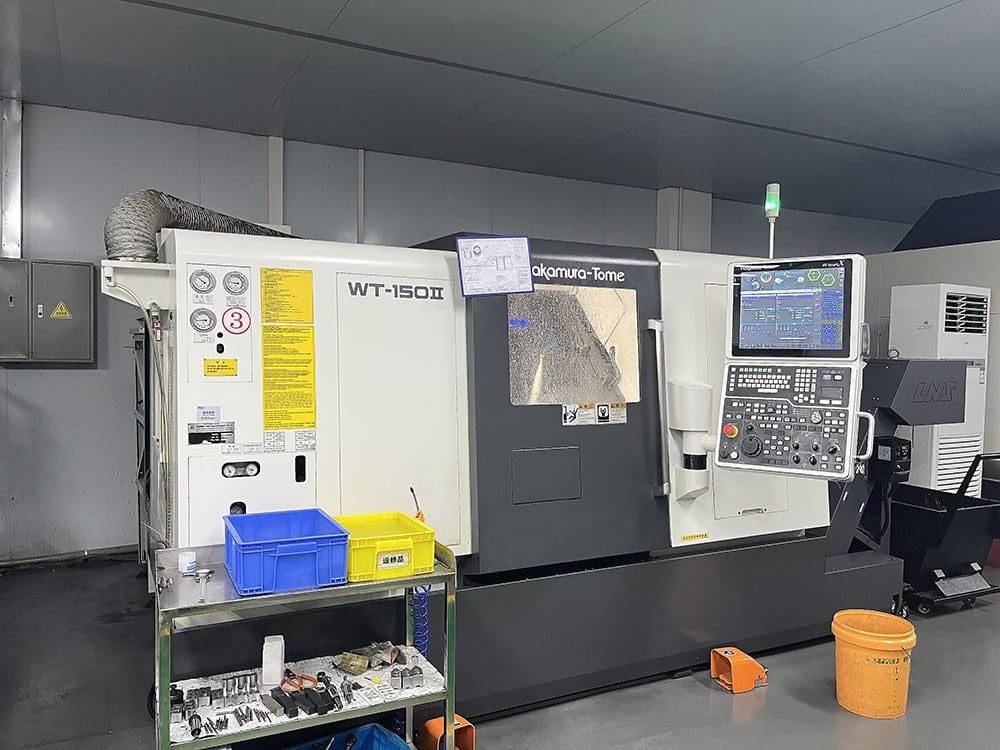
Axis CNC Machining Comparison Table
What this table means for buyers:
If your part geometry is simple, do not pay for a 5-axis machine hour rate. If your part requires multiple setups on a 3-axis machine, a 4-axis or 5-axis solution may reduce total cost. YPMFG can help evaluate your part geometry and recommend the most cost-effective axis configuration before quoting.
How to Choose the Right Axis for Your Part
Step 1: Analyze part geometry
Does the part have features on multiple faces?
Are there undercuts, angled holes, or compound curves?
What is the required surface finish?
Step 2: Determine tolerance requirements
Tighter tolerances across multiple faces favor fewer setups.
Multi-axis machining reduces positional error between setups.
Step 3: Estimate production volume
High volume with simple geometry: 3-axis is often optimal.
Low volume with complex geometry: 5-axis may still be cost-effective because setup time is minimized.
Step 4: Check material and tool access
Hard materials and deep cavities benefit from 5-axis tool orientation.
Avoid long tool overhangs by using a machine that can tilt the tool or workpiece.
Step 5: Request an axis evaluation
Send your 3D model to YPMFG for an engineering review.
The team can identify whether a 3-axis, 4-axis, or 5-axis CNC machine is most suitable for your part.
Common Questions About Axis CNC Machining
Does more axes always mean better quality?
No. Quality depends on machine rigidity, spindle accuracy, tool selection, and programming. More axes add capability but also add complexity. For simple parts, a well-calibrated 3-axis machine can achieve excellent tolerances.
Can a 5-axis machine cut simple parts faster than a 3-axis machine?
Not necessarily. For simple prismatic parts, 3-axis machining is faster and cheaper because programming and setup are minimal. Use multi-axis machines only when geometry requires it.
What is the difference between simultaneous 5-axis and 3+2 machining?
Simultaneous 5-axis moves all axes at once for continuous contouring. 3+2 machining uses five axes but locks two rotary axes during cutting. 3+2 is easier to program and often sufficient for complex features without continuous curvature.
Is axis CNC machining more expensive for prototypes?
It can be. Prototypes often have complex geometry, and multi-axis machining reduces setup time. However, programming cost is the main driver. For one-off parts, the total cost may still be lower than multiple 3-axis setups with manual repositioning.
What file format do I need to send for axis evaluation?
Most shops prefer STEP or IGES for 3D models. Some also accept native CAD files. YPMFG reviews STEP files for axis and tool access before providing a quote.
How do I know if my part needs 5-axis machining?
If a feature cannot be reached without repositioning the part, and repositioning would compromise tolerance, 5-axis is likely needed. Common signs include deep pockets, compound angles,and tight tolerances on multiple faces.
Questions Buyers Often Ask About Axis CNC Machining
Can a 3-axis machine produce parts with angled holes?
Only if the part is manually repositioned using a fixture or angle plate. This adds setup time and positional error. A 4-axis or 5-axis CNC machine can machine angled holes in a single setup with better accuracy.
What is the most common axis configuration for production runs?
For production runs of simple parts, 3-axis machining is most common. For medium-complexity parts, 4-axis indexing is widely used. For high-complexity parts in aerospace and medical, 5-axis is standard.
Does axis count affect surface finish?
Yes. On a 3-axis machine, long tools may be needed for deep cavities, increasing vibration. A 5-axis machine can tilt the tool to maintain a constant cutting angle, improving surface finish without secondary operations.
How much does a 5-axis CNC machine cost per hour?
Hourly rates for 5-axis machines are typically 50–100% higher than 3-axis rates. However, for complex parts, the total cost per part is often lower because fewer setups and less manual work are required.
Can I get a quote for a 5-axis part without a full 3D model?
A 3D model is strongly recommended. Without it, the shop cannot verify tool access, axis requirements, or cycle time. YPMFG provides engineering feedback on axis feasibility after reviewing your model.
What are the risks of using too few axes?
Risk includes tolerance stack-up from multiple setups, longer lead times, higher labor cost for manual repositioning, and potential scrap from misalignment. Always evaluate whether a single-setup multi-axis approach could reduce these risks.
Is 3+2 machining considered multi-axis?
Yes, it is a form of 5-axis machining where two rotary axes are locked during cutting. It is simpler to program than simultaneous 5-axis and is suitable for parts with complex features that do not require continuous contouring.
How do I compare axis machine quotes from different suppliers?
Compare not only hourly rates but also estimated cycle time, number of setups, and projected scrap rate. A lower hourly rate with more setups may cost more overall. Ask each supplier to specify the axis configuration they plan to use.
Making a Better Long-Term Decision for Axis CNC Machining
Axis selection is not just a technical detail. It directly affects your project cost, lead time, part quality, and supplier reliability. Choosing the right configuration begins with a clear understanding of your part geometry and tolerance needs. For simple parts, 3-axis machining remains the most practical and cost-effective option. For parts requiring complex geometries, tighter tolerances, or reduced handling, 4-axis or 5-axis CNC machining offers measurable advantages.
Rather than guessing which axis level fits your project, send your specifications to YPMFG for an engineering review. The team can evaluate tool access, recommended axis type, estimated cycle time, and provide a clear cost breakdown. Whether you need a quick prototype or a production run, understanding the right axis configuration helps you avoid unnecessary cost and rework.