
Quick answer:
China CNC machining is widely used for high-volume production because it offers consistent precision, scalable capacity, and cost-efficient manufacturing for industries like automotive, electronics, and industrial equipment. The combination of advanced multi-axis equipment, experienced engineering teams, and mature supply chains allows buyers to move from prototypes to mass production with shorter lead times. However, quality control and material traceability must be verified with each supplier to avoid variability in large batches.
The global demand for precision components has pushed many procurement and engineering teams to evaluate China-based CNC machining partners. Whether you are scaling a new product line or optimizing existing production costs, the decision involves more than unit price—it requires understanding capability, quality systems, and communication reliability.
Why Companies Choose China CNC Machining for Volume Production
Production volume often determines whether local or overseas machining makes financial sense. For runs exceeding several thousand parts, China CNC machining centers offer significant advantages in cost per unit without sacrificing dimensional accuracy.
The main drivers are equipment density and labor efficiency. Factories in major industrial regions operate large fleets of 3-axis, 4-axis, and 5-axis CNC machines, often running 24/7. This capacity allows shorter cycle times and faster order fulfillment compared to smaller local shops.
Another factor is the mature supply chain for raw materials. Aluminum, stainless steel, brass, and engineering plastics are readily available in standardized grades, which reduces procurement delays. Buyers can also consolidate multiple part numbers into one production run, simplifying logistics.
Cost savings become more visible when you factor in setup, tooling, and inspection. For high-volume orders, the per-part cost of programming and fixturing drops sharply. Many buyers find that China CNC machining allows them to reinvest savings into product development or inventory buffer.
However, the decision should not be based solely on price. The real value comes from a partner who can maintain tight tolerances across thousands of parts and provide clear communication throughout the production cycle.
Key Capabilities in China CNC Machining Centers
Not all CNC shops in China offer the same capabilities. For high-volume work, you need facilities equipped with modern machines and process controls.
Common Machine Types Available
Shops with a diverse machine park can handle both simple brackets and complex housings under one roof. This reduces the need for multiple suppliers and simplifies quality responsibility.
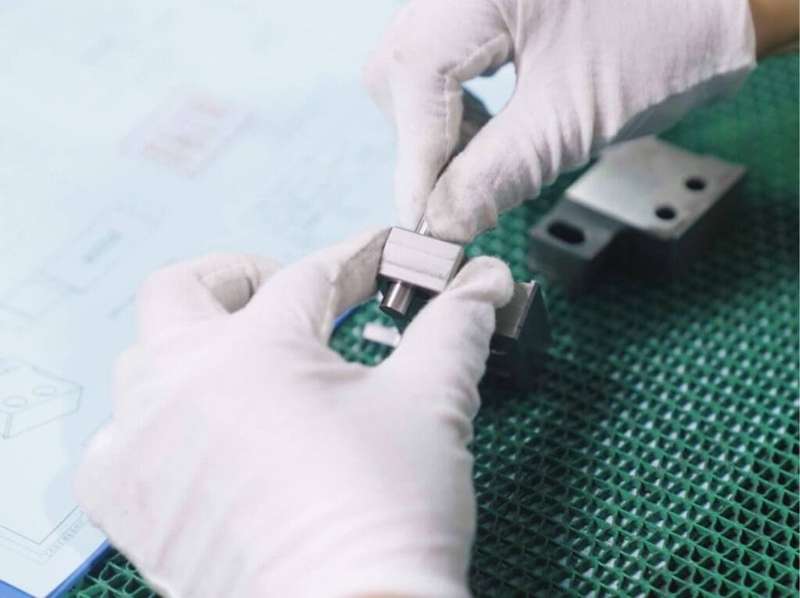
For high-volume orders, automation features like robotic part loading and in-process probing help maintain consistency. These capabilities directly affect rejection rates and delivery timelines.
What to Verify Before Committing
Machine age and maintenance records
Number of machines available for your part size
Experience with your material and tolerance range
In-house inspection equipment (CMM, vision systems)
Capacity for rush orders or split deliveries
YPMFG supports buyers who need high-volume CNC machining with consistent quality. Their engineering team reviews part geometry and material requirements before recommending the most efficient machine setup, helping avoid costly trial runs.
Material Options and Their Impact on Cost and Lead Time
Material selection directly affects machining speed, tool wear, and final part cost. In China CNC machining, the most commonly used materials fall into three categories.
Metals
Aluminum 6061 and 7075 – Fast machining, good strength-to-weight ratio, low tool wear
Stainless steel 303, 304, 316 – Corrosion resistant, slower cutting speeds, higher cost
Steel 1018, 1045,4140 – Strong and wear-resistant, moderate machinability
Brass C360 – Excellent machinability, often used for fittings and connectors
Plastics
ABS, Nylon, Delrin (POM) – Lightweight, good for prototypes and functional parts
PEEK, PTFE – High-performance plastics for extreme temperatures and chemical resistance
Choosing the Right Grade
The cheapest material is not always the most cost-effective. For example, aluminum machines faster than stainless steel, reducing cycle time. But if the application requires high strength or corrosion resistance, stainless steel may be the only viable option.
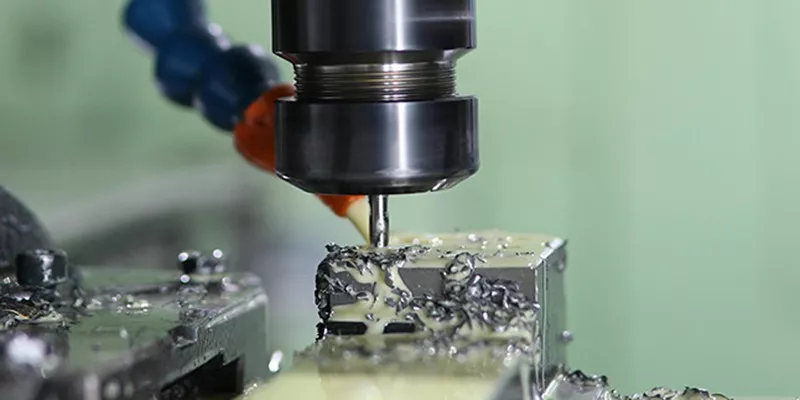
Material availability in China is generally excellent for standard grades. Specialty alloys or imported plastics may require longer lead times and higher minimum order quantities. Always confirm material certificates and traceability with your supplier.
For high-volume production, material cost per part is a significant factor. YPMFG helps buyers compare material options early in the quoting process, so there are no surprises when the order scales.
Quality Control Practices That Matter in Large Runs
Consistency across thousands of parts depends on repeatable inspection methods. In China CNC machining, quality control typically includes first article inspection, in-process checks, and final sampling.
Standard QC Steps
First Article Inspection (FAI) – Full dimensional check before production release
In-Process Inspection – Random or interval sampling during machining
Final Inspection – Sampling per AQL standards or 100% inspection for critical dimensions
Measurement Tools
CMM (Coordinate Measuring Machine)
Optical comparators
Height gauges and micrometers
Surface roughness testers
Common Risks in High-Volume Orders
Tool wear causing drift in dimensions over time
Material batch variation affecting machinability
Operator fatigue during long production runs
Inconsistent deburring or surface finish
To mitigate these risks, work with shops that document each inspection step and provide inspection reports with every shipment. YPMFG follows structured QC protocols and can adjust sampling plans based on part criticality and customer requirements.
Common Questions About China CNC Machining
How do I verify the quality of China CNC machining services?
Request a sample part or first article before full production. Ask for dimensional reports and material certificates. Shops with ISO 9001 certification typically follow documented processes, but always confirm their inspection equipment and sampling methods match your requirements.
What is the typical lead time for high-volume CNC orders from China?
Lead times vary by part complexity and material. Simple parts in aluminum can ship in 3-4 weeks after approval. Complex parts with tight tolerances or multiple operations may take 6-8 weeks. Factor in shipping time when planning inventory.
Can I mix multiple part numbers in one order?
Yes. Many suppliers offer blanket orders or kitting services that combine different parts into one production run. This reduces per-part setup costs and simplifies logistics. Confirm packaging and labeling requirements in advance.
What tolerances can China CNC machining hold?
Standard tolerances are typically ±0.005 inches or ±0.13 mm. For tighter requirements, precision shops can hold ±0.001 inches or ±0.025 mm on critical features. Always specify tolerance zones on your drawing.
How do I handle design changes during production?
Notify your supplier as early as possible. Minor changes may be absorbed without extra cost. Major changes could require new programming or fixturing, which adds time and expense. YPMFG reviews change requests with engineering to minimize disruption.
Is it cheaper to produce small batches in China?
For small batches under 100 parts, local machining may be more cost-effective when shipping and customs are included. China CNC machining becomes more competitive as order quantity increases, typically above 500 to 1,000 parts depending on complexity.
What documents should I provide when requesting a quote?
Send a 2D drawing with tolerances, material specification, surface finish requirements, and estimated annual volume. If you have a 3D model, include it for programming reference. Clear specifications reduce back-and-forth and improve quote accuracy.
How do I protect my intellectual property with a China CNC supplier?
Sign a non-disclosure agreement before sharing detailed documents. Work with suppliers who store digital files securely and do not subcontract work without approval. YPMFG treats customer designs as confidential and does not share drawings outside the project team.
Choosing the Right China CNC Machining Partner
High-volume CNC machining requires more than just low pricing. It demands a partner who understands production scalability, material behavior, and quality consistency. China CNC services can deliver strong value when the supplier’s capabilities align with your part requirements.
Start by defining your critical dimensions, material grade, and volume forecast. Share this information with multiple shops and compare their approach to setup, inspection, and communication. A supplier who asks questions during quoting is often more reliable than one who provides a quote immediately.
If you are evaluating options for your next production run, send your specifications to YPMFG for an engineering review. Their team can help you determine the most efficient machining strategy, recommend suitable materials, and provide a structured quote that includes lead time and inspection details.