
Quick answer:
Custom processing of brackets using sheet metal fabrication allows engineers to obtain parts with precise dimensions, specific material grades, and tailored geometries that standard catalog brackets cannot match. This approach is commonly used when load requirements, mounting configurations, or space constraints demand a non-standard solution. Choosing the right fabrication method directly affects part strength, assembly fit, and long-term cost — especially when production volumes range from prototypes to low- or mid-volume runs. Without a clear specification and a capable fabrication partner, the risk of dimensional errors, material waste, or delayed delivery increases significantly.
Many engineers and procurement professionals face a recurring challenge: standard bracket catalogs rarely match the exact hole pattern, bend radius, or material thickness required by their assembly. Custom sheet metal bracket fabrication solves this gap by producing parts that follow your CAD model precisely. Whether you need a single prototype for testing or a small batch for production, the ability to control every parameter — from material selection to edge treatment — means your final bracket fits correctly the first time. However, the quality of the result depends heavily on the fabricator’s ability to interpret your requirements and choose the right processing sequence.
What Is Custom Processing of Brackets in Sheet Metal Fabrication?
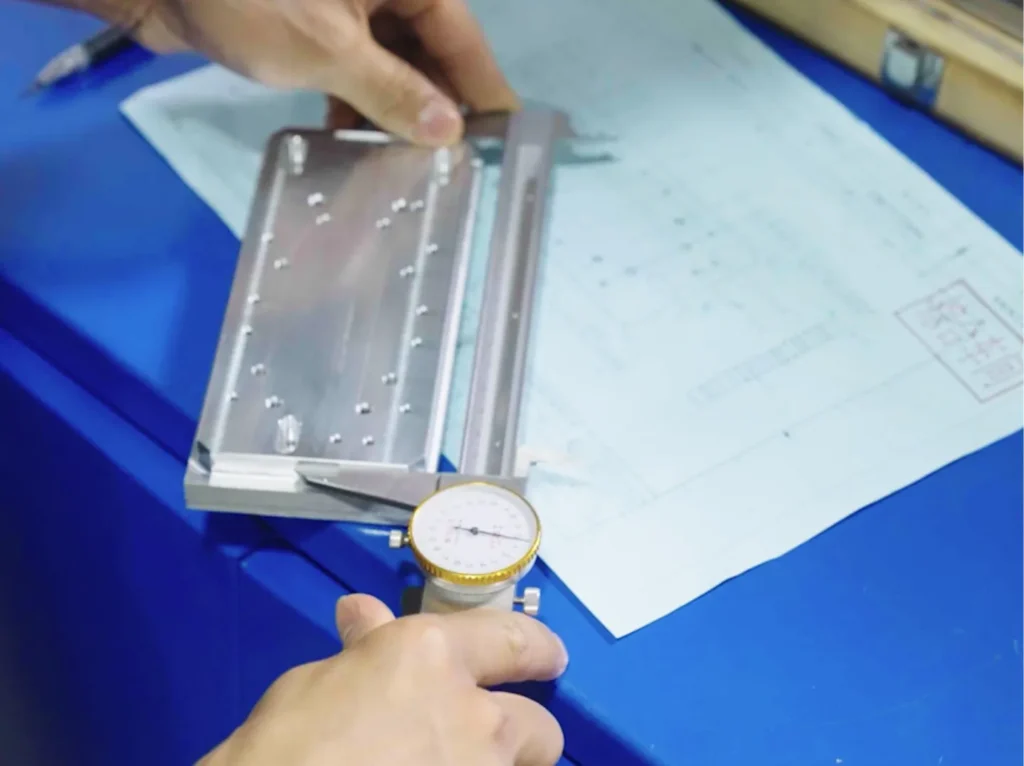
Custom processing refers to the manufacturing of brackets according to unique design specifications rather than from a standard product catalog. In sheet metal fabrication, this typically involves cutting, bending, forming, and finishing a flat metal sheet into a three-dimensional bracket that meets exact dimensional and functional requirements. The process begins with a CAD file or technical drawing that defines hole locations, bend angles, tolerances, and material type.
Unlike off-the-shelf brackets, custom-processed brackets are engineered for a specific application. This means every feature — from mounting slots to stiffening ribs — serves a purpose within the final assembly. The fabrication method is selected based on part complexity, quantity, and required precision.
Why Choose Custom Brackets Over Standard Options?
Standard brackets are limited to fixed geometries and pre-determined load ratings. When your mounting surface has an unusual angle or your equipment requires a non-standard hole pattern, a custom bracket becomes necessary. Custom fabrication also allows you to select the exact material grade, thickness, and surface finish for your operating environment.
For example, brackets used in outdoor or corrosive environments may require galvanized steel or stainless steel, while lightweight applications may call for aluminum. Standard catalogs rarely offer this level of material flexibility. Additionally, custom bracket design lets you optimize weight,reduce assembly steps, or consolidate multiple parts into one formed component.
Key Material Choices for Custom Brackets
Material selection directly affects bracket strength, weight, corrosion resistance, and fabrication cost. Below is a comparison of common materials used in custom sheet metal bracket fabrication.
Choosing the right material requires balancing mechanical requirements with fabrication feasibility. Thicker materials require more powerful press brakes and may limit achievable bend radii. Softer materials like aluminum are easier to form but may require protective tooling to avoid surface marks.
Common Fabrication Methods for Custom Brackets
The fabrication method chosen for your custom bracket depends on part geometry, tolerance requirements, and production volume. Each method has distinct advantages and limitations.
Laser cutting is the most common method for creating custom bracket profiles. It delivers tight tolerances, clean edges, and no tooling costs, making it suitable for prototypes and small to medium batches. For high-volume runs, punching may be more cost-effective.
Press brake forming creates bends by pressing the sheet metal between a punch and die. The achievable bend angle and radius depend on material thickness and tooling selection. For complex geometries with multiple bends, sequential forming or custom tooling may be required.
Welding is sometimes used to join multiple bracket sections or attach additional features like reinforcement ribs. However, welding introduces potential distortion and adds finishing steps. Where possible, single-piece forming is preferred to maintain dimensional consistency.
Critical Design Considerations for Custom Brackets
Designing a custom bracket for sheet metal fabrication requires attention to several key factors that affect both manufacturability and performance.
Bend radius must match the material thickness and tooling capability. A radius that is too tight can cause cracking, especially in harder materials. A general guideline is to specify a bend radius equal to or greater than the material thickness.

Hole placement near bend lines can cause distortion. Holes should be positioned at least two to three times the material thickness away from the bend line to maintain roundness and positional accuracy.
Tolerance requirements should be realistic for sheet metal processes. Typical tolerances for laser-cut profiles are ±0.1 mm, while formed bend angles are typically ±1 degree. Specifying tighter tolerances than necessary increases cost without functional benefit.
Edge finishing options include deburring, countersinking, or applying a protective coating. Sharp edges can be safety hazards or damage cables, so specifying edge treatment is important for final assembly.
Cost Factors in Custom Bracket Fabrication
Understanding cost drivers helps engineers make informed decisions during the design phase. The main factors influencing custom bracket fabrication cost include material type and thickness, part complexity, quantity, and surface finish requirements.
Material cost varies significantly between steel, stainless steel, and aluminum. Thicker materials also increase material cost and may require slower machine speeds. Part complexity — measured by the number of bends, cutouts, and tight tolerances — directly affects programming time and production cycle time.
Quantity plays a major role in unit cost. Prototype quantities (1–10 pieces) have higher setup cost per part, while small-batch production (50–500 pieces) allows cost to be spread across more units. For larger quantities, tooling investments like custom dies can reduce per-part cost significantly.
Surface finishing adds another cost layer. Powder coating provides durable protection and aesthetic options but involves preparation and curing time. Plating offers corrosion resistance but requires chemical processing. Not all finishes are compatible with all materials, so verifying compatibility with your fabricator early is advisable.
YPMFG supports engineers through this evaluation process by reviewing part geometry, material selection, and finishing requirements before quoting, helping identify cost-saving opportunities without compromising function.
Common Questions About Custom Bracket Processing
How do I specify tolerances for a custom sheet metal bracket?
Start with standard sheet metal tolerances — typically ±0.1 mm for laser-cut features and ±1 degree for bend angles. Only tighten tolerances where the assembly function requires it. Over-specifying tolerances increases cost without adding value. Review your fit requirements with your fabricator to confirm realistic ranges.
What file format should I provide for a quote?
Most fabricators accept STEP, IGES, or PDF drawings. A STEP file preserves 3D geometry and is preferred for accurate quoting. A 2D PDF drawing with dimension annotations helps clarify critical features like hole positions and bend angles. Including both formats is recommended.
Can custom brackets be made from pre-finished material?
Yes, pre-finished materials like pre-painted steel or anodized aluminum can be used. However, the fabrication process — particularly bending and welding — may damage the finish. If appearance is critical, post-fabrication finishing like powder coating is often a better choice.
What is the typical lead time for custom bracket fabrication?
Lead time depends on part complexity, material availability, and current shop workload. Simple brackets with standard materials can often be produced within 1–2 weeks. Parts requiring non-stock materials or complex forming sequences may take 3–4 weeks. Requesting an early engineering review can help identify lead time risks.
How many bends can a custom bracket have?
There is no fixed limit, but each bend increases setup time and potential for cumulative dimensional error. Typically, brackets with 2–6 bends are the most common. Beyond that, the fabricator may recommend breaking the design into multiple parts or using a different manufacturing method.
Is a prototype necessary before ordering production quantities?
For complex geometries or tight-fit applications, a prototype is highly recommended. Prototype fabrication verifies fit, form, and function before committing to full production. The cost of a single prototype is often far less than the cost of correcting errors in a full batch.
What is the minimum order quantity for custom brackets?
Many fabricators accept orders for single prototypes. Minimum order quantities for production runs vary by shop and part complexity. Some specialize in low-volume custom work and have no minimum, while others require a minimum batch to justify setup time. Confirming this early avoids surprises.
How do I know if my bracket design is optimized for fabrication?
A design is considered fabrication-friendly when it uses standard material thicknesses, specifies achievable bend radii, positions holes away from bend lines, and avoids unnecessary tight tolerances. Having your design reviewed by an experienced fabricator before finalizing the drawing is the most reliable way to confirm optimization.
Choosing the Right Fabrication Partner for Custom Brackets
Selecting a fabrication partner for custom processing brackets sheet metal fabrication involves evaluating their equipment capabilities, material sourcing, quality control, and engineering support. A partner who can review your design for manufacturability before production reduces the risk of costly revisions.
Look for a fabricator with experience in your industry and a track record of working with your target materials. The ability to handle multiple processes — cutting, forming, welding, and finishing — under one roof simplifies communication and shortens lead times. YPMFG offers exactly this integration, supporting projects from prototype evaluation through small-batch production.
When you are ready to move forward, the next step is straightforward. Send your CAD file or technical drawing to YPMFG for an engineering review and a competitive quote. Their team will assess your bracket geometry, material needs, and tolerance requirements, then provide clear recommendations before production begins. This approach ensures your custom brackets meet both technical specifications and budget expectations without unnecessary delays.