
Quick answer:
Custom CNC lathe milling and turning refer to subtractive manufacturing methods used to produce precision parts from metal, plastic, or composite materials. CNC milling removes material with rotating cutting tools, while CNC turning shapes workpieces on a rotating lathe. These processes are chosen based on part geometry, tolerance requirements, volume, and material type. YPMFG provides CNC machining services that combine both milling and turning capabilities to deliver complete, production-ready components. If you are looking for a reliable partner to handle your precision parts, understanding how these processes work is the first step.
Introduction
Many engineers and procurement specialists face a common challenge: knowing whether a part should go through milling, turning, or a combination of both. Without clear guidance, projects often experience delays, rework, or unnecessary costs. At YPMFG, we work closely with buyers across automotive, aerospace, industrial equipment, and medical sectors. Every engagement starts with the same question—what does this part require to meet its functional specifications? The answer usually involves understanding the differences between CNC turning and CNC milling, and knowing when each process adds value. This article breaks down those differences and gives you a practical framework for making better sourcing decisions.
Understanding CNC Milling and CNC Turning
CNC milling and CNC turning are two distinct subtractive machining processes, each suited to different part geometries.
CNC milling uses a stationary workpiece and rotating cutting tools to remove material. The tool moves along multiple axes—typically three to five—to create complex shapes, slots, holes, and contoured surfaces. A CNC milling machine is ideal for parts that require flat faces, intricate contours, or multiple features machined into a single block of material.
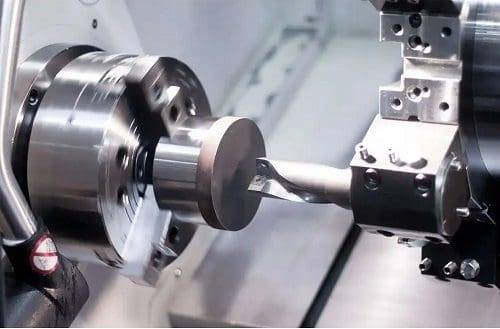
CNC turning operates on a different principle. The workpiece rotates at high speed while a stationary cutting tool shapes its outer or inner diameter. This process produces cylindrical or axis-symmetric components such as shafts, bushings, pins, and threaded rods. A CNC lathe is the primary equipment used for turning operations.
The choice between milling and turning—or a combination of both—depends entirely on your part design. Many components require combined milling and turning operations to achieve the final geometry. YPMFG evaluates each drawing to recommend the most efficient machining sequence.
When to Choose Milling,Turning, or Both
Selecting the right process starts with understanding the part’s shape and functional requirements.
If your component features flat surfaces, irregular contours, or multiple machined holes in non-symmetric positions, CNC milling is the appropriate choice. Examples include valve bodies, sensor housings, and structural brackets.
If your part is primarily cylindrical—with requirements around diameter, concentricity, or external threading—CNC turning is more efficient. Turned parts like drive shafts and hydraulic pistons can often be completed in a single setup on a lathe.
For parts that combine both cylindrical features and complex milled surfaces, a multi-process approach is necessary. YPMFG routinely handles hybrid CNC machining where turning and milling operations are sequenced on combined machine centers. This approach reduces the number of setups, improves accuracy, and shortens lead times.
When evaluating your project, consider the following:
Does the part have rotational symmetry, or is it block-style?
Are there features that cannot be reached by a lathe tool?
Would combining operations on one machine improve tolerance control?
What is the required surface finish for each feature?
Answering these questions early helps your supplier provide an accurate quote and a realistic production timeline.
Materials Used in Custom CNC Machining
Material selection significantly affects machinability, final part performance, and unit cost. YPMFG works with a wide range of metals and engineering plastics commonly used in industrial applications.
Metals frequently machined include aluminum alloys such as 6061 and 7075, stainless steels like 303, 304, and 17-4 PH, brass, copper, titanium grades, and tool steels. Each material offers different strengths, corrosion resistance, and weight characteristics.
Plastics such as PEEK, POM, Nylon, and PTFE are selected when electrical insulation, chemical resistance, or lightweight properties are required.
Material choice should align with the part’s operational environment. A component exposed to high temperatures may require a specialty alloy, while a general-purpose bracket may perform adequately in standard aluminum. Discuss your application conditions with your supplier so the material recommendation is based on real performance needs rather than assumption.
Tolerances and Surface Finish Requirements
Precision specifications are often the deciding factor in process selection and cost estimation.
Standard CNC milling tolerances typically range from ±0.025 mm to ±0.1 mm, depending on part size and machine capability. CNC turning tolerances can achieve ±0.01 mm to ±0.05 mm for diameters on production-grade lathes. Tighter tolerances are possible but require specialized equipment and additional machining passes.
Surface finish is measured in Ra values. Common requirements fall between 0.8 µm and 3.2 µm Ra for functional surfaces. Aesthetic or seal-contact surfaces may require finishes as low as 0.4 µm Ra, achieved through grinding, polishing, or superfinishing operations.
When submitting a drawing, clearly specify which dimensions carry tight tolerances and which surfaces have finish requirements. Over-specifying tolerances across an entire part increases cost without improving performance. A targeted specification approach ensures you pay only for the precision your application actually needs.
Cost Factors in Custom CNC Machining
Understanding what drives machining costs helps buyers evaluate quotes more effectively and negotiate from a position of knowledge.
Several factors influence the final price of a custom CNC machined part:
Part complexity: More axes and setups increase machining time and cost.
Material choice: Exotic metals and engineering plastics cost more than standard aluminum or steel.
Tolerance levels: Tighter tolerances require slower cutting speeds and additional inspection.
Surface finish: Higher finish requirements add secondary operations.
Production volume: Setup costs are amortized across larger batches, reducing per-unit price.
Lead time: Rush orders often carry a premium.
Requesting quotes from multiple suppliers with identical specifications allows for fair comparison. Be cautious of quotes that appear significantly lower than the market average, as they may reflect compromised tooling, unverified quality processes, or hidden charges added later.
How to Prepare a Machining Project for Quote
Submitting a well-documented request accelerates the quoting process and reduces the chance of miscommunication.
At minimum, provide the following information:
A complete engineering drawing with GD&T annotations
Material specification and any heat treatment requirements
Quantity and target delivery timeline
Surface finish requirements for critical features
Any post-machining operations such as anodizing, plating, or threading
YPMFG offers free engineering evaluation for new projects. Our team reviews drawings for manufacturability and suggests modifications that can reduce cost without sacrificing function. Early feedback on design-for-manufacturability issues often saves significant time during production.
Quality Control and Compliance
Quality assurance practices separate professional machine shops from amateur operations. Reputable suppliers implement documented quality management systems and perform inspections at multiple stages.
Key quality practices include first article inspection using CMM measurement, in-process monitoring, and final verification against drawing specifications. Traceability of raw material batches ensures that every shipped part can be linked back to its source certificate.
While specific certifications vary by industry, many customers require compliance with standards such as ISO 9001 for quality management. Medical and aerospace applications may demand additional controls under AS9100 or IATF 16949. Always verify that your supplier’s quality system matches your regulatory requirements before placing an order.
Common Mistakes to Avoid When Sourcing CNC Parts
Several recurring errors can derail a machining project if not addressed early.
Mistake 1: Submitting incomplete drawings. Missing tolerances or ambiguous surface finish calls force the machine shop to guess, which often leads to parts that do not meet expectations.
Mistake 2: Specifying unrealistic tolerances. Tight tolerances everywhere increases cost dramatically. Apply precision only where function demands it.
Mistake 3: Ignoring material machinability. Some materials are difficult to machine and require specialized tooling. Your supplier should flag these issues before production begins.
Mistake 4: Choosing solely on price. The lowest quote may come from a shop without proper quality controls, resulting in scrap, rework, and delayed shipments.
Mistake 5: Not requesting a design review. A professional supplier will identify features that are expensive to produce and suggest simpler alternatives. Skipping this step means missing an opportunity to optimize your design.
Avoiding these mistakes requires an informed buyer. Take time to understand the basics of CNC part manufacturing before engaging with suppliers. Knowledge empowers better negotiation and clearer communication.
Practical Questions Buyers Often Ask About CNC Machining
What is the difference between CNC milling and CNC turning?
CNC milling uses rotating cutting tools on a stationary workpiece to create complex shapes. CNC turning rotates the workpiece against a stationary tool to produce cylindrical parts. Each process excels at different geometries.
Can a single shop handle both milling and turning?
Yes. Many facilities, including YPMFG, offer combined CNC machining on multi-tasking machine centers. This allows sequential milling and turning operations without transferring parts between machines, which improves accuracy and reduces handling time.
How long does a typical custom CNC machining project take?
Lead times depend on part complexity, material availability, and order quantity. Simple turned parts may ship within days, while complex milled assemblies can take several weeks. Always confirm the delivery schedule before approving the order.
What documentation should I provide for a quote?
Submit a complete engineering drawing with material, tolerance, and surface finish calls. Additional documents such as material certificates, inspection reports, or compliance requirements help the supplier prepare an accurate estimate.
How do I verify part quality upon delivery?
Request a first article inspection report and material test certificates with your order. If possible, arrange for incoming inspection using your own CMM or calibrated measuring tools. A reliable supplier will welcome these requests.
Can I request samples before committing to full production?
Yes. Most suppliers offer prototype or sample runs to validate design and quality before mass production. Sampling reduces risk and gives you confidence in the manufacturing partner.
Making a Better Long-Term Decision
Choosing the right partner for custom CNC lathe milling turning services comes down to technical competence, quality discipline, and clear communication. The processes discussed in this article—milling, turning, and their combination—each serve specific part geometries and performance requirements. Understanding which process applies to your design, what tolerances are reasonable, and which cost drivers matter most will help you evaluate quotes with confidence.
YPMFG supports buyers at every stage, from initial design review through final delivery. You can send your specifications to YPMFG for engineering assessment, request a detailed quotation, or discuss how our capabilities align with your production needs. Starting the conversation early often reveals opportunities to simplify your design and reduce overall project cost.