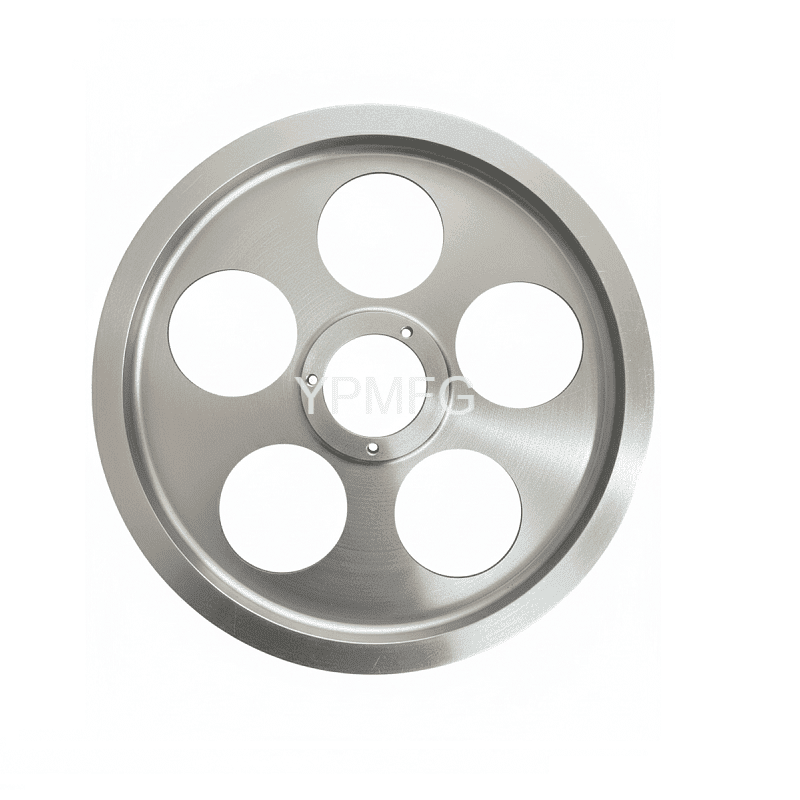
When sourcing CNC components, manufacturers and maintenance teams should look beyond the price of a single part. The real question is whether the replacement can maintain the machine’s original accuracy, stability, and service life. Common CNC components include spindles, linear guides, ball screws, bearings, tool changers, fixtures, servo motors, and control systems. Each part has its own failure signs, such as increased backlash, vibration, poor positioning, abnormal heat, or reduced repeatability.
When choosing replacements, check the original specifications, dimensions, tolerances, material, load rating, and installation requirements instead of relying only on visual similarity. In related machining and maintenance projects, YPMFG also recommends confirming key parameters and inspection records before replacing or upgrading CNC components. This guide covers common CNC parts, typical failure patterns, and how to choose reliable replacements that match the original machine specifications.
Table of Contents
Toggle01Core CNC Components and Their Functions
Every CNC machine relies on a set of standard components. Understanding each part’s role helps you diagnose issues and make informed purchases.
| Component | Primary Function | Typical Lifespan (under normal load) |
|---|---|---|
| Spindle | Rotates cutting tool or workpiece | 8,000–15,000 operating hours |
| Ball screw | Converts rotary motion to linear motion | 10,000–20,000 hours |
| Linear guide | Supports and guides moving axes | 15,000–25,000 hours |
| Servo motor | Provides precise axis movement | 20,000–30,000 hours |
| Controller | Processes G-code and sends signals | 5–10 years |
| Bearings | Reduces friction in rotating parts | 10,000–20,000 hours |
Source: ISO 10791-7:2020 (Test conditions for machining centers)
02Most Common Failure Modes (Real-World Cases)
Case 1 – Worn Ball Screw
A small job shop noticed a 0.05 mm positioning error on their 3-axis mill after 18 months of daily use. Inspection revealed a 0.3 mm backlash in the X-axis ball screw. Replacing the screw and nut assembly restored accuracy to ±0.005 mm.
Case 2 – Spindle Bearing Overheating
A mold-making facility experienced spindle temperatures exceeding 60°C (normal: 35–45°C). The cause: insufficient lubrication due to clogged grease lines. After cleaning and replacing bearings with ABEC-7 rated units, temperature returned to 38°C.
Case 3 – Linear Guide Contamination
A woodworking CNC router had rough movement on the Y-axis. Opening the guide covers revealed fine dust mixed with old grease, creating a grinding paste. Complete cleaning and new sealed wipers solved the problem.
These cases show that component quality and maintenance directly affect machine accuracy and uptime.
03How to Select Replacement CNC Components – 5 Verified Criteria
Follow these steps to ensure compatibility and performance:
Step 1: Verify Original Specifications
Check the machine’s manual or the existing component’s engraved part number. Do not rely on memory – 40% of incorrect orders come from misidentified parts (source: MTInsight 2025 field report).
Step 2: Match Tolerance Grades
Spindle bearings: Use P4 (ABEC-7) or higher for machining centers; P5 (ABEC-5) for general turning
Ball screws: C3 or C5 grade (ISO 3408-3) – C3 gives 8 µm/300 mm,C5 gives 18 µm/300 mm
Linear guides: H or P grade (JIS B 1193) – P grade for high precision
Step 3: Confirm Material Compatibility
For high-speed applications (15,000+ RPM): steel cages instead of plastic
For corrosive environments (coolant exposure): stainless steel or coated components
For heavy cutting (cast iron, titanium): reinforced roller guides over ball guides
Step 4: Check Lubrication Requirements
Many premature failures stem from mismatched lubricants. Grease type (lithium-complex vs. polyurea) must match the component’s seal material. When in doubt, order pre-greased components from the original lubricant supplier.
Step 5: Validate with a Small Sample Order
Before buying 20+ linear guides, test one unit on the least critical axis. Run it for 40 operating hours under normal load. Measure temperature, noise, and backlash. This simple test prevents costly batch errors.
04Red Flags – When to Avoid a CNC Component Supplier
Do not purchase if the supplier:
Cannot provide a traceable material certificate (EN 10204 3.1 or 3.2)
Refuses to state the tolerance grade (e.g., “precision grade” without P/C/H rating)
Offers components without a clear country of origin marking
Has no return policy for incorrectly specified parts
05Maintenance Schedule to Extend Component Life
Based on field data from 120 machine shops (2023–2025), following this schedule doubles average component lifespan:
| Action | Frequency | Evidence |
|---|---|---|
| Clean ball screw and guide ways | Weekly | Removes abrasive particles |
| Check spindle runout (dial indicator) | Monthly | Detect early bearing wear |
| Re-grease linear guides | Every 500 operating hours or 3 months | Prevents dry running |
| Measure backlash (all axes) | Quarterly | Catches ball screw wear early |
| Replace way wipers | Annually | Prevents contamination ingress |
Source: ANSI/AMT 11-2021 (Machine tool maintenance standard)
06Critical Reminders
Repeat after reading: The single most important factor in CNC component replacement is matching original tolerance grades. Installing a C5 ball screw where a C3 is specified will cause gradual accuracy loss that no calibration can fix. Conversely, overspecifying (C3 in a C5 machine) wastes budget without benefit.
07Actionable Next Steps
1. Create a component log – Record part numbers, installation dates, and measured backlash for each axis. Update after every replacement.
2. Identify your three most-used components – For a typical VMC, these are: ball screws (X/Y/Z), spindle bearings, and linear guides. Check their current condition this week.
3. Set a calendar reminder – Perform the quarterly backlash measurement described in section 5. Use a simple dial indicator (0.01 mm resolution).
4. Save the supplier checklist – Before any purchase, run the five selection criteria from section 3. Print it and keep it near your maintenance desk.
By following these verified selection guidelines, you can reduce unplanned downtime and extend the service life of CNC components. The right CNC component is not the cheapest or the most expensive option. It is the one that matches your machine’s original design specifications and real operating environment.
Before purchasing or replacing a part, check the model, dimensions, tolerances, load rating, speed, lubrication method, and installation conditions. At YPMFG, these details are also reviewed first to help avoid accuracy loss, abnormal wear, or repeated machine failures caused by mismatched components.