
Quick answer:
CNC black anodized aluminum profiles combine precision CNC machining with a durable, corrosion-resistant black anodized finish. They are widely used in industrial applications that require tight tolerances, wear resistance, and a consistent appearance. The black anodizing process creates a protective oxide layer that is harder than the base aluminum and does not chip or peel like paint. However, the success of the final part depends on material selection, machining tolerances, anodizing thickness, and the supplier’s ability to manage both mechanical and surface requirements.
If you are sourcing CNC black anodized aluminum profiles for an industrial project, you already know that surface finish is not just cosmetic. In many cases, the anodized layer affects part fit, thermal properties, and long-term durability. Yet many buyers focus only on the initial price or lead time, only to discover that the anodizing quality does not meet their application requirements. This article explains what controls the quality, cost, and reliability of black anodized CNC profiles, and how to evaluate your options before placing an order.
What Are CNC Black Anodized Aluminum Profiles?
CNC black anodized aluminum profiles are aluminum extrusions or machined components that have been milled, turned, or cut using CNC machining, then treated with a black anodized finish. The anodizing process converts the outer surface of the aluminum into a dense, corrosion-resistant oxide layer. This layer can be dyed black and sealed to achieve a uniform, long-lasting color.
The base material is typically 6061 or 6063 aluminum, both of which respond well to anodizing. The black finish is not a coating that sits on top of the metal — it becomes part of the aluminum structure. This means the finish cannot peel, flake, or chip under normal use, making it suitable for demanding industrial environments.

Why Black Anodizing Is Different from Other Finishes
Black anodizing offers several advantages over painted or powder-coated finishes. The anodized layer is much harder — typically 60–70 Rockwell C — and provides excellent wear resistance. It also improves the aluminum’s natural corrosion resistance, especially in humid or mildly corrosive environments.
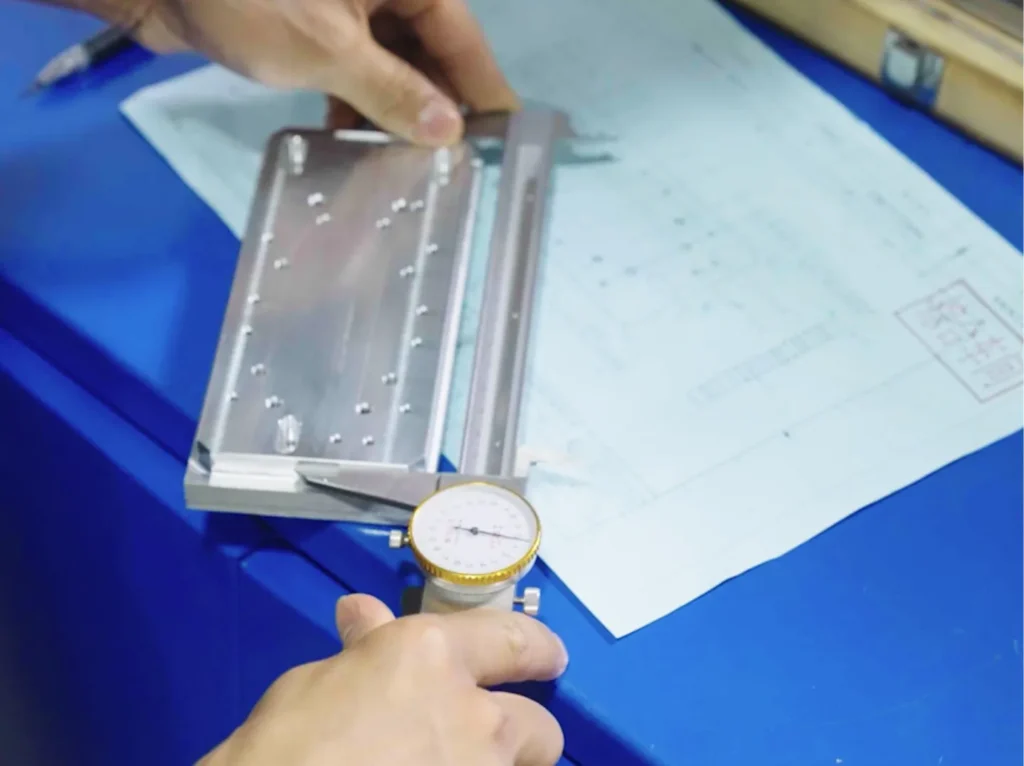
Another key difference is dimensional change. The anodizing process grows the oxide layer outward from the aluminum surface, which can add 0.0005 to 0.001 inches per surface depending on the coating thickness. If your CNC machining tolerances are tight, this change must be accounted for in the pre-anodizing machining dimensions. Experienced suppliers can adjust the machining parameters to ensure the final part meets your specification after anodizing.
Key Factors That Affect Quality and Cost
Several variables directly influence the quality and cost of CNC black anodized aluminum profiles:
Material grade: 6061-T6 offers higher strength; 6063-T5 offers better extrudability and a smoother finish.
Surface preparation: A consistent surface finish before anodizing is critical for uniform color. Scratches, tool marks, or inconsistent surface roughness will show after anodizing.
Anodizing thickness: Typical thickness ranges from 0.0002 to 0.001 inches. Thicker coatings improve wear resistance but increase dimensional change and cost.
Dye quality and sealing: Lower-quality dyes may fade over time, and poor sealing can reduce corrosion resistance.
Part geometry: Complex internal features, deep holes, or sharp corners may cause uneven anodizing coverage.
YPMFG can help buyers evaluate these factors early in the process, adjusting machining and finishing parameters to match the specific application.
Common Applications in Industry
Black anodized CNC profiles are used in a wide range of industrial applications where appearance, durability, and precision are required. Common examples include:
Automation and robotics frames – Lightweight, rigid, and wear-resistant.
Electronic enclosures – Black finish reduces light reflection and improves heat dissipation.
Optical and laser equipment mounts – Non-reflective surface and tight tolerances.
Medical device components – Corrosion resistance and clean appearance.
Aerospace and defense fixtures – Dimensional stability and surface hardness.
Each application places different demands on the anodizing quality, tolerance control, and material selection. Understanding your specific use case helps avoid mismatches between the part and its intended environment.
How to Choose a Supplier for Black Anodized CNC Profiles
Not all CNC machining shops have the same capability when it comes to black anodizing. The following factors should be evaluated when selecting a supplier:
YPMFG supports industrial buyers by reviewing part specifications, recommending appropriate material and finishing parameters, and providing engineering evaluation before production begins.
Questions Buyers Often Ask About Black Anodized CNC Profiles
Will black anodizing affect my part tolerances?
Yes. The anodizing process grows the oxide layer outward, typically adding 0.0005 to 0.001 inches per surface. Your supplier must account for this by adjusting machining dimensions before anodizing.
Can I rework a part after it has been anodized?
Reworking is difficult after anodizing. The oxide layer is very hard and removing it will expose raw aluminum, creating a visible difference. Any machining should be completed before anodizing.
Is black anodizing resistant to UV fading?
Black anodized parts that are properly dyed and sealed have excellent UV resistance. However, exposure to direct sunlight for extended periods may cause some fading, depending on dye quality.
What aluminum grades are best for black anodizing?
6061 and 6063 are the most common choices. 6061 is stronger, while 6063 produces a smoother finish. Both respond well to black anodizing when properly prepared.
Does black anodizing change the material’s thermal properties?
The anodized layer is a good electrical insulator and has a lower thermal conductivity than bare aluminum. For applications that require heat dissipation, the anodizing thickness should be specified carefully.
How do I specify anodizing thickness on my drawing?
You can specify MIL-A-8625 Type II,Class 2 (dyed black) and indicate the required coating thickness range. Most industrial applications use a thickness of 0.0004 to 0.0008 inches.
Can black anodized parts be welded after anodizing?
No. The anodized layer must be removed before welding, and the weld area will need to be re-finished. It is generally better to weld before anodizing.
How do I know if the anodizing quality is consistent?
Request a quality report that includes coating thickness measurements, sealing quality test results, and visual inspection records. A reputable supplier will provide these on request.
Making the Right Choice for Your Industrial Application
Choosing the right CNC black anodized aluminum profile supplier is not just about getting the lowest price. The real value comes from working with a partner who understands how material selection, machining tolerances, and anodizing parameters interact to produce a reliable, high-quality part.
If your current supplier struggles with inconsistent color, dimensional issues after anodizing, or long lead times, it may be time to re-evaluate your sourcing strategy. YPMFG provides engineering support, custom solutions, and production capability for projects that require precision CNC machining combined with a consistent black anodized finish.
Send your specifications to YPMFG for an engineering review and a practical recommendation tailored to your application.