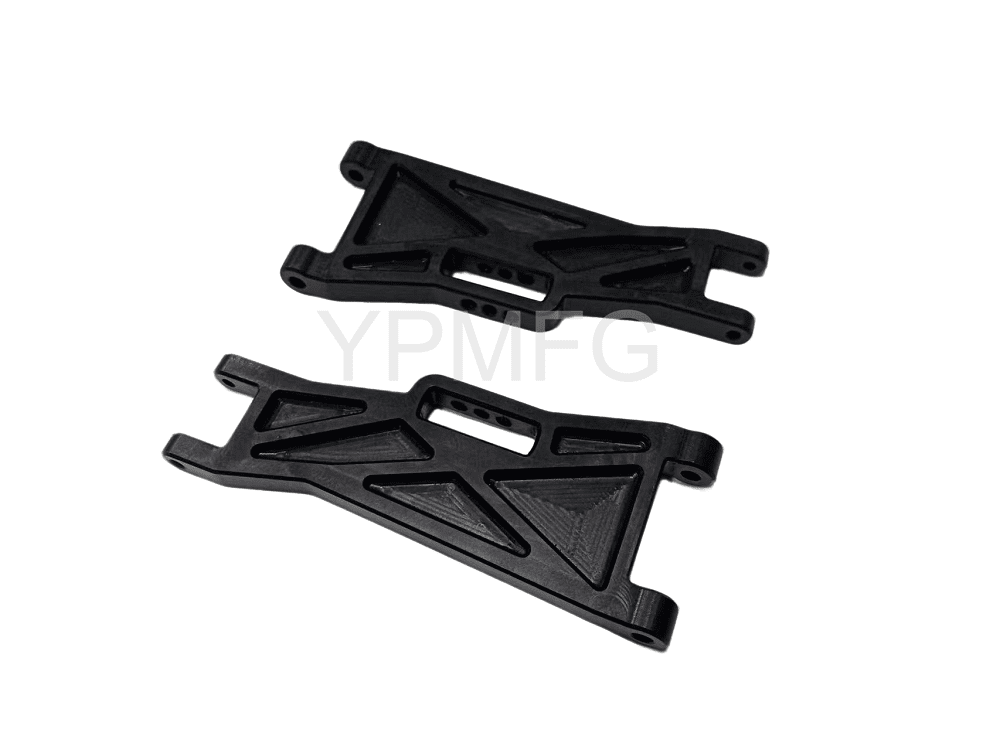
Selecting the right hardware accessory parts is critical for product performance and safety. Poor-quality parts often lead to equipment failure, increased maintenance costs, or even safety hazards. This guide provides clear, actionable steps to identify, evaluate, and source hardware accessory parts that meet industry standards, based on real-world cases and verified practices.
01 What Are Hardware Accessory Parts?
Hardware accessory parts refer to the functional components that support, connect, fasten, or enhance a primary mechanical or structural product. Common examples include screws, nuts, bolts, washers, hinges, handles, brackets, casters, springs, pins, and clips. These parts are typically made from metals (steel, stainless steel, aluminum, brass) or engineering plastics (nylon, acetal, polycarbonate).
02 Why Quality Matters: A Real Case
A mid-sized furniture manufacturer experienced a 12% product return rate due to loose screws and failing drawer slides. Investigation revealed that the hardware accessory parts – specifically M4 cross-recessed screws and 14-inch slide rails – had inconsistent thread dimensions and substandard surface treatment. After switching to parts with certified material grades and dimensional compliance, return rates dropped to 1.8% within three months. This case illustrates that even small parts directly determine product reliability and brand reputation.
03 Four Core Criteria for Evaluating Hardware Accessory Parts
1. Material Specification and Traceability
Required documentation : Mill test reports (MTR) per ASTM/EN/JIS standards.
For steel parts : Grade markings (eg, Grade 8.8, 10.9, 12.9 for bolts).
For stainless steel : A2 (304) or A4 (316) designation.
For plastic parts : Full material name (eg, PA66+GF30%) and UL flammability rating.
Verification method : Request supplier-provided material certificates and cross-check with independent lab reports where possible.
2. Dimensional Accuracy and Tolerances

Industry reference standards : ISO 2768-m for general tolerances, or ANSI B4.1 for fit classes.
Critical checks : Thread pitch (eg, M6 x 1.0 vs. 1.25 – non-interchangeable), head height, across-flats distance, and hole alignment.
Common failure example : A batch of M5x0.8 socket head cap screws with an actual pitch of 0.85 mm caused stripped threads in 40% of assembled units. Always verify with a go/no-go gauge or certified thread ring.
3. Surface Finish and Corrosion Resistance
For indoor applications : Zinc plating (clear, yellow, or black) with 72–96 hours salt spray resistance (ASTM B117).
For outdoor or humid environments : Hot-dip galvanizing (≥65µm thickness), or stainless steel 316.
Coating defects to reject : Blisters, flaking, exposed base metal, or inconsistent color.
Test method : Cross-cut adhesion test (ISO 2409) and salt spray chamber testing for quoted hours.
4. Supplier Process Control and Certification
Minimum required credentials : ISO 9001:2015 certification for quality management.
Recommended for critical applications : IATF 16949 (automotive), AS9100D (aerospace), or ISO 13485 (medical devices).
What to ask for : Control plans, incoming material inspection records, in-process inspection checklists, and final audit reports.
Red flags : No lot traceability, unwillingness to provide dimensional reports, or inability to name the steel mill origin.

04 Step-by-Step Sourcing Process for Hardware Accessory Parts
Step 1 – Define technical requirements clearly
Create a specification sheet that includes: part name, material grade, dimensions (with tolerances), surface finish, required standards, and quantity. Example: “Hex head bolt, M10×1.5×50mm, Grade 10.9, zinc yellow plating 8µm, ISO 4014, 5000 pcs.”
Step 2 – Pre-screen suppliers
Use platforms that require verified certifications (eg, ISO 9001). Exclude suppliers who cannot provide material certificates or have no quality manual.
Step 3 – Request samples and test reports
Always ask for at least 10 sample pieces plus a full dimensional report (CMM or micrometer measurements) and material certificate. For critical parts, order a pilot lot of 50–200 pieces to test in your actual assembly line.
Step 4 – Conduct a simple incoming inspection
Even with certified parts, perform random checks:
Measure outer diameter and length with calipers.
Test thread fit with a go/no-go gauge.
Check surface finish visually under good lighting.
Step 5 – Maintain lot traceability
Record the supplier's lot number, date received, inspection results, and which production batch the parts were used in. This allows rapid recall if an issue emerges later.
05 Common Mistakes That Lead to Part Failure
06 Actionable Recommendations to Secure Reliable Hardware Accessory Parts
1. Create a standardized part approval form that includes material, dimensions, finish,certification requirements, and test frequency. Use this for every new part.
2. Audit your top three suppliers annually – focus on their incoming material control, in-process gauging, and final inspection records.
3. Invest in basic measurement tools – a digital caliper (±0.01mm), thread plug/ring gauges for your most common sizes, and a salt spray test kit (approx. $500 for a simple chamber) or outsource testing to a local lab.
4. Require a Certificate of Conformance (CoC) with every shipment, stating that the parts meet your specified standards. The CoC must be signed by the supplier's quality manager.
5. Keep a non-conformance log – record every rejected part, the reason, and supplier corrective action. Review this log quarterly to identify recurring weak suppliers.
07 Final Core Principle
Hardware accessory parts are not commodities – they are precision components that directly affect your product's safety, longevity, and customer satisfaction. Always prioritize verified material data and dimensional conformity over lowest price. Apply the four evaluation criteria (material, dimension, finish, process control) before every purchase, no matter how small the part seems.
Action item today : Download or create a simple “Supplier Qualification Checklist” based on the four criteria above. Use it for your next hardware accessory parts order – even for a small batch – and track how many potential issues you identify before production.