
When sourcing aluminum turning parts, selecting the right machining service directly determines your part quality, cost, and lead time. Based on thousands of real-world projects, four critical factors consistently separate successful outcomes from costly rework: material grade selection, dimensional tolerance control, surface finish requirements, and quality verification protocols. Ignoring any of these leads to rejected parts, production delays, and budget overruns.
01Material Grade: Match the Aluminum Alloy to Your Application
Aluminum turning parts fail prematurely when the wrong alloy is used. Common mistakes include substituting 6061 for 7075 in high-stress components, resulting in deformation under load.
Industry-standard aluminum grades for turning:
6061-T6: General-purpose, good machinability, corrosion resistance. Use for frames, brackets, fittings.
7075-T6: High strength (comparable to mild steel). Use for aerospace, high-stress mechanical parts.
2024: Excellent fatigue resistance. Use for structural aircraft components.
5052: Superior corrosion resistance, good formability. Use for marine and chemical environments.
Case example: A medical device manufacturer ordered 7075 aluminum turning pins but received 6061 parts due to the service provider’s unspecified material sourcing. The pins bent during assembly testing, causing a 3-week production halt and $18,000 in expedited rework costs.
Actionable check: Specify exact ASTM or EN standard (e.g., ASTM B211 for 6061) on your purchase order. Require material test reports (MTRs) with each shipment.
02Dimensional Tolerances: Define What You Actually Need
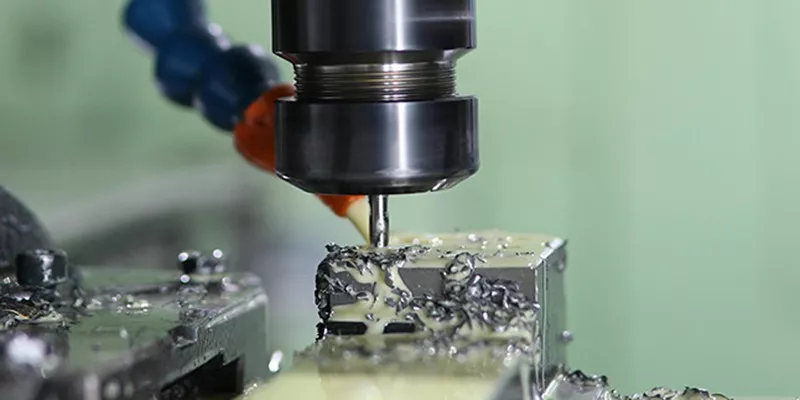
Over-specifying tolerances increases machining time and cost by 30–50%. Under-specifying leads to loose fits or non-functional assemblies.
Standard tolerance classes for turned aluminum parts (per ISO 2768-1):
Critical dimensions to control:
Shaft diameters (for bearing fits: H7/g6, H7/f7)
Threads (ISO metric, UNF, UNC)
Concentricity (for rotating parts)
Perpendicularity (for shoulder faces)
Case example: A robotics company requested “tight tolerances” without specifying values. The machining service held ±0.01mm on all features, doubling the quoted price. After reviewing the actual assembly, only the bearing journal (±0.005mm) and two locating diameters (±0.02mm) required high precision—the rest could be ±0.1mm, reducing cost by 42% on subsequent orders.
Actionable check: List only functionally necessary tight tolerances. Use ISO 2768-m for general dimensions. Request a capability chart from your service provider showing their standard and achievable tolerances for aluminum.
03Surface Finish: Specify Ra Values and Post-Processing
Turned aluminum parts often require specific surface finishes for sealing, sliding contact, or aesthetic reasons. The as-turned finish (typically Ra 1.6–3.2µm) may be insufficient.
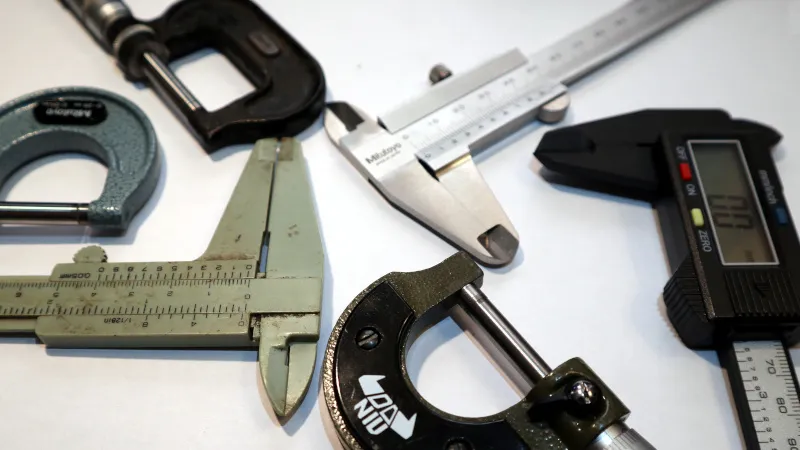
Common surface finish requirements:
Case example: A hydraulic fitting manufacturer received aluminum turning parts with as-turned finish (Ra 2.5µm) for an O-ring groove. The seals leaked at 2000 psi. After switching to a service that diamond-turned the groove to Ra 0.6µm, all leak tests passed without any design change.
Actionable check: Specify Ra value and measurement direction (parallel/perpendicular to lay). For anodized parts, require surface finish measurement before anodizing—anodizing typically increases roughness by 0.1–0.3µm.
04Quality Verification: Demand Documentation, Not Promises
Without documented inspection, you have no evidence that your aluminum turning parts meet specifications. Verbal assurances are worthless when a part fails in service.
Minimum required quality documents for any aluminum turning order:
First article inspection report (FAIR): Complete dimensional check of first part, per AS9102 or PPAP format
Material test report (MTR): Certifying alloy composition and temper
In-process inspection records: Critical dimensions checked during production
Final inspection certificate: Signed by quality manager, referencing your drawing revision
Case example: An automotive supplier ordered 5000 aluminum turning pins with a 0.02mm concentricity requirement. The machining service provided a generic “certificate of conformance” but no data. After assembly, 12% of pins caused bearing noise. Investigation revealed the service used a worn collet that introduced 0.08mm runout. Without inspection records, the supplier could not claim damages and had to sort 5000 parts manually at $4,000 cost.
Actionable check: Write into your purchase order: “Supplier must provide FAIR with actual measured values for all drawing dimensions. Random sampling (AQL 1.0) with inspection records required for production lot.” Reject any service that refuses to provide measurement data.
05Repeat Core Principle: Match Capability to Requirement
The most expensive machining service is not the one with the highest hourly rate—it is the one that delivers non-conforming parts. Conversely, paying for ultra-precision tolerances on non-critical features wastes capital. Success comes from clearly defining what you need in material, tolerance, finish, and verification,then selecting a service whose standard processes align with those needs.
06Actionable Conclusion: 5-Step Plan for Your Next Aluminum Turning Order
1. Define your alloy – Write the exact ASTM/EN grade and temper on the drawing.
2. Specify only critical tolerances – Use ISO 2768-m for all others. Mark critical dimensions with ⌀ tolerance or note.
3. State surface finish – Write Ra value and “as-turned” or “finish turned” with any post-processing.
4. Require inspection documents – FAIR, MTR, and final certificate as non-negotiable conditions.
5. Audit with a sample – Order 5–10 pieces first. Inspect fully before approving production quantities.
Apply these four keys—material, tolerance, finish, verification—to every aluminum turning parts project. You will eliminate the most common causes of rejection, reduce hidden costs, and consistently receive parts that assemble correctly the first time.