Quick answer:
CNC prototyping is a transformative service for businesses that must validate designs before committing to expensive production tooling. It allows you to produce functional, precise parts from CAD data in days or weeks, not months. For a process where schedule compression means market advantage, choosing a supplier with materials expertise and application-specific engineering is not optional. The risk of selecting a partner solely on price for CNC prototyping often results in delayed feedback loops and compromised long-term product quality even before full-scale manufacturing begins.
When executive decisions rely on tangible evidence, virtual models are insufficient. Prototyping with computer numerical control (CNC) machining provides the physical, adjustable component that dictates process reliability, supply chain familiarity, and final design performance. This is where choosing a service like what YPMFG offers, which aligns with your strategic goals of secure design iteration and predictable progress, fundamentally shapes the commercial realization of your product.
Table of Contents
1. What is the Composition of CNC Prototyping?
2. How Does the CNC Prototyping Workflow Differ from Production?
3. What are the Primary Design and Material Considerations?
4. How Do You Determine Optimal Part Tolerances for Prototyping?
5. Specialist Requirements and Surface Finishes
6. How to Strategically Evaluate a CNC Prototyping Partner
7. Considering the Cost and Time Dynamics
8. Common Questions About CNC Prototyping
Every project is about the journey from concept to revenue. CNC prototyping asks whether the foundational assumptions of your entire project are correct. You must verify not just one requirement but a complete system of interrelated dependencies. Incomplete verification can cost months of schedule and significant capital outlay, which is why the process itself demands specialist oversight from companies with a history of technical compliance across development cycles.
01What is the Composition of CNC Prototyping?
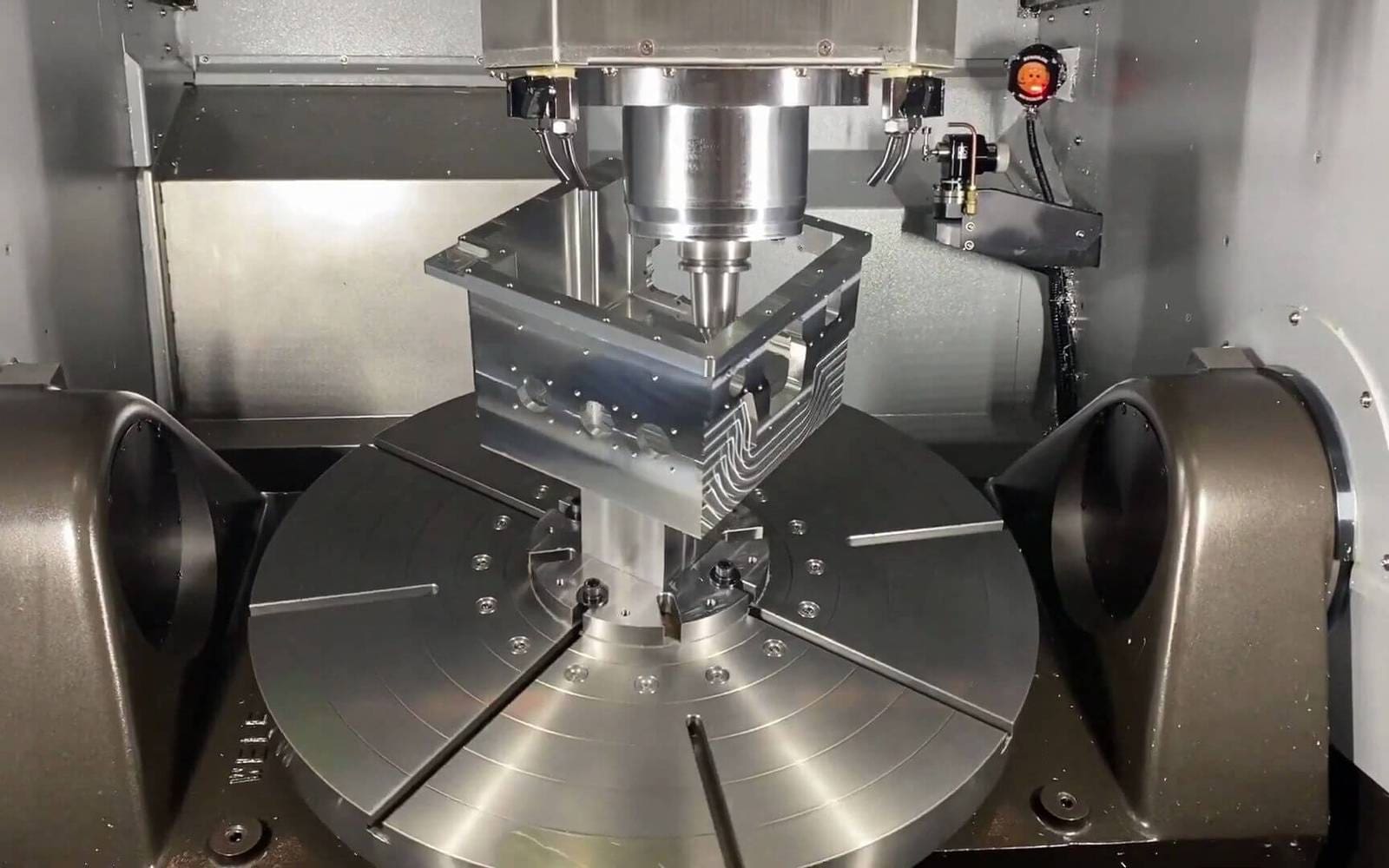
CNC prototyping is not a singular activity but a structured sequence of subtractive manufacturing. It begins with a digital model, which is translated into machine instructions that control the precise movement of cutting tools. This process removes material from a solid block, known as a workpiece, to create the desired geometry. The fundamental question is whether your design intent can be physically manifested with the required accuracy and surface finish using available machining strategies.
The process composition includes material selection, fixturing strategy, toolpath generation, and post-processing. Each element influences the final part’s form and function. For instance, the chosen machining material directly impacts the prototype’s mechanical properties and its ability to simulate the performance of the final production part. A poorly chosen material renders the prototype useless for functional testing, wasting both time and budget.
02How Does the CNC Prototyping Workflow Differ from Production?
The workflow for prototyping is fundamentally distinct from high-volume production. While production focuses on optimizing cycle time and cost per part, prototyping prioritizes speed of iteration and design flexibility. The primary objective shifts from cost efficiency to information gathering. This means production workflows often involve dedicated fixtures and optimized toolpaths, whereas prototyping workflows must accommodate rapid changes and one-off setups.
This divergence creates a critical tension. A production-oriented supplier may struggle with the fluid requirements of a prototype, while a prototyping specialist may lack the scale mindset for subsequent production. The optimal partner, therefore, must demonstrate a mastery of workflows that efficiently bridge both phases of the product lifecycle. They must understand how today’s prototype design decisions will impact tomorrow’s production efficiency and implement modifications that reduce future risks.
The conclusion is that you must evaluate a CNC machining service based on specific workflow capabilities. YPMFG can aid potential buyers in comparing tolerance capability and interaction patterns to determine process fit.
03What are the Primary Design and Material Considerations?
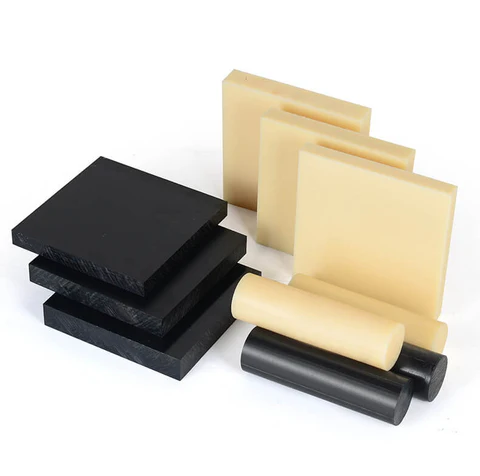
Failures in prototyping often stem directly from ignoring the synergy between component design and material selection. The most elegant CAD model is useless if the specified aluminum alloy or engineering plastic cannot be machined to the required features or lacks the necessary strength for testing. You must constantly ask whether the material’s machinability aligns with the design’s complexity to avoid high tool wear or dimensional instability.
Material selection is not merely about mechanical properties and per-unit cost. It often involves factors like material availability in prototype-sized stock, the need for specific material certifications, and the ability of the material to accept surface treatments or simulating the production environment. Does the prototype need to withstand thermal cycling? Must it have a specific electrical conductivity? An experienced partner will challenge your assumptions at this stage.
04How Do You Determine Optimal Part Tolerances for Prototyping?

Tolerance specification is a critical exercise in balancing cost against information value. Requesting tolerances tighter than functionally necessary for a prototype at the CNC parts manufacturing step exponentially increases cost and lead time without providing additional actionable data. The strategic approach is to define which features require tight control for assembly verification and which can be left with standard machining tolerances.
The methodology involves a proactive review of the assembly and an understanding of the impactful source of error. Are you primarily concerned with the fit between two mating parts, or is the final dimensional accuracy the key constraint? Setting a global, tight tolerance is a common mistake that inexperienced designers make. A disciplined supplier will question every tolerance callout to ensure it serves a clear purpose in the validation step of the broader CNC production journey.
05Specialist Requirements and Surface Finishes
Prototypes frequently require specialist treatments that go beyond the machining process itself. Applied surface finishes like anodizing, plating, or painting serve both functional and aesthetic goals. Functionally, they may be required for wear resistance, corrosion protection, or to achieve a specific coefficient of friction. Aesthetically, they provide stakeholders with a tangible representation of the final product’s look and feel.
Furthermore, specialist requirements may include non-destructive testing, specific part marking, or even low-volume assembly services. The ability of your prototyping partner to manage these value-added services in-house or through a reliable network significantly streamlines the process. It eliminates the coordination overhead and schedule risk of managing multiple vendors, which is problematic for projects on a compressed timeline. YPMFG supports projects that require a comprehensive technical solution alongside sterile machining.
06How to Strategically Evaluate a CNC Prototyping Partner
The evaluation should extend beyond simple price quotients. You must assess the partner’s technical depth, communication protocols, and operational transparency. Do they provide proactive design for manufacturing (DFM) feedback that challenges and improves your design? Is their project management system geared towards predictable information flow and rapid issue escalation? Understanding the manufacturing supply chain is irrelevant if the partner is not fit for the specific task.
Evidence of capacity is equally important. While a small shop may offer high flexibility, does it have the machine tool capacity to handle your project’s geometric complexity or material hardness? Conversely, a large facility focused on production runs may deprioritize a prototype job. The nuanced evaluation centers on finding a partner whose organizational model and customer focus align with the unique demands of the prototyping stage. You can send your full specifications to YPMFG for a comprehensive engineering review.
07Considering the Cost and Time Dynamics
What is the relationship between the cost of a prototype and the value of the learning derived? Cost in prototyping is a function of material expense, machine time, setup complexity, and engineering support. However, the greater cost is often the unknown opportunity cost of a delayed product launch caused by an inadequate prototype. A slightly higher quote from a supplier capable of delivering a functionally accurate part faster may provide a superior return on investment.
Time dynamics are nonlinear. Adding a secondary operation, like a specialized finish, can extend lead time by a week. Tightening a tolerance may require slower machining speeds and multiple validation checks. A transparent partner will highlight these trade-offs clearly, allowing you to make informed decisions about what is critical for your current development phase. The end goal is to achieve rapid iteration without compromising the integrity of the test data the prototype must generate.
08Common Questions About CNC Prototyping
How long does a typical CNC prototype take?
Lead time for CNC prototyping services varies primarily based on design complexity, material availability, and the supplier’s current workload. A simple part machined from a common material may be quoted in days, while a complex assembly with multiple parts and finishes can require several weeks. The critical factor is the supplier’s ability to provide a reliable and consistently updated schedule.
What is the recommended file format for prototype quotes?
Industry-standard 3D CAD file formats like STEP or IGES are essential for an accurate quote. While they can provide some information, 2D drawings are insufficient for machining as they lack full 3D geometry. If you question the detail needed, sending a detailed PDF of your requirements along with the 3D file may help an estimator verify geometries and tolerances before generating a markup.
Can one prototype be used to simulate multiple materials?
No, a single physical prototype is made from one specific material source. To test different materials, you must manufacture separate prototypes. This is where the cost-benefit analysis of material selection is most apparent. Experienced services can advise on which material properties are most critical to test first, potentially saving you from unnecessary duplicate builds early in the process.
How do surface finishes affect the prototype’s test results?
Surface finishes significantly impact friction, corrosion resistance, and sometimes dimensional accuracy. For example, an anodized surface will be harder and more wear-resistant than raw aluminum. If your final product will have a finish, testing the prototype with that finish applied often provides more accurate functional data, though it adds to the prototype’s cost and lead time for part finishing.
What’s the biggest mistake when ordering a prototype?
The most common mistake is requesting a prototype that diverges significantly from the planned production method. For instance, designing a part for eventual injection molding but prototyping it via machining without considering draft angles, wall thickness uniformity, or other mold-specific design rules. This yields a part that validates little about the manufacturability of the final design.
09Making an Informed Prototyping Decision
Your choice of a CNC prototyping service is a strategic decision that influences product development speed, cost, and ultimate market success. The objective is not merely to obtain a physical part but to acquire a tool for confident,data-driven decision-making. Precision mapping of your design proof is a core requirement. The process must provide you with hyper-dense information to de-risk subsequent production phases.
Need help refining your prototype specifications or exploring the manufacturability of your design? YPMFG offers targeted engineering evaluation to help you optimize your approach. You can submit your technical drawings or 3D models for a comprehensive review that identifies potential production issues, streamlines your design, and ensures your prototype delivers maximum validation value. Let’s connect to discuss how to translate your concept efficiently into a tangible, functional component.