
Quick answer: Steel casting is ideal for producing complex, high-strength metal parts in medium to high volumes, but for low-volume orders or parts requiring very tight tolerances and excellent surface finishes, CNC machining from cast or billet stock may be more practical and cost-effective. The decision depends on your part geometry, order quantity, required material properties, and whether post-casting machining is part of your plan.
Many engineers and procurement specialists face the same question when planning a new project: should they use steel casting or switch to CNC machining for their components? Both methods have distinct advantages, and choosing incorrectly can lead to higher costs, longer lead times, or parts that do not meet performance requirements. At YPMFG, we work with manufacturers and engineering teams who need to match their production strategy to the actual demands of each part. This guide breaks down what matters most when you are making that decision.
What Is Steel Casting and How Does It Work?
Steel casting is a manufacturing process where molten steel is poured into a pre-formed mold cavity. After the metal solidifies and cools, the mold is removed and the casting is cleaned, trimmed, and often heat-treated to reach the desired mechanical properties. The resulting part takes the general shape of the cavity, and any fine details or tight-tolerance features are added through secondary machining operations.
This process has been used for over a century because it allows complex geometries to be produced in a single step. Unlike subtractive methods that remove material from a solid block, casting builds the part from the inside out. That means less raw material waste for intricate shapes and the ability to create internal passages, hollow sections, and compound curves that would be extremely difficult or impossible to machine from solid stock.
However, casting is not a one-step solution. Most steel castings require finishing operations such as grinding, milling, drilling, or turning to achieve the final dimensions and surface finish needed for assembly. The extent of this post-processing depends on the casting method used and the tolerances required by your design.
Common Types of Steel Casting Processes
The casting method you select directly affects the cost, quality, and lead time of your project. Here are the most relevant options for steel components:
Sand casting remains the most widely used method for steel because it is flexible and economical at scale. Investment casting delivers superior detail and tighter dimensional control, making it the preferred choice when your part has complex features and limited machining access. Vacuum-assisted casting reduces porosity and improves mechanical consistency, which matters for safety-critical components.
The selection of casting method should be based on a clear understanding of which features on your drawing actually require tight tolerances and which surfaces need a fine finish. Not every surface on a casting needs to be machined, and identifying the critical zones early can save significant cost.
Material Selection for Steel Castings
The type of steel you choose determines the mechanical properties, corrosion resistance, machinability, and ultimately the cost of the final part. The most commonly specified grades fall into three categories:
Carbon steels such as ASTM A27 Grade 60-30 offer good strength and weldability at a moderate price. They are suitable for structural components, brackets, housings, and general machinery parts where corrosion resistance is not a primary concern.
Stainless steel castings, typically governed by ASTM A743 and A744, provide excellent corrosion and heat resistance. Grades like CF-8 (equivalent to casting 304), CF-3M (equivalent to casting 316), and CN-7M are widely used in chemical processing, food and beverage equipment, marine hardware, and medical device components. These materials are more expensive and require careful handling during both casting and post-processing.
Alloy steel castings such as ASTM A216 WCB and WC6 are heat-treatable and provide higher strength and toughness than carbon steel. They are common in valve bodies, pump casings, turbine components, and heavy machinery where impact resistance and temperature performance matter.
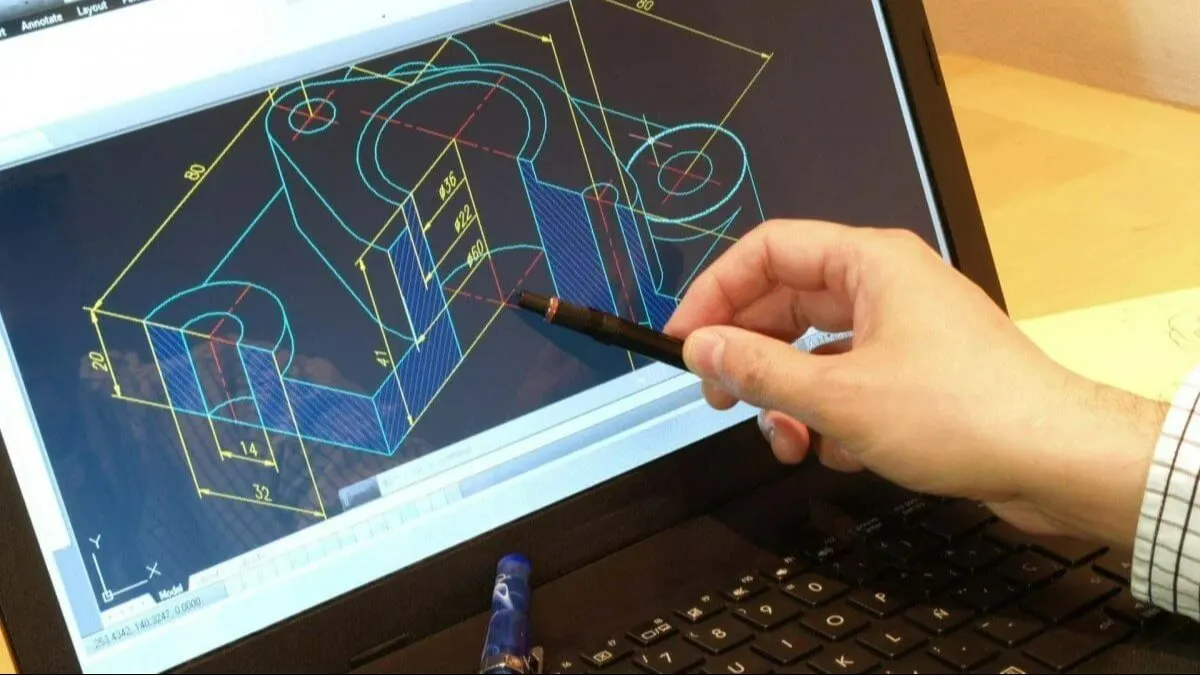
When specifying material, always consider not only the casting requirements but also how the material will behave during any CNC machining that follows. Some stainless grades work-harden rapidly and can be challenging to machine, which affects tool life and cycle time on secondary operations.
Steel Casting vs CNC Machining: Key Differences
Comparing steel casting with CNC machining requires looking at what each process does well and where it falls short. Neither method is universally better—the right choice depends on your specific part requirements.
Steel casting excels at producing complex shapes with internal passages, compound curves, and hollow sections in a single operation. It is cost-effective for batch sizes above a few hundred units because the per-part cost decreases significantly once the mold is prepared. The material utilization is generally favorable for intricate geometries since excess metal is limited to gating and riser systems.
CNC machining excels at producing parts with very tight tolerances, superior surface finishes, and consistent repeatability. It is the preferred method for low-volume production, prototypes, and parts that require precise interfacing surfaces, threaded holes, or bearing seats. Material removal can be substantial for complex shapes, which increases both cost and lead time.
The following comparison summarizes the practical trade-offs:
A practical rule of thumb is this: if your part has high geometric complexity and you need more than five hundred units, steel casting is likely the more economical route. If your part is relatively simple, requires very tight tolerances, or you are producing fewer than two hundred units, precision machining from cast or billet stock is often the faster and more cost-effective path.
YPMFG supports buyers who need to evaluate both options for their specific component. We can assess your drawing and recommend whether casting, machining, or a combination of both will deliver the best result for your application and budget.
Cost Factors That Influence Steel Casting Pricing
Understanding how steel casting costs are structured helps you evaluate quotes accurately and avoid surprises. Several factors interact to determine the final price per part:
Part size and weight directly affect the amount of molten steel required and the capacity of the mold. Larger parts need larger furnaces, more material, and longer cooling cycles. Weight also influences handling, shipping, and the size of the equipment needed for any post-casting operations.
Casting method determines the base cost. Sand casting has lower tooling costs but may require more manual finishing. Investment casting involves higher per-unit process costs due to ceramic shell production but reduces the need for secondary machining. The method you choose should align with your tolerance and surface requirements rather than simply being the cheapest option upfront.
Post-casting machining is often the largest hidden cost. If your drawing specifies multiple machined surfaces, tight-tolerance bores, or threaded features, the machining time and tool wear can exceed the casting cost itself. Clarifying which surfaces are functionally critical and which are cosmetic allows you to reduce unnecessary machining and control total cost.
Heat treatment and surface treatment add cost but may be essential for performance. Processes such as normalizing, quenching and tempering, stress relieving, shot blasting, and painting or coating each add time and expense. These should be specified only when they are required by your application, not as default assumptions.
Order volume determines whether fixed costs are amortized effectively. A one-off casting carries the full cost of pattern or mold preparation, while a production run of several thousand units spreads that cost across many parts. If your volume is low, custom solution options such as using existing patterns or selecting off-the-shelf alloys may reduce the per-unit price significantly.
Quality Standards and Certifications to Consider
Quality assurance is essential when working with steel castings, especially for parts that carry structural, safety, or regulatory responsibilities. Knowing which standards apply to your project helps you specify requirements clearly and evaluate supplier capabilities.
ASTM A27 covers carbon steel castings for general engineering use. ASTM A216 covers carbon steel castings for elevated temperature service, commonly specified for pressure-containing components such as valves and pump casings. ASTM A743 and A744 cover castings for corrosion and heat-resistant steel, which includes most stainless steel grades used in industrial applications.
ISO 9001 certification indicates that a foundry has a documented quality management system in place. This is a baseline expectation for any supplier serving regulated industries. IATF 16949 is the automotive-specific requirement and is necessary if your parts will be used in vehicle manufacturing or supply chains.
Nadcap accreditation is relevant for foundries performing special processes such as heat treatment, nondestructive testing, or metallurgical analysis. If your project requires certified NDT reports or traceable heat treatment records, verifying Nadcap status is a practical step.
Requesting a quality manual, material traceability procedures, and sample inspection reports before placing an order gives you confidence in the supplier’s ability to meet your specifications consistently.
Design Guidelines for Successful Steel Castings
Good casting design reduces defects, lowers cost, and simplifies post-processing. The following guidelines reflect common engineering best practices:
Maintain uniform wall thickness wherever possible. Sudden changes in section thickness create hot spots that lead to shrinkage porosity and cracking. When transitions are necessary, use gradual changes or fillets rather than sharp steps.
Provide adequate draft angles to allow the mold or pattern to be removed without damaging the casting. Typical draft angles range from 1 to 3 degrees depending on the sand type and part geometry.
Specify generous fillet radii at internal corners. Sharp internal corners concentrate stress and are prone to cracking during solidification and subsequent heat treatment. A fillet radius of at least one-third the section thickness is a practical minimum.
Limit the depth and complexity of blind holes and narrow passages. These features are difficult to core and often require additional machining that increases cost. Where possible, design for through-holes or simplify internal channels.
Define machining allowances only where functionally necessary. Adding unnecessary machined surfaces increases cost without improving performance. Coordinate with your supplier early to identify which surfaces truly require material removal.
Practical Questions Before Choosing Steel Casting
Below are questions that buyers and engineers commonly ask before committing to a steel casting project. These address the practical concerns that affect cost, quality, and delivery.
What is the minimum order quantity for steel casting?
Minimum order quantities vary by foundry and casting method. Sand casting can sometimes accommodate smaller batches, while investment casting typically requires higher volumes to justify the pattern and shell costs. Discuss your expected annual demand with your supplier to determine the most suitable approach.
How long does steel casting take from design to delivery?
Lead time depends on the casting method, part complexity, and whether new patterns or molds are required. Standard sand casting projects typically take four to eight weeks. Investment casting may require six to ten weeks due to the additional shell-building steps. Rush schedules are often available at a premium.
Can steel castings be machined to CNC-level tolerances?
Yes, but the cost increases significantly. Steel castings can be finished to tolerances as tight as ±0.05 mm on select surfaces through precision machining. However, achieving tight tolerances across all surfaces is rarely economical. Identify your critical dimensions and allow looser tolerances on non-functional features.
What are the most common defects in steel casting?
The most frequent defects include shrinkage porosity, misruns, hot tears, sand inclusions, and dimensional variations. These are largely preventable through proper design, controlled pouring practices, and appropriate heat treatment. A qualified foundry will perform NDT and dimensional inspection to catch defects before shipment.
Is steel casting suitable for prototype production?
Steel casting is generally not the most efficient option for true prototypes due to the time and cost of pattern or mold creation. For initial prototypes, CNC machining from billet or cast blank is faster and more economical. Once the design is finalized, steel casting becomes cost-effective for pilot runs and full production.
How do I verify the material grade of a steel casting?
Request a mill test certificate or material certification from the supplier. The certificate should reference the applicable ASTM or equivalent standard and include the chemical composition and mechanical properties. For critical applications, independent material verification through spectral analysis or spectroscopy is recommended.
Choosing the Right Manufacturing Path for Your Project
The decision between steel casting and CNC machining is not about finding a single best method. It is about matching the manufacturing process to the actual requirements of your part, your production volume, and your budget. Steel casting delivers exceptional value for complex, high-volume components where material efficiency and geometric freedom matter most. CNC machining delivers superior precision and surface quality for low-volume runs and parts with demanding tolerances. Many successful projects use both methods, starting with a casting to establish the near-net shape and following with precision machining to achieve the final specifications.
When you are unsure which approach is right, the most reliable path is to share your design details with an experienced manufacturing partner. YPMFG offers engineering evaluation services where our team reviews your drawings, identifies potential cost and quality risks, and recommends the most efficient production strategy for your component. You can send your specifications to YPMFG for a no-obligation review and receive a detailed assessment that includes process recommendation, estimated lead time, and a competitive quote.
Whether your project requires a single casting prototype, a batch of precision components, or a long production run, the goal is the same: deliver parts that meet your specifications on time and within budget. Proper process selection, clear communication with your supplier, and attention to design for manufacturability are the three elements that consistently separate successful projects from costly mistakes.