Quick answer:
A CNC code example is a practical set of G-code and M-code instructions that tells a CNC machine how to move, cut, and finish a part. These examples help machinists, engineers, and buyers understand how specific toolpaths, speeds, feeds, and machine functions are programmed before production begins. Reviewing real CNC code examples is one of the fastest ways to verify whether a manufacturer has the right machining capabilities for your part’s geometry, tolerances, and material.
A new engineer or procurement professional reviewing a CNC supplier often faces a gap between the 2D drawing or 3D model and what actually happens on the machine. Without seeing how the tool moves, where the machine stops, or how the part is clamped, it is hard to assess whether the supplier can deliver consistent quality. Understanding basic CNC code examples removes that uncertainty and gives you a direct way to evaluate machining strategy, cycle time, and potential risk points before you commit to production.
What a CNC Code Example Actually Shows You
A CNC code example is not just a list of commands. It is a complete description of how a machine will behave from start to finish. Every line of code corresponds to a physical action: spindle rotation, axis movement, coolant flow, tool change, or feed rate adjustment. When you look at a well-written example, you can immediately see whether the programmer understands the material behavior, the tool geometry, and the machine limitations.
For buyers, the most useful part is not the syntax. It is what the code reveals about the manufacturer’s approach to precision, cycle time, and surface finish. If the code contains constant acceleration moves, unnecessary retracts,or missing safety lines, those are red flags. If it shows smooth contouring paths, proper chip breaking, and clear tool change sequences, that signals experienced programming.
Basic G-Code and M-Code Commands You Will See
Every CNC code example relies on a small set of standard commands. These are defined by the ISO 6983 standard and are used across most Fanuc, Haas, Siemens, and Heidenhain controls.
The most important takeaway from this table is that a complete CNC code example must include all of these categories: motion, plane, unit, compensation, coordinate system, and auxiliary functions. A missing M08 or incorrect G20/G21 switch can scrap a part or damage the tool.
A Simple CNC Code Example for a Facing Operation
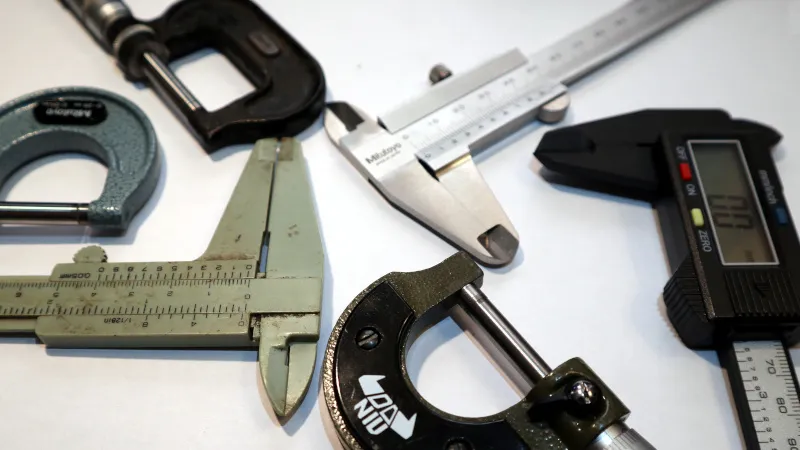
Below is a basic example for facing a 100 mm x 100 mm aluminum block on a 3-axis vertical mill. This is a common starting shape for brackets, housings, and mounting plates.
%
O0001 (FACE ALUMINUM BLOCK)
N10 G90 G54 G17 G40
N20 G20 (INCH MODE)
N30 T01 M06 (1 INCH FACE MILL)
N40 S6000 M03
N50 G43 H01 Z0.5
N60 M08
N70 G00 X-0.5 Y-0.5
N80 Z0.1
N90 G01 Z-0.02 F10.0
N100 X4.0 F25.0
N110 Y0.5
N120 X-0.5
N130 G00 Z0.5
N140 M09
N150 G91 G28 Z0
N160 M30
%
This example tells you several things. The programmer used a face mill (T01), set a spindle speed of 6000 RPM, applied a feed rate of 25 inches per minute, and took a depth of cut of 0.02 inches. The tool path is a simple back-and-forth sweep. The machine returns to the reference point after completion.
For a buyer, this level of transparency helps confirm that the manufacturer uses standard work coordinate systems, applies tool length offsets, and follows safe retract practices. If your part requires tighter tolerances or a different material, you can request a modified code example before production.
How to Read a CNC Code Example for Quality Assessment
When you receive a CNC code example from a potential supplier, do not just look at the numbers. Check these five items:
Coordinate system selection: Does the code use G54 or a custom fixture offset? If it uses G54, it assumes the part is located consistently. That is a sign of good setup planning.
Cutter compensation: Is G40 present at the start? Missing compensation can lead to overcutting or undercutting on tight features.
Feed and speed consistency: Are the feeds appropriate for the material? If the code runs a stainless steel part at aluminum speeds, that should raise questions.
Tool change logic: Does the code include a tool change with M06 and a clear tool number? Multiple unlabeled tool changes increase risk.
Coolant and chip management: Is M08 turned on during cutting and off after? Missing coolant management can cause thermal expansion and poor surface finish.

If any of these are unclear or missing, ask the supplier to provide a documented example with annotations. A reliable manufacturer will be able to explain every line.
Common Questions About CNC Code Examples
What is the difference between G-code and CNC code?
G-code is one type of CNC code. CNC code is a broader term that includes G-code, M-code, and sometimes custom macro variables. Most CNC code examples mix both G and M commands to define motion and machine functions.
Do all CNC machines use the same code?
No. While Fanuc-style G-code is the most common, Haas, Siemens, Heidenhain, and Mazak use variations. A code written for a Fanuc control may not run on a Heidenhain control without modification. Always verify that the example matches your supplier’s machine control.
Can I use a CNC code example to estimate cycle time?
Yes, but only approximately. Cycle time depends on actual acceleration, spindle response, and tool change speed. A CNC code example gives you the sequence, but the real cycle time must be measured on the machine or simulated in CAM software.
How detailed should a supplier’s code example be?
A useful example should include at least the header (program number and description), coordinate system setup, tool call, speed and feed, motion commands, and a safe end sequence. If the example is missing any of these, ask for a complete version.
Is it possible to verify tolerance from a code example?
Indirectly. If the code uses small stepover values, tight finish passes, and appropriate feed rates, it suggests the programmer values accuracy. However, tolerance verification still requires inspection reports and machine capability data.
What should I do if the code example does not match my drawing?
Send the supplier a marked-up copy of your drawing with the critical dimensions highlighted. Ask them to produce a new CNC code example that targets those features. This is a low-risk way to test their engineering responsiveness.
Can a code example help me compare multiple suppliers?
Yes. Request a simple part geometry, such as a pocket or contour, and ask each supplier to provide a code example and estimated cycle time. Compare the code structure, tool selection, and safety practices. This gives you an objective basis for evaluation.
Why do some code examples have no comments?
Lack of comments is common in production environments, but it is not a good sign for new supplier evaluation. A code example without comments is harder to review. Ask for a commented version or a separate explanation sheet. YPMFG can help buyers interpret these examples and clarify any unclear sequences.
Choosing the Right CNC Partner Starts with the Code
A CNC code example is one of the most practical tools a buyer can use to evaluate a manufacturer’s technical depth, process discipline, and communication quality. It reveals how the supplier thinks about toolpath planning, material behavior, and machine safety. A clean, well-structured code example signals a partner who values precision and transparency.
If you are evaluating a new CNC machining supplier or want to confirm that your current manufacturer is using the best approach, consider requesting a code example for a representative feature on your part. Send the drawing or model to YPMFG, and the engineering team can review the example, explain the programming logic, and provide a custom CNC code example matched to your material, tolerance, and volume requirements. This low-effort step can save you from costly tool collisions, rejected parts, and missed delivery dates.