
Quick answer:
A CNC machining parts factory is a manufacturing facility that uses computer-controlled machine tools to produce precision metal and plastic components from customer-supplied designs. These factories handle everything from prototyping to high-volume production, and the right one can significantly reduce your lead times,part costs, and quality risks. Choosing a factory that matches your part complexity, material requirements, tolerance needs, and volume is essential for long-term project success.
Choosing the right CNC machining parts factory is not just about getting the lowest unit price. Engineers and procurement managers often face problems like inconsistent tolerances, delayed deliveries, poor surface finish, or hidden costs from secondary operations. The factory you select directly affects your product quality, time to market, and total cost of ownership.
What a CNC Machining Parts Factory Does
A CNC machining parts factory uses CNC mills, lathes, routers, and multi-axis machines to cut raw material into finished parts. The process starts with a 3D CAD model, which is converted into machine code. The factory then selects the appropriate tooling, sets up the machine, and runs the production cycle.
Most factories offer both prototyping and production runs. Prototyping helps you validate design fit and function before committing to larger volumes. Production runs can range from dozens to tens of thousands of parts, depending on the factory’s capacity and equipment.
A factory with multi-axis machining capabilities can produce complex geometries in fewer setups, which reduces lead time and improves accuracy. For buyers, understanding the factory’s equipment range is the first step in matching their part requirements.
Key Capabilities to Look For
When evaluating a CNC machining parts factory, you should check the following capabilities:
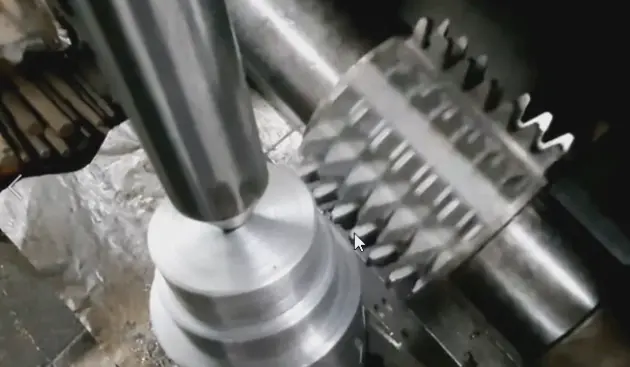
Number of axes: 3-axis, 4-axis, and 5-axis machines determine how complex a part can be machined.
Tolerance range: Standard machining holds ±0.005″ (0.127 mm), but high-precision shops can achieve ±0.0002″ (0.005 mm).
Maximum part size: Each machine has a work envelope limit.
Secondary operations: Tapping, deburring, heat treating, anodizing, and plating are often required after machining.
Material availability: Common materials include aluminum 6061, stainless steel 304, brass, steel, and engineering plastics like Delrin and PEEK.
A factory that offers in-house secondary operations can reduce your supplier chain complexity and shorten overall lead time. If your part needs post-machining finishing, it is more efficient to work with a single factory that handles everything.
YPMFG supports projects that require tight tolerances, complex geometries, and a wide range of materials. Buyers can send their specifications for an engineering review before committing to production.
Materials and Tolerance Capabilities
Material selection directly affects part strength, weight, corrosion resistance, and cost. A reliable CNC machining parts factory should offer a standard material list and also support custom material sourcing.
Tolerance capability varies by machine type and part geometry. 5-axis machining often allows tighter tolerances because it reduces part repositioning errors. For parts with critical mating surfaces, always verify the factory’s standard and best achievable tolerances before ordering.
YPMFG can help buyers compare material options and tolerance capabilities based on the specific application. Engineers can request documentation on material certifications and inspection reports.
Quality Control and Documentation
Quality control is what separates a reliable CNC machining parts factory from an inconsistent one. Key QC elements include:
First article inspection (FAI): The first part is fully inspected before production continues.
In-process inspection: Operators check dimensions at regular intervals during the run.
Final inspection: All critical dimensions are measured before shipping.

Certification documents: Material certificates, dimensional reports, and compliance statements should be available.
A factory that provides a full inspection report with every order gives you traceability and reduces the risk of receiving non-conforming parts. For regulated industries such as medical or aerospace, documentation is not optional.
YPMFG supports projects that require documented quality assurance and material traceability. Buyers can request sample testing and engineering evaluation before full-scale production.
Cost Factors You Should Know
The unit price of a machined part depends on several variables. Understanding these helps you make better sourcing decisions.
Material cost: Raw material price fluctuates with market conditions and alloy type.
Setup time: Complex parts with multiple setups increase programming and fixturing costs.
Cycle time: The longer the machine runs per part, the higher the cost.
Tolerance tightness: Tighter tolerances require slower feeds, more passes, and additional inspection.
Quantity: Higher volumes reduce per-part setup cost, but tool wear may increase over long runs.
Surface finish: Additional post-processing like polishing or anodizing adds cost.
A common mistake is focusing only on unit price. The total cost includes shipping, inspection time, potential rework, and delays. A slightly higher per-part cost from a capable factory often results in lower total cost when quality and delivery are consistent.
YPMFG can provide a detailed cost breakdown and engineering review to help you identify opportunities for cost reduction without sacrificing quality.
Common Questions About CNC Machining Parts Factories
How do I know if a factory can hold my required tolerance?
Ask for their standard tolerance range and whether they provide first article inspection reports. For tight tolerances, request a capability study or sample part inspection before production.
What information should I send to get an accurate quote?
Send a 3D CAD file (STEP or IGES), a 2D drawing with tolerances and notes, material specification, required quantity, and desired surface finish. The more detail you provide, the more accurate the quote.
Is it better to use a local or overseas CNC machining parts factory?
It depends on your priorities. Local factories offer faster communication and easier logistics. Overseas factories may offer lower unit costs but require longer lead times and more careful quality management.
Can a factory machine parts from my own raw material?
Some factories allow customer-supplied material, but they must verify the material properties and condition before machining. This option is less common and may affect warranty responsibility.
How long does a typical CNC machining order take?
Prototypes can take 1–2 weeks. Production runs vary from 2–6 weeks depending on complexity, quantity, and factory workload. Always confirm current lead time before placing an order.
What if my part needs multiple finishing processes?
Look for a factory that offers or coordinates secondary operations like anodizing, powder coating, or heat treating. A single point of contact simplifies communication and reduces logistics risk.
Do I need a drawing, or is a 3D model enough?
A 3D model is often sufficient for quoting, but a 2D drawing with tolerances and notes is strongly recommended for production. The drawing clarifies critical dimensions and surface finish requirements.
What is the minimum order quantity for a CNC machining parts factory?
Many factories accept orders as low as 1–10 parts for prototyping. For production runs, minimum quantities vary. Always confirm MOQ with the factory before finalizing your order.
Choosing the Right Factory for Your Application
Selecting the right CNC machining parts factory is a decision that affects your product quality, timeline, and budget. Focus on capability, quality control, and communication rather than just price. A factory that understands your application and provides clear documentation will save you time and reduce risk.
If you are evaluating a new supplier, start by sending your specifications for review. YPMFG can help with engineering evaluation, material selection, and cost optimization. Contact us to request a quote or compare your current solution against a more comprehensive approach.