
Quick answer:
CNC machining is a subtractive manufacturing process where pre-programmed computer software controls the movement of factory tools and machinery. This process allows for precise, repeatable, and complex part production from a variety of materials, including metals, plastics, and composites. It is widely used across industries such as aerospace, automotive, medical devices, and industrial equipment. While CNC machining offers high accuracy and consistency, it also introduces considerations around material waste, tooling costs, and design constraints that buyers must understand before sourcing parts.
If you are evaluating CNC machining for a production run or a prototype, you already know the basic definition. What matters more is how this process fits your specific application, budget, and quality requirements. Many buyers assume CNC machining is interchangeable with 3D printing or manual machining, but the differences in cost, lead time, and precision are significant. This article explains what CNC machining is, how it works, and what you should check before choosing a supplier.
What Is CNC Machining?
CNC stands for Computer Numerical Control. It refers to the automated control of machining tools—such as mills, lathes, routers, and grinders—by a computer program. The program reads a digital design file, typically in STEP or IGES format, and translates it into precise movements of the cutting tool.
Unlike manual machining, where an operator controls the tool by hand, CNC machining removes human variability. This makes it ideal for high-volume production or parts that require tight tolerances—often within ±0.005 inches or tighter. It also allows for complex geometries that would be difficult or impossible to achieve manually.
CNC machining is a subtractive process. It starts with a solid block of material and removes material to create the final shape. This contrasts with additive manufacturing, which builds parts layer by layer.
How Does CNC Machining Work?
The CNC machining process follows a consistent sequence. Understanding this sequence helps you identify where delays or cost overruns may occur.
1. Design creation – A CAD (Computer-Aided Design) model is created.
2. CAM programming – The CAD file is converted into G-code, the language the CNC machine understands.
3. Machine setup – The workpiece is secured, and the appropriate cutting tools are selected.
4. Machining – The machine executes the program, removing material in controlled passes.
5. Inspection – The finished part is measured against the design specifications.
Each step affects the final part quality and cost. For example, complex geometries may require multiple setups or specialized tooling, increasing both lead time and price. A reliable partner like YPMFG can review your design early to identify these factors and suggest adjustments that reduce cost without compromising function.
Key Types of CNC Machines
Different CNC machines serve different purposes. Choosing the wrong type can lead to poor surface finish, dimensional errors, or unnecessary expense.
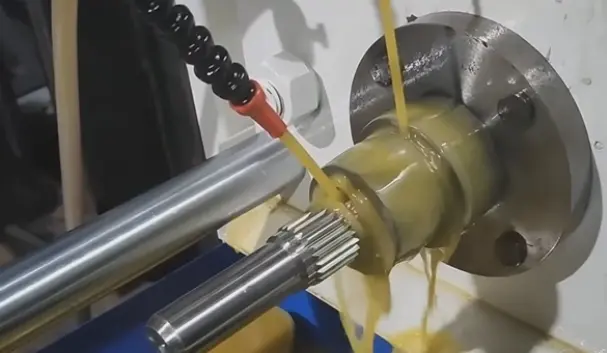
Multi-axis CNC machines, such as 5-axis mills, can machine a part from multiple angles in a single setup. This reduces handling errors and shortens production time, but also requires more skilled programming.
Common Materials Used in CNC Machining
Material selection directly impacts machinability, surface finish, and component durability. Below are the most common categories:
Metals
Aluminum – Lightweight, corrosion-resistant, and easy to machine. Common in aerospace and automotive.
Stainless steel – Strong, corrosion-resistant, but can work-harden during machining.
Steel – High strength and wear resistance. Suitable for structural parts.
Titanium – Excellent strength-to-weight ratio but difficult to machine. Requires rigid setups and slower speeds.
Brass and copper – Good electrical conductivity. Often used in connectors and fittings.
Plastics
ABS – Impact-resistant and low-cost. Suitable for prototypes.
Nylon – Low friction and good wear resistance. Used in gears and bushings.
PEEK – High temperature and chemical resistance. Used in medical and aerospace.
Acrylic – Optical clarity. Common in displays and lighting.
Composites
Carbon fiber reinforced polymers – Lightweight and stiff. Requires specialized tooling to avoid delamination.
CNC Machining vs. Other Manufacturing Methods
Many buyers compare CNC machining to other processes. Here is a brief comparison:
For small batch production or prototypes with complex internal geometries, 3D printing may be faster and cheaper. For production runs requiring tight tolerances and consistent quality, CNC machining remains the standard.
Cost Factors in CNC Machining
Understanding what drives cost helps you make better sourcing decisions. The main factors include:
Material cost – Some metals and engineering plastics are significantly more expensive.
Machine time – Complex parts require longer cycle times.
Tooling wear – Hard materials like titanium wear out tools faster.
Setup complexity – Multi-axis or multi-operation parts need more setup time.
Quantity – Higher volumes reduce per-part cost but require more upfront investment.
Tolerance requirements – Tighter tolerances increase inspection time and rejection risk.
To get an accurate estimate, provide a complete engineering drawing with tolerances, surface finish requirements, and material specifications. YPMFG offers a free engineering review to help you identify unnecessary cost drivers before production begins.
Common Questions About CNC Machining
Is CNC machining suitable for prototyping?
Yes. CNC machining is widely used for functional prototypes because it produces parts with the same material properties as final production parts. This allows for realistic testing of fit, strength, and thermal performance.
What is the difference between 3-axis and 5-axis CNC machining?
A 3-axis machine moves the cutting tool in three linear directions. A 5-axis machine adds two rotational axes, allowing the tool to approach the workpiece from any angle. This reduces setups and improves accuracy for complex geometries.
How tight can CNC machining tolerances be?
Standard tolerances are typically ±0.005 inches. Precision machining can achieve ±0.001 inches or better. Tighter tolerances increase cost and inspection time, so specify only what your design requires.
What file formats do CNC shops accept?
Most shops accept STEP, IGES, and native CAD formats like SolidWorks or Fusion 360. Some also accept PDF drawings with critical dimensions clearly marked.
Can CNC machining produce threaded holes?
Yes. Threads can be cut using taps, thread mills, or single-point threading. The method depends on the material, thread size, and production volume.
How long does a typical CNC machining lead time take?
Lead times vary by complexity and shop capacity. Simple parts can ship in 1–2 weeks. Complex parts with multiple setups may take 4–6 weeks. Rush services are often available at a premium.
Does CNC machining work for small quantities?
Yes. CNC machining has no minimum order quantity. Many suppliers, including YPMFG, produce single prototypes and small batches with the same process as large production runs.
What surface finishes are available?
Common finishes include as-machined, bead blasted, anodized, powder coated, and electropolished. The choice depends on the material and the part’s aesthetic or functional requirements.
Choosing the Right CNC Machining Partner
The definition of CNC machining is straightforward, but applying it to your project requires practical judgment. Start by clarifying your tolerance requirements, material specifications, and production volume. Then look for a partner with experience in your industry.
A good CNC machining partner will offer more than just machine time. They should provide design for manufacturability (DFM) feedback, material sourcing support, and quality documentation. They should also be transparent about pricing and lead times.
If you have a part to produce, send your CAD file and engineering drawing to YPMFG for a free evaluation. Our team will review your design for potential cost savings, recommend the most efficient machining strategy, and provide a detailed quote with clear timelines.