
Quick answer:
Yes, CNC milling foam is a common and highly effective process used to create lightweight prototypes, molds, patterns, and tooling. The most suitable foams include polyurethane (PU), polystyrene (EPS/XPS), and polyethylene (PE) foams, which are easy to machine, dimensionally stable, and cost-efficient. However, selecting the wrong foam density or milling strategy can lead to poor surface finish, excessive dust, or part breakage. This guide explains the material types, machining considerations, and how to achieve reliable results.
Why CNC Milling Foam Is a Practical Choice for Prototyping and Mold Making
CNC milling foam is widely used in industries like aerospace, automotive, marine, and architectural modeling. The main reason is speed: foam machines much faster than metals or plastics, allowing for rapid iterations and reduced lead times.
But the real value lies in its versatility. Foam can be milled into complex geometries, large-scale patterns for sand casting or composite layup, and detailed architectural models. It also absorbs vibration during cutting, which helps protect both the tooling and the workpiece.
The trade-off is mechanical strength. Foam parts are not structural. They are typically used as sacrificial patterns, master models, or cores. This makes material selection the most critical step in the process.
Types of Foam Suitable for CNC Milling
Not all foams behave the same under a cutting tool. Choosing the right type depends on your part’s required surface finish, dimensional tolerance, and end use.
Polyurethane foam is the most common choice for CNC milling foam projects because it provides a smooth cut edge and can be sanded or coated after machining. If you need a fine surface for painting or molding, PU foam is typically the better option.
For lost-foam casting applications, EPS is preferred because it vaporizes upon contact with molten metal. However, EPS produces significant static charge and dust, so proper dust collection is required.
Key Machining Parameters for Foam
Milling foam is different from milling metal or plastic. The material is soft, and cutting forces are low, but chip evacuation and heat buildup can still cause problems.
Spindle speed: Higher speeds (12,000–24,000 RPM) work well for dense foams like PU. For soft EPS, lower speeds (8,000–12,000 RPM) help reduce tearing.
Feed rate: Faster feeds (200–600 IPM depending on machine) can improve surface finish by reducing dwell time. Slow feeds on soft foam can cause melting or a fuzzy surface.
Tool geometry: Single-flute or two-flute up-cut spiral bits are standard. A sharp tool is essential. Using a dull end mill on foam will create a rough, melted finish and may break the foam.
Stepover and depth of cut: A 40–50% stepover with a shallow depth (0.5–2 mm per pass) works well for dense foams. For very low-density foam, a deeper cut can be used, but tool deflection becomes a risk.
Surface Finish and Post-Machining Considerations
One of the most common concerns when CNC milling foam is surface quality. Foam is porous, and even a well-machined surface may have open cells or small voids.
For applications that require a smooth, sealed surface—such as master patterns or paint-ready models—post-machining steps are often necessary. These include:
Light sanding with fine grit paper (180–400)
Applying a sealer or filler primer
Using a thin epoxy coating for higher durability
If the foam part is intended as a sacrificial pattern for casting or molding, surface preparation is less critical. In those cases, a consistent but unsealed surface is acceptable.
Common Problems and How to Avoid Them
Melting or gumming occurs when the tool runs too slow or when cutting low-density foam with a high spindle speed and low feed rate. The solution is to increase feed, reduce spindle speed, or use a sharper tool.
Fuzzy edges or tearing is often caused by a dull tool or an incorrect tool path direction. Climb milling tends to produce a cleaner cut on foam compared to conventional milling.
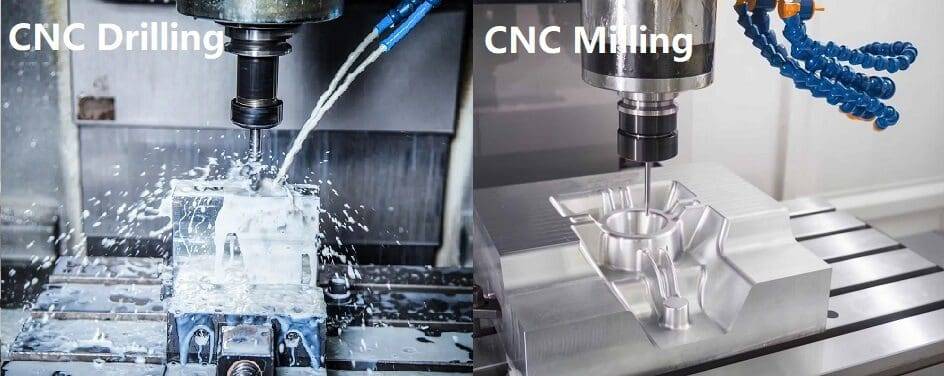
Dust and static charge are especially problematic with EPS foam. Using a dust collection system with a fine filter and an anti-static hose is recommended. For large jobs, consider wet milling with a mist coolant to reduce airborne particles.
Part breakage can happen with very low-density foams if clamping pressure is too high or if the tool engages too deeply. Vacuum tables or double-sided tape are safer than mechanical clamps for thin foam blanks.
When to Work with a CNC Machining Partner
Not every shop has the right equipment, tooling, or dust management system for foam machining. If your project involves large parts, tight tolerances, or a need for custom foam profiles, working with an experienced CNC machining service can save time and reduce waste.
At YPMFG, we support foam milling projects that range from small-scale prototypes to production-level patterns. We can help with material selection, tool path optimization, and surface preparation. If your design requires a specific density or dimensional tolerance, we can review your specifications and recommend the most efficient approach.
Sending your part file or drawing to YPMFG for an engineering evaluation is a straightforward way to confirm whether foam is the right material for your application—and how to achieve the best result within your budget.
Practical Questions Before Choosing a Foam for CNC Milling
Q: Can CNC milling foam produce parts with tight tolerances?
Yes. Dense polyurethane foam can hold tolerances within ±0.005 inches under proper machining conditions. However, soft foams like EPS will expand or contract more with temperature and humidity, so tolerances should be relaxed for those materials.
Q: How do I choose between polyurethane and EPS foam?
If you need a smooth, paintable surface or a durable pattern, choose PU foam. If the part will be used in lost-foam casting or is purely dimensional verification, EPS is cheaper and faster to machine.
Q: Does foam require coolant during milling?
Not typically. Most foams are machined dry. A light air blast can help clear chips. For high-density PU foam, a mist coolant may reduce dust but is not required.
Q: Can I machine foam on a standard CNC router?
Yes. A standard 3-axis CNC router with adequate spindle speed (10,000+ RPM) and dust collection is sufficient for most foam milling applications. Large parts may require a gantry-style machine.
Q: How long does it take to machine a foam prototype?
Milling time depends on part size and complexity, but foam cuts roughly 5–10 times faster than aluminum. A medium-sized prototype (12 x 12 x 6 inches) can often be machined in under an hour.
Q: Is foam recyclable after machining?
Some foams, especially EPS and certain PU foams, can be granulated and reused as filler or packaging material. Check with your local recycling facility, as options vary.
Q: What is the maximum part size for foam CNC milling?
This depends on your machine’s work envelope. Many CNC routers can handle foam blanks up to 4 x 8 feet. For larger parts, foam can be bonded before machining, or the job can be split into sections.
Q: Will foam parts hold up for repeated use in molding?
Dense PU foam can withstand dozens of mold releases if properly sealed. For higher cycle counts,epoxy tooling board or aluminum may be more cost-effective in the long run.
Choosing the Right Foam Milling Approach for Your Application
Foam machining is not a one-size-fits-all process. The right choice depends on the part’s function, required accuracy, and production volume.
For early-stage prototyping, EPS or low-density PU foam offers the fastest turnaround at the lowest cost. For master patterns and paint-ready models, medium-density PU foam with a sealed finish is the standard. For high-temperature or repeated-use tooling, you may need to move toward phenolic foam or tooling board alternatives.
If you are uncertain about which material or milling strategy fits your project, the most efficient step is to send your specifications to YPMFG. Our team can evaluate your design, suggest the optimal foam type, and provide a detailed quote with estimated machining time and surface finish expectations.