Quick answer:
Yes, 3D printed CNC parts can replace traditionally machined components in specific applications, but not across the board. 3D printing excels at producing complex geometries, rapid prototypes, and low-volume custom parts, while CNC machining remains superior for high-strength materials, tight tolerances, and large production runs. The best approach often combines both technologies to leverage the strengths of each for faster development cycles and optimized part performance.
Why this question matters
Engineers and procurement teams increasingly face a critical decision: should they use additive manufacturing or subtractive machining for their metal and plastic components. The choice directly impacts lead time, cost per part, material properties, and long-term reliability. Making the wrong call can result in delayed projects, unexpected tooling expenses, or parts that fail under operational loads.
What Are 3D Printed CNC Parts?
3D printed CNC parts are components that combine additive and subtractive manufacturing processes. In practice, this usually means one of two approaches:
Printing a near-net-shape part using metal or plastic 3D printing (SLM, SLS, FDM), then finishing it with CNC machining for critical surfaces, threads, or tolerances.
Using 3D printing to create tooling, jigs, or fixtures that are then used to produce CNC machined parts more efficiently.
The hybrid approach allows manufacturers to achieve design freedom from 3D printing while maintaining the precision and surface finish of CNC machining. This combination is particularly valuable for complex aerospace brackets, medical implants, and custom automotive components.
Key Differences Between 3D Printing and CNC Machining
The table above shows that neither process is universally better. The right choice depends on your specific tolerance requirements, production volume, material needs, and budget constraints.
When to Use 3D Printed CNC Parts
Prototyping and Iterative Development
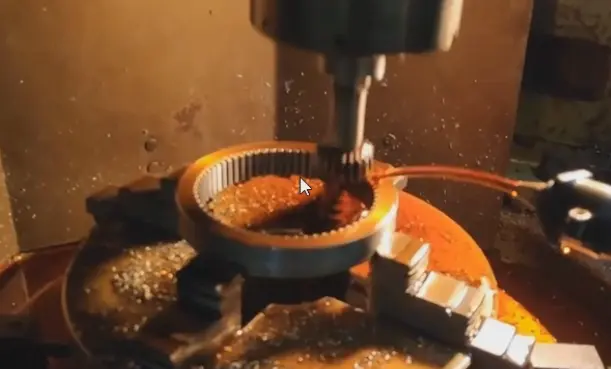
During product development, 3D printing allows engineers to test form, fit, and function without waiting for CNC programming and fixturing. Once the design is finalized, the same part can be CNC machined for production. This hybrid workflow reduces development cycles from weeks to days.
Complex Internal Geometries
Parts with internal cooling channels, lattice structures, or organic shapes are difficult or impossible to machine. 3D printed CNC parts solve this by printing the complex core and machining only the external mounting surfaces, sealing faces, or threaded holes.
Low-Volume Custom Components
For spare parts, custom medical devices, or specialized tooling, the cost of CNC programming and setup can be prohibitive. Additive manufacturing eliminates these upfront costs, making single-unit production economically viable.
When CNC Machining Is the Better Choice
High-Strength or High-Temperature Applications
If your part must withstand extreme loads, fatigue cycles, or operating temperatures above 300°C, CNC machining from wrought or forged stock is typically more reliable. Additively manufactured parts may require post-processing like hot isostatic pressing to achieve comparable mechanical properties.
Tight Tolerance Requirements
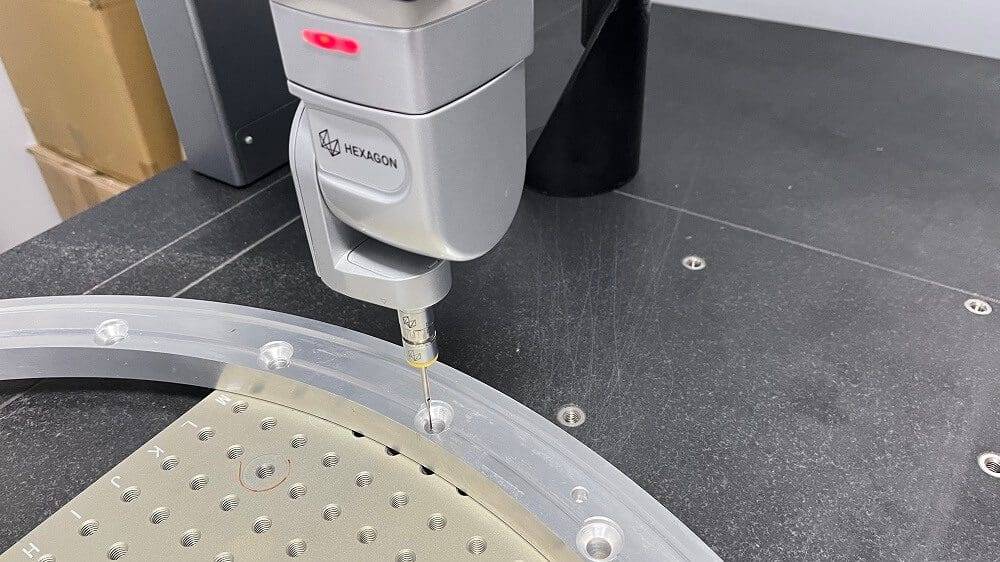
For bearing housings, mating surfaces, or sealing interfaces, the precision of CNC machining is difficult to match. Tolerances of ±0.01 mm are routine with machining, while 3D printing typically struggles below ±0.1 mm without secondary operations.
Large Production Volumes
Once you exceed 50–100 units per year, the per-part cost of CNC machining often drops below 3D printing due to faster cycle times and automated setups. 3D printing becomes increasingly cost-prohibitive as volume scales.
Common Risks to Avoid
Assuming 3D printing is always faster – While first-part lead time is shorter, post-processing, support removal, and heat treatment can add days. Always evaluate total cycle time.
Ignoring material certification – Many 3D printed metals do not carry the same traceability as wrought materials. For aerospace, medical,or defense applications, verify that your supplier provides full material certifications.
Overlooking surface finish requirements – A part that looks acceptable in a 3D print may require extensive hand finishing to meet functional specifications. Factor post-processing time and cost into your decision.
Questions Buyers Often Ask About 3D Printed CNC Parts
Can you CNC machine a 3D printed part?
Yes, it is common to machine critical surfaces on a 3D printed part. The printed blank is first made slightly oversized, then finished on a CNC mill or lathe to achieve the required tolerances and surface finish.
Are 3D printed parts as strong as machined parts?
It depends on the material and printing process. In many cases, additively manufactured metals achieve 80–95% of wrought properties after heat treatment. For plastic parts, CNC machining generally provides better consistency and strength.
What is the cost difference between 3D printing and CNC machining?
For a single part, 3D printing can be 30–60% cheaper because there is no setup cost. For 100 parts, CNC machining is usually 40–70% less expensive due to faster per-unit production.
Can you combine both processes in one part?
Yes, this is a growing trend. A part is first 3D printed to near-net shape, then CNC machined on critical features. This method is common for complex aerospace and medical components.
What materials are available for 3D printed CNC parts?
Common materials include aluminum (AlSi10Mg), titanium (Ti6Al4V), stainless steel (316L, 17-4PH), cobalt chrome, and engineering plastics like PEEK, Ultem, and nylon. The selection depends on the printing technology.
How do I know which process is right for my part?
Start by defining your tolerance, volume, material, and lead time requirements. For parts with complex internal features and low volume, 3D printing is often best. For high-strength, tight-tolerance, or high-volume parts, CNC machining is typically preferred.
Does 3D printing eliminate the need for CNC machining?
Not entirely. 3D printing excels at shape complexity, but CNC machining remains essential for precision, surface finish, and material certification. The two processes are complementary, not competitive.
Can I get a quote for both processes at the same time?
Yes. YPMFG can evaluate your part geometry and provide cost and lead time comparisons for both 3D printed and CNC machined options, helping you make an informed decision.
Choosing the Right Manufacturing Path for Your Parts
There is no single answer to whether 3D printed CNC parts should replace traditional machining. The best decision depends on your specific application requirements, production volume, and budget.
For complex, low-volume parts that benefit from design freedom, additive manufacturing with secondary machining offers a powerful solution. For high-strength, high-precision, or high-volume components, CNC machining remains the proven standard.
YPMFG supports both manufacturing routes and can help you evaluate which approach—or combination—delivers the best balance of cost, lead time, and performance. You can send your part specifications for engineering review and receive a direct comparison of 3D printing versus CNC machining options for your project.