Quick answer:
Copper stamping parts are precision metal components formed by pressing copper sheets through a die in a stamping press. They are widely used in electrical, automotive, and industrial applications because copper offers excellent electrical conductivity, thermal performance, and corrosion resistance. Choosing the right material grade, thickness, and surface finish is critical to part function and cost. Without proper specification review, parts may fail under thermal cycling or electrical load.
Copper stamping parts are not commodity items. Engineers and procurement managers often face the same challenge: balancing performance requirements with production cost while ensuring long-term reliability. Whether you are sourcing busbars, terminals, heat sinks, or grounding clips, the material choice, tooling design, and finishing process directly affect the final part’s conductivity, durability, and dimensional accuracy. This article explains what matters most when evaluating copper stamping parts, from material grades to quality checks, and how YPMFG supports buyers in making informed decisions.
What Are Copper Stamping Parts?
Copper stamping parts are produced by feeding a coil or sheet of copper into a stamping press. The press uses a custom die to cut, bend, form, or emboss the material into a desired shape. This process is highly efficient for high-volume production and delivers consistent dimensional tolerances.
The process can include blanking, piercing, coining, bending, and drawing. Each operation affects the part’s final geometry and mechanical properties. Unlike machining, stamping does not remove material but reshapes it, which preserves the material’s natural grain structure and conductivity.
Because copper is softer than steel, tooling design and material handling must account for burr formation, springback, and surface scratching. These factors influence both the part quality and the tooling lifespan.
Common Copper Grades for Stamping
Not all copper grades perform the same way in a stamping process. The grade you choose affects formability, conductivity, and cost.

For most electrical applications, C110 is the default choice. If the part requires welding or brazing, C102 or C122 may be preferred. For parts that need mechanical strength, such as spring contacts, a copper alloy like C194 or C260 is more suitable.
Selecting the wrong grade can lead to premature failure, poor electrical performance, or higher scrap rates.
Key Design Considerations
Designing copper stamping parts requires attention to several parameters that directly affect manufacturability and function.
Material thickness influences the minimum bend radius and the required press tonnage. Thinner materials allow tighter bends but may lack mechanical strength. Thicker materials require larger radii to avoid cracking.
Tolerances depend on the stamping process capability and tooling condition. Typical stamping tolerances range from ±0.05 mm to ±0.13 mm, but tighter tolerances are possible with precision tooling and secondary operations.
Surface finish matters for electrical contact resistance and corrosion resistance. Uncoated copper may oxidize over time. For exposed applications, tin plating, nickel plating, or silver plating is often specified.
Burr direction should be considered during assembly. Burrs are unavoidable in stamping, but they can be controlled by die design and placed on the non-critical side of the part.
Ignoring these design factors can result in parts that do not fit, fail in service, or require costly rework. YPMFG offers engineering review services to help buyers optimize part geometry before tooling is built.
Typical Applications
Copper stamping parts appear in many industries where electrical or thermal performance is required.
Electrical components: Busbars, terminals, connectors, fuse clips
Automotive: Battery connectors, grounding straps, heat sinks for power modules
Electronics: Lead frames, EMI shielding, contact springs
Renewable energy: Solar panel interconnects, inverter busbars
Industrial: Heat exchanger fins, grounding plates, switchgear components
In each application, the part must maintain consistent conductivity, withstand thermal cycling, and resist corrosion over the product’s lifetime.
For example, busbars in electric vehicle battery packs must handle high current loads while remaining dimensionally stable under vibration. Choosing the right copper grade and stamping process is essential for safety and reliability.
Quality Control Checklist
When evaluating copper stamping parts, use this checklist to verify quality and consistency.
Material certification: Verify the copper grade and conductivity against the specification
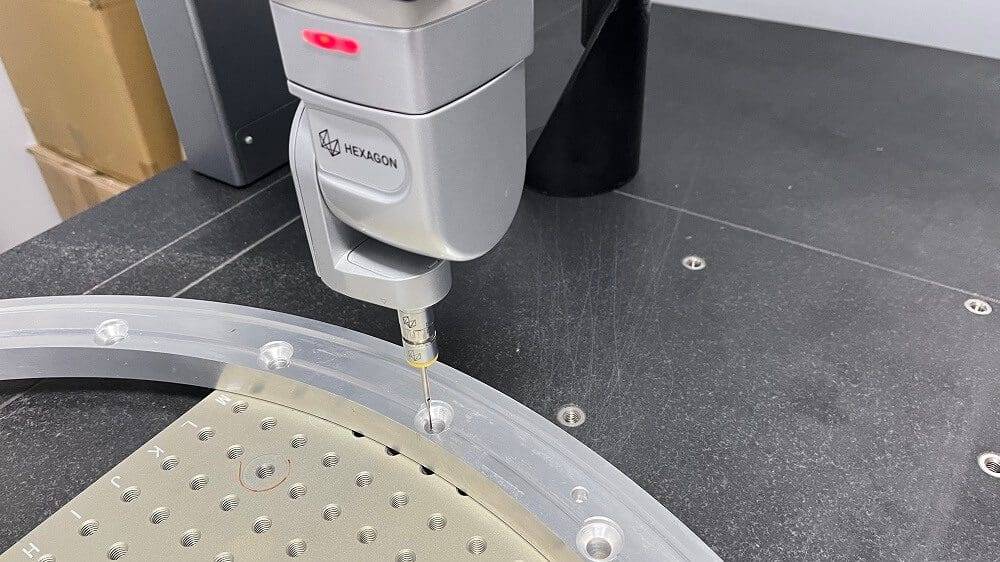
Dimensional inspection: Check critical features with CMM or optical measurement
Surface condition: Inspect for scratches, dents, and oxidation
Burr height: Confirm burrs are within acceptable limits
Flatness: Ensure parts lie flat for assembly
Plating thickness: If plated, verify coating thickness and adhesion
Tensile or hardness test: Confirm mechanical properties match requirements
A reliable supplier should provide inspection reports and be willing to review these parameters with you. If your current supplier cannot produce certifications or fails to meet tolerances consistently, consider switching to a partner with stricter quality control.
YPMFG provides full documentation with each order, including material certificates and inspection data, so buyers can verify part quality without delays.
Cost Factors You Should Know
The cost of copper stamping parts is influenced by several variables beyond the raw material price.
Tooling cost is typically the largest upfront expense. Complex geometries, tight tolerances, and multi-station dies increase tooling complexity. However, tooling cost per part drops significantly with higher volumes.
Material utilization affects unit cost. Efficient nesting of parts in the coil reduces scrap. Progressive dies that combine operations also reduce handling and cycle time.
Secondary operations add cost. Plating, heat treating, tapping, or assembly increase part price. Designing parts to minimize secondary work is one of the most effective ways to reduce total cost.
Volume and lead time affect pricing. Higher volumes allow fixed costs to be spread across more parts. Faster lead times may require overtime or expedited tooling, raising costs.
Understanding these factors helps you compare quotes more accurately. The lowest per-part price is not always the best value if the supplier compromises on material grade or quality checks.
Common Questions About Copper Stamping Parts
Can copper stamping parts be plated after stamping?
Yes. Post-stamping plating is common for corrosion protection or improved solderability. Common platings include tin, nickel, and silver. The plating process should be specified before tooling is designed to account for dimensional changes.
What is the minimum thickness for copper stamping?
Copper can be stamped in thicknesses down to 0.05 mm in some precision applications. The practical minimum depends on the part geometry, die design, and press capability. Thinner materials require careful handling to avoid distortion.
How does copper compare to brass for stamping?
Copper offers higher conductivity but is softer than brass. Brass has better spring properties and is more wear-resistant for contact applications. The choice depends on whether electrical performance or mechanical strength is more important.
What causes burrs in copper stamping?
Burrs form when the die clearance is too wide or the cutting edges are worn. Proper die maintenance and clearance optimization reduce burr height. For critical applications, secondary deburring can be specified.
Is copper stamping suitable for high-volume production?
Yes. Stamping is one of the most cost-effective processes for high-volume production of copper parts. Progressive dies can produce thousands of parts per hour with consistent quality.
Does copper oxidize over time in stamped parts?
Yes. Uncoated copper forms a surface oxide layer that increases electrical resistance. Plating or passivation is recommended for exposed electrical contacts or long-term reliability.
What tolerances can be held in copper stamping?
Standard tolerances are ±0.10 mm. With precision tooling and process control, tolerances down to ±0.05 mm are achievable. Tighter tolerances should be reviewed with the supplier during the design stage.
How do I choose between stamped and machined copper parts?
Stamping is faster and more economical for high volumes. Machining is better for low volumes, complex geometries, or parts requiring tight tolerances that stamping cannot hold.
Choosing the Right Partner for Copper Stamping
Copper stamping parts are not one-size-fits-all. Material grade, tooling design, quality control, and cost factors all influence the final outcome. A supplier that understands these variables can help you avoid costly mistakes and ensure the parts perform as expected.
When evaluating suppliers, ask about their experience with your application, their material sourcing practices, and their quality inspection process. Request a review of your part design before tooling begins.
If you are currently sourcing copper stamping parts and want to verify your specifications,YPMFG can help. Send your part drawings or sample requirements for an engineering review. Their team can provide a custom solution, recommend material grades, and offer a quote with full documentation. You can also request sample testing to confirm fit and function before production.