
Quick answer:
CNC turning and milling machining combines two subtractive processes on a single CNC machined part to produce complex geometries without multiple setups. Turning rotates the workpiece against a stationary cutting tool to create cylindrical features, while milling uses rotating tools to cut flat surfaces, slots, and contours. Parts that require both operations, such as shafts with keyways, flanged housings, or threaded components with mounting faces, benefit from combined machining centers. This approach reduces lead times,improves concentricity, and eliminates tolerance stacking between separate setups. Understanding which features are best suited for turning versus milling helps buyers specify parts correctly and avoid unnecessary cost.
When sourcing precision components, engineers and procurement teams often face a choice between dedicated turning and milling operations or a combined approach. The decision affects cycle time, part quality, and total project cost. For many applications, turning milling machining CNC parts offer the best balance of accuracy and efficiency.
Combined machining centers allow both operations to be completed in one setup. This eliminates the need to transfer parts between machines, which reduces handling errors and shortens production time. For buyers evaluating suppliers, the ability to perform both turning and milling in a single process is a strong indicator of production capability and quality control.
YPMFG supports projects that require tight tolerances across complex part geometries. Our machining centers are configured to handle both turning and milling operations, which means your part can be completed from start to finish without compromising accuracy.
How Turning and Milling Work Together
Turning is the process of removing material from a rotating workpiece using a stationary cutting tool. It is ideal for producing cylindrical features such as diameters, bores, threads, and grooves. Milling, on the other hand, uses rotating cutting tools to remove material from a stationary or moving workpiece. It excels at creating flat surfaces, slots, pockets, and complex contours.
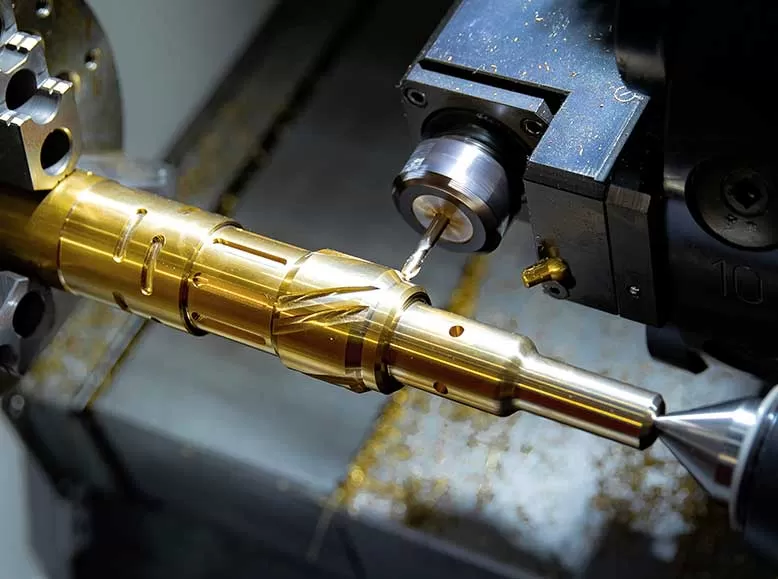
When both processes are combined in a single CNC machining center, the machine can automatically switch between turning and milling modes. This allows features like a threaded shaft with a milled keyway or a flanged boss with drilled holes to be machined without interruption.
Key advantages of combined machining:
Reduced setup time – One clamping cycle instead of multiple
Improved accuracy – Features machined in a single reference frame
Shorter lead times – Fewer machine transfers and waiting periods
Lower risk of error – No misalignment between separate setups
Part Types That Typically Require Both Turning and Milling
Not every part needs both operations. Simple cylindrical parts like plain shafts or bushings can usually be completed with turning alone. But many components in industries such as automotive, aerospace, medical devices, and industrial equipment require both cylindrical and prismatic features.
Common part examples:
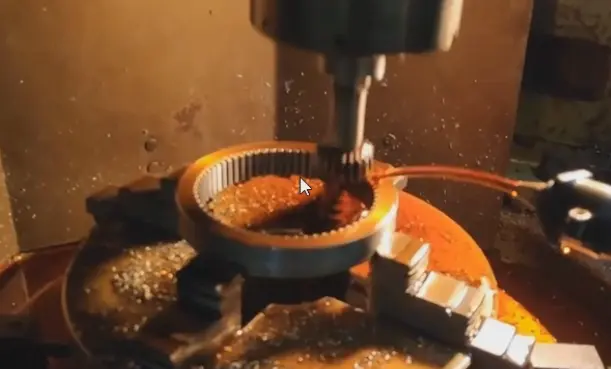
Each of these parts benefits from a combined machining process because the turning and milling features must align precisely. If the keyway on a shaft is machined in a separate setup, its position relative to the shaft’s centerline may vary. Combined machining eliminates that risk.
Material Considerations for Turning and Milling
The material you choose affects machining parameters, tool life, and surface finish. Some materials are more suited to turning, while others behave better under milling conditions.
Materials commonly machined in combined operations:
Aluminum – Excellent for both turning and milling; high speeds possible
Stainless steel – Requires rigid setups and appropriate tool coatings
Brass and copper – Good machinability but can cause built-up edge
Steel alloys – Tool wear is higher; coolant and feed rates matter
Plastics – Low cutting forces but risk of melting or deformation
Titanium – High strength-to-weight ratio; requires slow speeds and rigid tooling
When specifying turning milling machining CNC parts, you should provide the material grade and any required mechanical properties. This helps the supplier select the right tooling and cutting parameters.
Tolerance and Surface Finish Expectations
Combined machining centers can hold tight tolerances, but the achievable range depends on part geometry, material, and machine capability.
Typical tolerance ranges:
Turning operations – ±0.001 to ±0.005 inches (0.025 to 0.127 mm)
Milling operations – ±0.002 to ±0.005 inches (0.051 to 0.127 mm)
Surface finish – 32 to 63 Ra microinches (0.8 to 1.6 µm) achievable in standard production
YPMFG can evaluate your part specifications and advise on achievable tolerances before production begins. Sending a detailed drawing or CAD file allows us to identify potential issues early and adjust the machining approach accordingly.
Cost Factors in Combined Turning and Milling
The cost of CNC machined parts that require both turning and milling depends on several variables:
Complexity of geometry – More features increase cycle time
Material type – Harder materials reduce tool life
Tolerance requirements – Tighter tolerances require slower feeds and additional inspection
Quantity – Setup costs are spread across the batch size
Secondary operations – Threading, knurling, or heat treatment add cost
Combined machining often reduces total cost by eliminating multiple setups and reducing labor. For small to medium production runs, it is typically more economical than transferring parts between dedicated machines.
Questions Buyers Often Ask About Turning and Milling Parts
1. Can any CNC machine do both turning and milling?
Not all machines are capable. You need a combined machining center, often called a mill-turn or multi-tasking machine. Standard lathes cannot perform milling operations without special attachments.
2. How do I know if my part needs both processes?
Look at your part drawing. If it has both cylindrical features (diameters, bores, threads) and prismatic features (slots, flats, holes), it likely needs both turning and milling.
3. Will combined machining save me money?
In most cases, yes. Combining operations reduces setup time, handling, and inspection steps. The savings are most noticeable on parts with moderate complexity and batch sizes between 10 and 500 units.
4. What file format should I send for a quote?
Most shops accept STEP, IGES, or native CAD files. A detailed PDF drawing with tolerance callouts is also helpful. YPMFG accepts CAD files for review and can provide feedback before quoting.
5. How important is material selection for combined machining?
Very important. Materials like stainless steel and titanium require different tooling and feeds compared to aluminum or brass. Providing material specifications early helps avoid delays.
6. Can you machine parts with both internal and external features?
Yes. Combined machining centers can access both the inside and outside of a part in a single setup, provided the tooling can reach the required features.
7. What is the typical lead time for combined turning and milling parts?
Lead time depends on complexity and quantity. Simple parts can ship in 1-2 weeks. More complex parts may require 3-4 weeks. Rush services are available.
8. Do you provide inspection reports?
Yes. Most suppliers offer first article inspection reports and dimensional inspection data. You should confirm what documentation will be provided with your order.
Choosing a Reliable Partner for Turning and Milling Parts
Selecting the right supplier for turning milling machining CNC parts requires more than comparing prices. You need a shop with the right equipment, experienced engineers, and a clear understanding of your application’s requirements.
YPMFG supports buyers throughout the entire process, from engineering review to final inspection. If you are unsure whether your part is suited for combined machining, send us your specifications. We will evaluate the geometry, recommend the best approach, and provide a clear quote.
A well-chosen machining partner reduces risk, shortens development time, and helps you deliver a better product to your customers.