Quick answer:
CNC turning is a subtractive machining process where a rotating workpiece is shaped by a stationary cutting tool. It is most commonly used to produce cylindrical parts such as shafts, bushings, and pulleys. Unlike CNC milling, turning focuses on external and internal diameters, grooves, threads, and tapers with high repeatability. For procurement teams and engineers, the main concern is not the process itself but how it affects cost, lead time, and quality. Material choice, part geometry, tolerances, and surface finish all directly influence turning complexity. Understanding these variables helps avoid unnecessary design changes and budget overruns.
If you are sourcing turned parts for the first time, you might assume the price depends mainly on material. That is only half the story. Many buyers discover mid-project that a simple design change, such as adding an internal thread or tightening a tolerance, can double the machining time. The real cost of CNC turning comes from setup, cycle time, tool wear, and inspection requirements. Without a clear understanding of how these factors interact, it is easy to under-budget or over-specify. That is why this article breaks down the process, cost drivers, and practical selection criteria. YPMFG regularly supports buyers who need to balance precision with production speed, and the same logic applies whether you order fifty or five thousand parts.
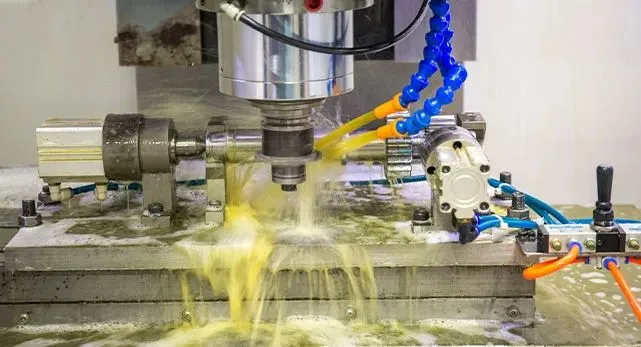
CNC turning uses a lathe or turning center to remove material from a rotating workpiece. The cutting tool moves along one or more axes to create the desired shape. Most turning operations are performed on cylindrical stock, but modern machines can handle complex profiles with live tooling. The process begins with a solid bar or pre-cut blank. The machine holds the material in a chuck or collet. As the spindle rotates, the tool engages the surface. Roughing passes remove bulk material, and finishing passes achieve the final dimensions and surface finish. Modern CNC turning centers can perform multiple operations in a single setup. This reduces handling errors and shortens overall production time. For buyers, this means faster delivery and better consistency across batches. CNC turning and milling are often confused, but they solve different geometry problems. Turning is ideal for parts that are symmetrical around a center axis. Milling is better for prismatic shapes with flat surfaces, pockets, or complex 3D contours. In turning, the workpiece spins. In milling, the tool spins. This fundamental difference affects tooling strategy, cycle time, and achievable tolerances. If your part is round and symmetrical, CNC turning is usually the faster and more cost-effective option. If it has features on multiple faces, milling or a mill-turn machine may be needed. The material you choose affects machinability, tool life, and final part cost. Aluminum, steel, stainless steel, brass, and plastics are the most common. Aluminum turns quickly and produces good surface finishes. It is widely used in automotive, aerospace, and consumer products. Steel and stainless steel are stronger but require slower speeds and more rigid setups. Brass is easy to machine and often used for fittings and valves. Plastics like nylon and acetal are lightweight and corrosion-resistant but may deform under heat. For each material, the machinist must adjust feed rate, spindle speed, and coolant strategy. If the material is unfamiliar, it is safer to request a machining review from your supplier. YPMFG provides material-specific recommendations during the quoting stage to avoid surprises. Turning cost is not a single number. It breaks down into multiple components that vary by part design and order quantity. Setup cost covers programming, tool selection, and machine preparation. This is a fixed cost per order. Complex parts with tight tolerances require longer setup. Cycle time is the actual machining time per part. It depends on material, feature count, and toolpath efficiency. Tool wear is higher for hard materials and small diameters. Inspection cost is often overlooked. Parts with critical dimensions may require CMM inspection or surface profilometry. This adds to both time and price. For small batches,setup dominates the total cost. For large runs, cycle time and tool wear matter more. When requesting a quote, always provide a clear print or 3D model with tolerance callouts. This helps the shop give an accurate price and avoids rework later. Standard turning tolerances are around ±0.05 mm. With careful setup and finishing passes, ±0.005 mm is achievable. But tighter tolerances increase cycle time and scrap risk. Surface finish in turning typically ranges from 0.8 to 3.2 µm Ra. Finer finishes require slower feeds, sharper tools, and sometimes secondary operations. For most industrial applications, 1.6 µm Ra is sufficient. If your design specifies tolerances tighter than necessary, you pay more for no functional benefit. Review your print with the assembly requirements in mind. A supplier that offers engineering feedback can help you relax unnecessary specs. CNC turning appears in nearly every manufacturing sector. In automotive, it produces shafts, pistons, and valve stems. In aerospace, bushings and fittings require tight tolerances and traceability. Medical devices use turned parts for implants, surgical tools, and instrument housings. Hydraulic and pneumatic systems rely on threaded fittings and cylinders. Even in electronics, connector housings and heat sinks are often turned from aluminum or brass. The common thread is the need for consistent roundness, concentricity, and repeatability across production volumes. How fast can I get a quote for a turned part? Most shops provide a quote within one to two business days if you submit a complete 3D model or print. Adding material specs and tolerance notes speeds up the process. What file format do you need for CNC turning? STEP or IGES files are preferred. PDF prints with dimension callouts are acceptable but slower to process. For simple parts, a sketch with key dimensions may be enough. Can CNC turning produce internal threads? Yes. Single-point threading and thread chasing are common. For small diameters, thread rolling may be used. Specify thread type and class on the print. Is it cheaper to turn parts from bar stock or blanks? Bar stock is faster for simple parts. Pre-cut blanks reduce waste for larger diameters. The better choice depends on material cost and quantity. What is the typical lead time for a turned part? Standard lead time is two to four weeks. Rush orders may be possible for an additional fee. Discuss your schedule early to avoid delays. Do you offer finishing after turning? Yes. Plating, anodizing, passivation, and painting are common post-turning processes. Note the required surface treatment on your RFQ. How do I know if my part can be turned in one setup? Parts with features on one side are easier. If you need features on both ends, the part may require a second operation. A supplier like YPMFG can review your design and suggest setup optimization. What happens if my part is out of tolerance? Most shops perform in-process inspection. If a part falls outside spec, it is either reworked or scrapped. Always confirm the supplier’s quality control procedure before placing an order. The best turning service is not necessarily the cheapest. It is the one that understands your application, material, and quality requirements. Look for a shop that offers engineering review, clear communication, and consistent inspection practices. If you are still unsure which material or tolerance is right for your part, start by sending your specifications to YPMFG for a free engineering evaluation. Their team can identify potential machining issues, suggest design adjustments, and provide a realistic cost estimate before you commit to production. That single step often saves both time and money.01What Is CNC Turning and How Does It Work?
02CNC Turning vs CNC Milling: Key Differences
03Common Materials Used in CNC Turning
04Cost Factors You Need to Know Before Quoting

05Tolerances and Surface Finish: What Is Realistic?
06Typical Applications Across Industries
07Questions Buyers Often Ask About CNC Turning
08Choosing the Right Turning Service for Your Project