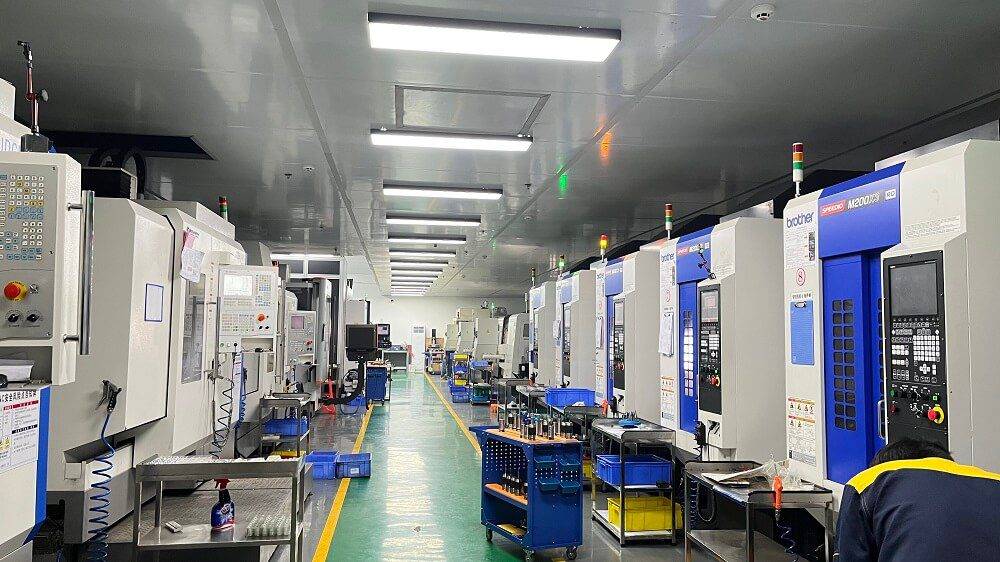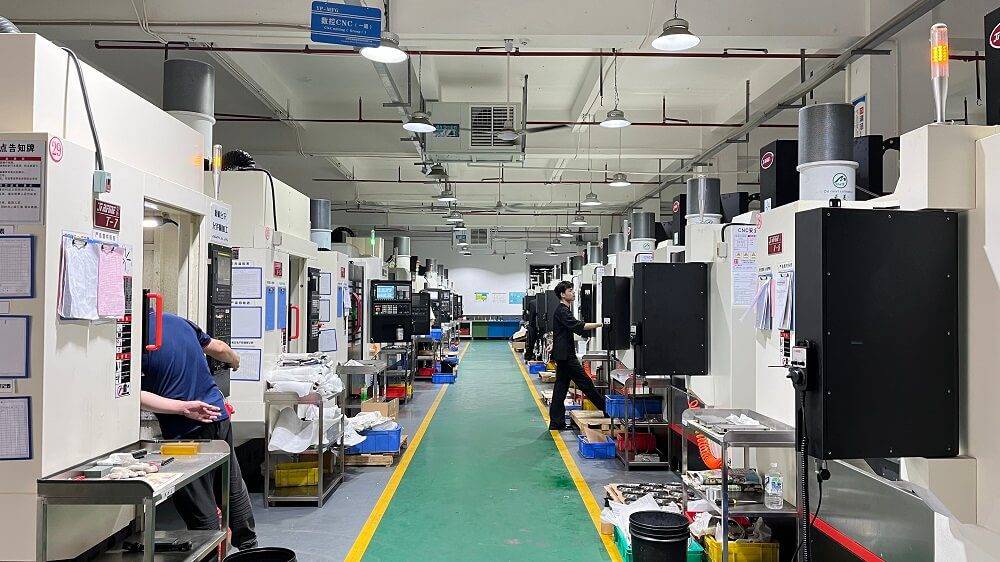
The die-cast shell is not a lump of iron. Have you ever seen a heat dissipation rollover site?
The rapid failure of LEDs is largely due to poor heat dissipation performance of the housing. Don’t be naive and think that just buying an aluminum alloy cover will solve the problem. This idea is too simple.
In fact, if you want to ensure that LEDs have good heat dissipation, it is by no means as simple as relying on an aluminum alloy cover. Heat dissipation issues involve key properties such as the service life of LEDs, and should not be treated lightly.
Market tragedy: whose LED is "chronically committing suicide"?
Look at the rows of street lights, the light has declined by 30% in less than half a year. Would you say it's annoying?
reason? Just one:
Thermal conduction is blocked
Air convection is useless
Some small-scale factories, when carrying out procurement activities, blindly pursue low prices and ultimately select die-casting parts of poor quality. So what happens next? The rate of customer returns has soared sharply. Not only has it suffered economic losses, but it has also suffered negative impacts on reputation and other levels. It can be said that it has damaged both financial resources and reputation.
Heat dissipation , this word sounds basic, how many have done it well?
An in-depth analysis of "die cast housing": an elaborate material scam
Die cast aluminum ADC12 or A380? Beginners always stumble here.
If the thermal conductivity differs by 10W/m·K, the junction temperature will jump by as much as 15°C. When the temperature difference exceeds 30°C, the situation becomes unfavorable and the device will be damaged quickly. This is an ironclad law based on physical principles and no doubt is allowed.
Common routines:
1. Manufacturers boast of “high-purity aluminum alloy”
The measured impurities exceed the standard
There are as many pores as the surface of the moon
2. The fins are designed to look good
Uneven thickness
The hot air can't get out at all
Guess what? The lamp beads are simmering inside, and the light decay curve is as steep as a bungee jump.
Q/A quick guide
Q: Die-cast shells must dissipate heat better than profiles?
A: Not necessarily. Design is more important than materials, inferior fins can block heat convection.
Q: How to quickly judge whether the shell is good or bad?
A: Depends on weight and fin density. If it is too light, material will be stolen; if the fins are too dense, it will hide dust.
Q: How thick should the thermal grease be applied?
A: The thinner, the better. 0.1mm is enough, the thicker it becomes the insulation layer.
Q: Does surface powder spraying affect heat dissipation?
A: The impact is huge. The powder spray thickness is 20μm, and the heat dissipation efficiency is reduced by 15%.
Design details: The pitfalls that no one tells you
The closer the fin spacing is, the better. It gets clogged with dust and turns into a "thermos cup" after half a year.
When it comes to the selection of materials, there are many ways to do it. Take die-cast aluminum as an example. For its thermal conductivity, you must not easily believe the value marked on the brochure. You must obtain an actual measurement report. There was once a well-known case (because it is inconvenient to point out the specific name). The thermal conductivity marked in the brochure was 150, but after actual measurement, the value was only 90. Such a huge temperature difference really taught people a good lesson.
There is a deviation in the installation hole position. The deviation is 0.5mm. In this situation, the pressure will become uneven. Have you seen the thermal resistance distribution diagram? In fact, the difference in contact thermal resistance can be as much as 4 times.
Don’t think that filling with glue is omnipotent. In actual use, if the potting compound is wrongly selected and the thermal expansion coefficient does not match, then in a low-temperature environment, such as -20°C, the shell will suddenly crack. This is enough to show that choosing the appropriate potting glue is very critical, but you cannot just rely on potting glue to solve all problems.
Historical Review: How did the die-cast shell get to where it is today?
Ten years ago, LED heat dissipation relied on the "silly, big, black and thick" method – that is, milling a whole piece of aluminum. The cost was so high that it was unreasonable and outrageous.
Later, the die-casting process came into play:
First generation: as long as it can be formed
Second generation: start calculating the heat dissipation area
Third generation (now): thermal simulation + flow channel optimization
However, in the market, up to 90% of the products are still in the second-generation stage. They are obviously sold at third-generation prices, but they are actually providing customers with first-generation quality. Such business practices are really unacceptable.
Collection of common misunderstandings
Myth 1: Thick walls = good heat dissipation
Truth: When the wall thickness exceeds 3mm, the thermal resistance decrease is negligible and material is wasted.
Misunderstanding 2: Black spray paint helps dissipate heat
The fact is that radiation heat dissipation accounts for only 20% of it, while convection accounts for a larger proportion. Black spray paint will clog the micropores.
Misunderstanding 3: If the shell is hot, it means it is conducting heat
The truth: If the shell is hot, it means that the heat has come out, but it cannot get out – the design is failed.
Action suggestion: Don’t step into the trap next time you purchase
To initiate the design process, we must start with the heat source and conduct reverse derivation. The chip has a red line standard of junction temperature of 85°C. Based on this, a margin of 10°C must be reserved. The current ambient temperature is 35°C. So, please do this calculation. What will the thermal resistance of the shell be at this time?
Three steps:
1. If you want actual measurement report, don’t look at the PPT
2. Check the thermal conductivity. If it is lower than 120W/m·K, pass it directly.
3. Run a thermal simulation to cure various "almost" problems
Keep in mind that the very existence of an LED product that lacks good heat dissipation design is an irresponsible act, just like being a hooligan. Suppose you cut corners on product quality in order to save a small shell cost of three to five yuan. When customers notice problems during actual use and vote against your product, it will be too late for you to regret it. You can only secretly regret your short-sightedness and greed.
If you can't handle the heat dissipation, don't use high power. The rules of this business are that simple.