The systematic review of 3D printing materials you are about to read starts from the iterative context of materials in the past few decades, analyzes the core parameters of different types of materials in detail, clarifies their applicable boundaries, and points out common misunderstandings, which can help relevant practitioners build a complete material knowledge framework.
01Basic materials pattern in the embryonic stage (1980s to 2000)
In the 1980s, the first batch of 3D printing materials came into commercial use, holding the key to the start of the industry. At that time, desktop-level production scenarios were not yet popular, and most of these consumables only served the rapid prototyping needs of industrial prototypes. Thermoplastic polymers were the first to break into the market. According to some members, as the prototype of entry-level pla consumables, it has a large printing fault tolerance and extremely loose threshold requirements for hardware nozzle temperature. Even if novice operators have accumulated too much practical experience, they are not prone to problems such as layer peeling and plugging. At that time, the entire 3D printing industry ecosystem was still in its infancy, and the synthesis process of raw materials had not yet completed mature large-scale iterations. There were only five or six types of consumables circulating on the market, and the options were extremely small. Many demanders even had to customize material formulas according to their own special processing scenarios, and the total processing cost has been high for a long time. At that time, who could have imagined that decades later, the variety would be so rich that it could cover the shelves of the entire material exhibition hall? Almost all the basic consumables circulating at this stage have molecular structural properties with a low cross-linking degree. However, many people do not know that the printed prototypes have almost no ability to withstand high load conditions. Most of them only meet the basic purpose of appearance verification. Compared with today's high-performance materials that can be directly assembled into terminal assembly components, there is a significant gap in performance indicators. Practitioners who participated in the early stages of many industries have deep memories of the complicated and trivial experiences of squatting in the workshop until late at night adjusting material ratio parameters. Such exploration experience in the initial stage has become the key core starting point for subsequent iterations of the entire material technology.
Leave blank
02The emergence of multiple categories in the popularization expansion stage (2001 to 2020)
The cost of printer hardware is declining year by year, and the number of equipment owned by desktop R&D workshops, maker studios, and college training centers is rising exponentially. The public's demand for 3D printing materials has been infinitely broadened. Ordinary pla derivative consumables are quickly meeting the mainstream needs of c-end users, AB S-type modified engineering consumables took over the second growth curve and entered the pan-industrial scene of hand-made prototypes and structural verification. Flexible consumables such as TPU took advantage of the lightweight application to enter the segmented track of shoe trial production and soft gasket proofing. All types of consumables mushroomed and filled the market display racks. At this time, practitioners slowly realized that in different processing scenarios, there are huge differences in the requirements for the toughness, deformation temperature and corrosion resistance level of consumables. Before this, a single basic polymer material could not meet all kinds of weird and bizarre demands. At this stage, when purchasing 3D printing materials, everyone has begun to learn how to superimpose modified demand parameters for screening. Photosensitive resin with carbon fiber filling has successively entered the processing fields of precision white molds and sand mold castings, providing a completely different alternative to the traditional subtractive manufacturing process. A large number of data obtained from the processing of ordinary scenes are recorded as time passes, helping those engaged in consumable production to calibrate and further optimize every detail of the material formula step by step. The rate of product manufacturing that can meet the qualified standards has increased from less than 50% in the early years to more than 98% later. The entire related industry has made substantial progress in the direction of reducing costs and improving efficiency. We might as well compare it with the raw material cycle required for traditional production and processing during the same period. Customizing a profile with special properties often requires up to twenty days to wait for raw material stocking and production capacity. However, the corresponding 3D printing materials can be delivered to the user's workstation in three days at the latest. Such an impactful efficiency difference has instantly hit the core pain points of many manufacturing users.
Leave blank
03High-performance iteration trend in the current implementation stage (2021 to 2026)
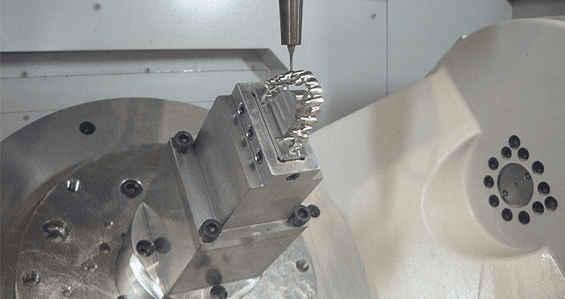
In the past five years, the industry as a whole has calmed down and made steady progress towards the solid goal of terminal mass production. A large number of composite materials that could only be seen in special laboratories have got rid of the constraints of expensive testing costs and entered the commercial sequence. In high-temperature alloy metal materials, customized proportions of ceramic particles are mixed The mixed formula of the particles gives the printed terminal parts much higher wear resistance and biophilic compatibility than traditional single products. Many medical orthopedic implants directly use this kind of material to complete batch printing and conduct landing verification. The data feedback of the landing effect is even better than the clinical performance of the finished product obtained by the traditional die-casting process. The iteration of ordinary plastics has not stopped. Various new formulas adding natural fibers are constantly emerging, and various new formulas adding food-grade precipitation inhibitors have appeared in large numbers. The corresponding policy compliance thresholds have been dynamically adjusted simultaneously, completely eliminating the legal obstacles for this type of materials to enter the household kitchenware manufacturing track, and completely eliminating the legal obstacles for this type of materials to enter the toy manufacturing track. Every practitioner on this track has personally experienced that when selecting and adapting products, the number of controllable parameter variables is unprecedented. Choosing the right materials that can match the characteristics of the scene can directly reduce the production scrap rate by more than 60%, thus forming a completely different input-output ratio. However, casually choosing cheap compatible consumables purchased online can easily lead to unexpected printing accidents. At present, after a long period of experience in the industry, everyone has long gone beyond the single limitation of selecting consumables based on heat-resistant parameters. Marginal indicators such as the recycling rate of environmental protection attributes and the degree of smoke evaporation during the printing process, which were previously ignored, have now been included in the key reference list for ordinary users to make decision-making decisions. Many workshops have even set aside special areas for material storage with constant temperature and humidity to store special types of powder consumables. This shift in refined cognition is supported by valuable practical experience accumulated through thousands of trials and errors throughout the industry.
Leave blank
04Reference of typical applicable dimensions in all scenarios
We have sorted out a list of high-frequency adaptation scenarios for mainstream 3D printing materials circulating in the market. When you make selections, you can use this list as a basis, refer to and compare to select the most suitable target categories, so as to effectively avoid incorrect procurement in the early stage, resulting in unnecessary cost waste.
1. For the entry-level prototype display category, conventional modified pla consumables are suitable for display models, scientific and educational teaching aids, and decorative ornaments. The unit price of the consumables is within a reasonable processing range, and the error tolerance rate is very high.
2. In the category of structural stress verification, consumables such as fiberglass-filled ABS are suitable for non-continuous load-bearing fixtures. The temperature resistance level of the fixtures during trial production and verification can be changed to a range of about 80 degrees Celsius.
3. Flexible elastic accessories. Among them, TPU consumables with different Shore hardness are suitable for flexible structural parts of sealing ring protectors. In this scenario, the resilience performance is guaranteed, allowing them to withstand pressure for multiple cycles without being damaged.
4. This type is used for medical terminal implantation. The medical-certified photosensitive resin or alloy-grade titanium-based consumables are suitable for dental braces and orthopedic customized brace scenarios. The entire process meets the requirements of biological-grade compliance standards.
5. In the category of anti-corrosion and high-temperature resistant working conditions, peek-type high-performance engineering consumables are suitable for equipped with accessories. They can even operate stably without interruption for a long time under long-term acid and alkali corrosion conditions and long-term high-temperature working conditions.

After reading this series of adaptation reference lists, have you clearly judged in advance that there are a considerable number of scenarios for specific uses of vertical subdivisions, among which there are material gaps that have not yet been covered and not satisfied, and are waiting to be further enriched, improved and filled by new products launched in the industry. What you need to pay special attention to here is that even if the consumables are marked as the same category, after different formulas and proportions, the actual internal performance differences fluctuate greatly. You can never make a purchase decision directly based on the category label alone, and you must avoid expected gaps in advance. Many practitioners keep in mind the profound lessons of the past and always remind everyone that they must print a sample for trial printing and test all core indicators before deciding whether to start bulk purchasing. They must not save tens of dollars for a sample and bear the subsequent losses of tens of thousands of dollars of scrapped batch printing, that is, sunk costs. In terms of comprehensively considering and adapting to the multi-scenario complex needs of daily processing in your factory, the comprehensive cost of procurement is actually much more substantial than the ratio of short-term investment and long-term benefits you estimate.
Leave blank
05Q/A answers to common questions about model selection
Question: What kind of abnormalities will occur when printing filament filaments that have been placed in a humid environment for a long time?
If the filament bulges, the glue filament will break, the material will not be smooth, and bubble-like pores will appear in the printed parts.
Question: If we mix and match light-curing resins from different manufacturers with the same standard number, will they be able to meet the standards and achieve the expected performance level?
No, the cross-linking reactions of the two sets of materials do not match, the stress distribution of the parts will be unbalanced, and invisible cracks and grain defects will most likely occur.
The question is, for high-temperature industrial-grade printers, what kind of equipment abnormality protection action mechanism will be triggered by filling it with engineering-grade consumables that do not fully match?
The nozzle feeding channel was completely squeezed and leaked material. The leaked material adhered to the heating construction platform, which made subsequent hardware cleaning and maintenance costs very high.
A: Metal powder consumables that have not been unpacked are stored. What are the basic environmental condition indicators for storage that must be strictly controlled?
A: Strictly carry out moisture-proof operations and accurately control the oxygen content to ensure that the powder does not oxidize, there is no mixing of external impurities, and the overall particle size distribution does not shift abnormally.
Q: How will the overall performance and capabilities of the pla-derived consumables after secondary melting and granulation change after they are recycled?
A: In terms of mechanics, the maximum strength has been reduced, by nearly 30%. The bonding strength between layers has dropped significantly, making it particularly unsuitable for use as stressed parts.
When you get your hands dirty and practice the printing of two or three batches of different attribute parameters, and understand the different batches of materials after verification, and get the support of internal reliable measured basic data, when you accumulate the most suitable and exclusive adaptation experience for your own workshop, this will be much more reliable than the guidance plan obtained by piecing together the tutorials on network fragmentation.
Leave blank
06Future industry outlook and implementation guidance
Over the past few decades, looking back at the full cycle of industry growth and iteration, all relevant personnel have put in their efforts step by step and down-to-earth. Now, we are pleased to see that the rhythm of collaborative cooperation between various entities in the entire 3D printing materials industry chain is becoming increasingly smooth. In the not-too-distant next five to ten years, we can fully predict that new consumables that are completely biodegradable and have zero natural emissions will release huge cross-industry empowerment energy that is far beyond anyone’s current imagination, opening up completely different new track opportunities for the entire advanced manufacturing chain. As one of them, whether you are the manager of the trainee's creative workshop or a manufacturing process developer, you can start immediately, step by step, to sort out and organize all the testing parameters of the different consumables in use. Make detailed records and compare the differences in the results after each trial and error of changing materials. If you accumulate and summarize it, in more than half a year, you will have rich experience in the selection methodology. The level is no longer found in any ready-made public report on the market, and this precious first-hand material derived from your own practice is actually more valuable than you expect. It can help you avoid countless, unseen and unforeseen material losses and manufacturing misunderstandings in the subsequent production process, allowing every resource you invest to be converted into real positive performance output.