In 2025, the global aluminum processing market will reach 1.2 trillion, but do you know how many orders were ultimately returned due to "details overturning"?
No nonsense, I am the "old fritter" who has been squatting on the aluminum processing assembly line for ten years.
Extruding, cutting, oxidizing, drilling – it looks simple, right?
However, every time when I get the drawings sent from the customer, I only have one thought in my mind, and that is: Who drew this thing for fun in the office?
If you go to the factory with a drawing of an aluminum profile with a complex cross-section, the first thing people say is always: "Who is going to pay for the mold fee?".
Don't rush to slam the table.
Let me think about it this way. It costs 30,000 to 50,000 yuan to complete a set of molds, but the result is that you only order 200 meters, and even the water and electricity bills incurred by turning on the machine cannot recover the cost. Who would do such a business?
So you will see a bunch of people running to ask about the price and then hanging up the phone after asking.
Then what?
Then go find the factory with the lowest price.
A common example is as follows. Last year, a small-scale private owner engaged in the display rack business found a roadside handicraft workshop to carry out aluminum processing business. The price was indeed extremely low. However, what happened in the end? The extruded profile is twisted like a twist, and the surface of the profile is covered with fine, brushed-like textures. When anodized, the surface directly presents a messy and mottled pattern like a map.
Out of dissatisfaction, the buyer slammed the table and demanded to return the goods. In this case, the small boss turned around and went back to find the workshop. However, the people in the workshop just spread their hands and said, "This is the situation we have always been in. If you need high-precision products, then go find a large factory."
Haha, I'm impressed by this.
So the question is – what exactly is being rolled in aluminum processing?
The first keyword: cutting parameter optimization
Do you think the machine is not good enough? wrong.
Most rollovers occur during the cutting process.
The speed of the saw blade deviated, the feed speed was too fast, and the coolant failed to keep up in time. As a result, the aluminum chips adhered to the blade, and the cutting surface was blurred when the blade was cut.
Not to mention those orders that require "zero burrs". Looking at the drawings makes my blood pressure rise.
If you ask ten masters engaged in processing work what "zero burr" means, these ten masters will give different answers.
There is an unspoken rule in this industry: the wider the tolerance, the harder it will be to cry later .
I have seen extremely outrageous drawings that indicate a cutting accuracy of plus or minus 0.05 millimeters, but the curvature of the profile itself reaches 0.3 millimeters per meter.
Do you want me to measure with a ruler or with my eyes?
Q: Is it better to process aluminum in the extruded state or the heat-treated state?
What A said is that if you directly choose a heat treatment state such as T5 or T6, the extruded state is too soft. When drilling and tapping are performed later, there will be burrs. Anyone who has used it will know that this happens.
OK, keep talking.
The extruded profile needs to pass the straightening process.
Many small factories do not do online straightening at all and wait for cooling before re-straightening.
What are the consequences? The shape of the profile has been fixed. After the straightening machine presses down, the middle becomes straight, but the two ends are bent. If the two sides become straight, the middle deviates again.
It's like squeezing plasticine – the harder you push, the harder it bounces back.
Therefore, for those who know the industry, when they go to observe an aluminum processing plant, the first thing they do is not to see how big the extrusion machine is, but to see whether the cooling bed is long enough.
The cooling bed was too short, so the profile was hung up without being cooled, and the entire section bent due to the pull of gravity.
The second keyword: cost trap identification
Don't talk to me about "cost-effectiveness".
In the field of aluminum processing, the price is reduced by 20%, which means that you have to bear the risk of 50% return.
The data I have on hand will not deceive anyone. In the past three years, 83% of the repair orders we have taken on came from customers who "shifted orders from factories with lower prices."
Originally they saved three yuan per kilogram in processing costs, but in the end they spent an extra six yuan per kilogram on rework and straightening.
In the end, it is better to find a regular factory from the beginning.
How do you think this account was calculated?
Q: What causes blistering on the surface of aluminum materials?
For A, if the extrusion speed is too fast, or if the aluminum rod is not homogeneous, the bubbles will explode after oxidation, and the entire batch will be scrapped. Don't even think about remediation.
Anodizing is the hardest hit area.
There is a little oil stain on the surface of the profile you sent, and the oxidation will turn into spots.
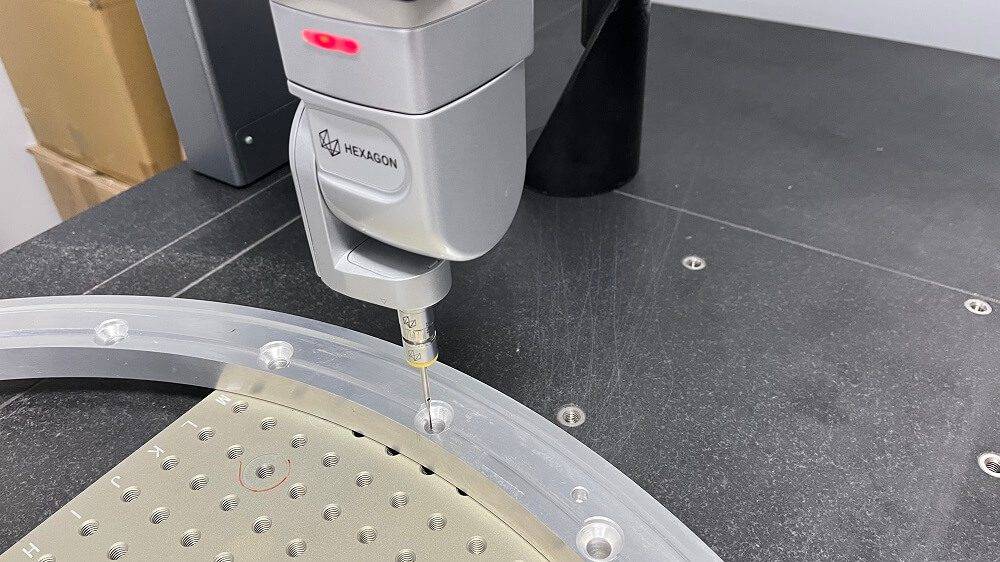
You accuse the oxidation plant of not doing a good enough job, and the oxidation plant in turn shows you photos of the incoming materials and says: "Go and see for yourself what kind of items are delivered?".
Are you speechless?
Therefore, I have always emphasized this situation with the customer: up to 80% of the quality problems when aluminum materials are processed are caused by the first three processing steps.
If the cutting is not clean, the squeezing temperature is not appropriate, and the straightening step is not done properly, no matter how much money is spent in the future, there is no way to save it.
Just last year, I met a customer who was engaged in outdoor furniture-related business. The customer firmly demanded that the thickness of the oxide film should be 25 microns.
Let me tell you that the wall thickness of your profile is only 1.2 mm. If you make a 25 micron thick film, it will definitely crack if you perform a bending test.
Don't believe it.
The result? When the workers broke it apart during assembly, the oxide layer collapsed.
The customer came to me and asked me what to do. I said to change the process to natural oxidation + spraying.
He also found it too expensive.
This is called a cognitive tax .
The third keyword: supplier selection
Aluminum processing is not about buying cabbage, or finding the cheapest one.
You have to first figure out what your core needs are.
Making structural parts? Focus on mechanical properties and dimensional accuracy.
Making exterior parts? Surface quality and color difference control are king.
Make a radiator? The accuracy of the internal teeth and the flatness of the substrate directly determine the heat dissipation efficiency.
But what’s the first thing most people do when they open a supplier list?
parity.
Sort from low to high.
Then make a phone call.
Then ask "can I do it?"
The other party said "it can be done" and placed the order.
Let me ask you, you dared to place the order without even asking how many straightening machines they have and whether the oxidation line is automatic or manual. Is this appropriate?
This is not buying something, this is lottery .
Q: Why is there no one accepting small batch aluminum processing?
Reply A: It takes two hours to prepare for startup, but only five minutes to start production. The cost of mold sharing is very high. If you can pay for it, then do it. Otherwise, go to the profile supermarket to pick up the spot.
According to some statistics, for aluminum processing orders with a medium level of complexity, the average number of effective communications from the time a quotation is given to the completion of delivery is fourteen times.
Among these 14 times, 9 times were to confirm the markings and tolerances on the drawings.
Once, a customer sent me a drawing in PDF format. I asked him to send the CAD source file. He said, "This is the drawing. You can just trace it yourself."
Trace it?
Guess whose responsibility I made the mistake of describing?
Ever since, I have now formed a habit, that is, whenever I receive a new drawing, I will first spend half an hour browsing every tolerance and annotation one by one. If there is any doubt, I will directly mark it in red and send it back.
Do clients think I have too many things to do?
But after doing this, our first-time pass rate increased from 72% to 91%.
What is the remaining 9%? It's a problem with the material itself.
Aluminum rods come from different sources and batches, and the extruded performance will fluctuate.
This is like a stir-fry situation where the chili peppers used today are spicier than yesterday's chili peppers for the same dish, resulting in a difference in taste.
What we can do is to inspect the incoming materials before processing.
Hardness, composition, low-magnification structure – each batch is randomly inspected.
The cost is a bit higher, but it’s better than scrapping the entire batch.
The fourth keyword: process reverse thinking
Many people engaged in aluminum processing adopt a forward advancement method, that is, first get the drawings, then perform the mold opening operation, then carry out extrusion work, then cut it, and then implement the oxidation process, and finally complete the delivery process.
Sounds okay, right?
But a true veteran works backwards .
Ask yourself first: In what environment will this product be ultimately used?
seaside? If the corrosion resistance requirements are high, the oxide film must be sealed.
High temperature environment? Then consider the thermal expansion coefficient and reserve a gap.
Need a tooth tapped? The wall thickness must be sufficient, otherwise it will crack with one attack.
If welding is required, the alloy state must be selected appropriately. 6061 alloy can be welded, 6063 will be welded with difficulty, and 6060 is basically impossible to weld.
You see, these are not necessarily marked on the drawings.
You know, if you can't sort out the ideas in your mind earlier, and you don't notice the problem until the goods arrive in the hands of the customer, it will be too late!
Q: How to choose between 6061 and 6063?
If you want that kind of strength, then choose 6061-T6. If you want surface finish and extrudability, then you have to choose 6063-T5. There is no way to achieve both situations at the same time, so don't be greedy.
Last year, a customer who made automation equipment wanted to use aluminum profiles instead of square steel to make the frame.
He took a fancy to the good squeezing properties of 6063, but did not consider the load-bearing capacity.
As a result, after a week of installation, the beam became bent.
He came to me and I said that for your current situation, you can only use 6061. However, 6061 is more difficult to extrude, and its surface quality will be relatively poor.
He weighed it up and chose 6061.
One more step of verification will save you one more mistake.
Having mentioned this, you may be vaguely aware of this. In the aluminum processing industry, details are as elusive as ghosts, and communication is like the life-saving thing that can save the overall situation.
Those factories that pat their chests and say "no problem" at every turn are often the factories that are best at blaming others.
A truly reliable supplier will ask you a bunch of troublesome questions before accepting an order:
Why does this fillet have to be so small?
Can this chamfer be enlarged?
Can this hole be changed to the other side?
Can this tolerance be relaxed by 0.01?
It’s not that they have too many things to do, it’s that they don’t want to have to deal with it afterwards .
The fifth keyword: quality closed-loop management
We have an internal table called the problem traceability card .
For each batch of aluminum processing orders, from the time the aluminum rods enter the factory until the finished products are shipped out of the factory, any problems that arise in any link, who performed the operations, and how they were solved are all recorded in detail.
Review the review once a month and hold a critique meeting on high-frequency issues.
Last month we discovered a problem: customers complained that the cutting surface had a step-like feel.
After chasing after it, I found that the saw blade replacement cycle was too long, and it took 800 times to replace it.
The standard should be 600 times.
This gap of 200 times resulted in three entire batches of goods requiring secondary processing.
How much is the loss? More than fifty thousand.
Who do you think should pay for this?
Of course, the factory itself takes care of it.
So now our saw blades are forced to be replaced 600 times, not even once less.
This is not a high-tech issue, but a matter of management granularity .
But many small factories don't even have this basic SOP, and they all rely on the master's touch and mood.
Master Zhang is in a good mood today, and the cut looks like a mirror.
Master Zhang will ask for leave tomorrow, and Master Li will cut everything into burrs.
Who do you think customers can complain to?
So when you are choosing an aluminum processing supplier, don’t just look at how advanced the equipment is.
Do you have process inspection records ?
Do you have a process for handling defective products ?
Do you have a customer complaint file ?
A factory that can produce these three things is basically not too bad.
Can't take it out? You weigh it yourself.
Q: Can surface scratches be repaired?
It can be re-oxidized after mechanical polishing, but the cost is about the same as new. Deep scratches cannot be repaired and it is more cost-effective to just scrap them.
Back to the original question.
Why does aluminum processing always turn over?
Because too many people only focus on price and delivery time , ignoring process matching and process control .
For you, you can return a piece of clothing you purchased within seven days without any reason. However, when you are doing a batch of aluminum processing, once you return an item, it is very likely that you will eat up all your profits for the entire quarter.
So there is a saying in our industry: cheap is often the most expensive .
What's so expensive?
It is expensive in rework, redoing, compensation, and customer loss.
I've seen too many people fail at this.
A young man who had just started trading showed off with a quotation that was 500 yuan cheaper per ton.
Three months later, something went wrong with the goods and the customer wanted to make a claim. He hid in the toilet and cried.
Why bother?
The core of aluminum processing is not processing, but risk management .
When you choose a supplier, you are basically choosing who can bear all the uncertainties in the processing process on your behalf.
Those with low quotes often leave all these uncertainties to you.
If the quotation is reasonable, we will proactively help you identify and avoid risks.
This price difference buys you peace of mind .
But many people never understand this truth throughout their lives.
Finally, some suggestions for action :
A process review must be done before placing an order.
Send the drawings to at least three suppliers and ask them to list all potential risk points in writing.
Whoever lists more and more details will be more professional.
It never hurts to get samples first .
Regardless of the expensive sample fee, compared to turning over the entire batch, this little money is just a drop in the bucket.
Establish quality acceptance criteria .
Never say "it's almost enough", it must be written into the contract: what is the flatness, what is the twist, what is the surface roughness, what is the color difference △E.
In black and white, no one is bad.
Audit your suppliers regularly .
Don't wait until something goes wrong before going to the factory to check. Make surprise inspections of their process records.
Long-term cooperation is better than changing factories every day.
In the aluminum processing industry, the cost of running in is extremely high. A supplier that understands the products you produce and is familiar with the standards you set will play a greater role than ten brand-new factories.
That's all I have to say.
Whether you listen or not is your business.
Anyway, when the car rolled over, it wasn’t me who was in pain.
Q: How can I be held accountable for delays in delivery?
A: The contract clearly stipulates the daily liquidated damages ratio, and the recommended range is 0.5% to 1%. A promise made verbally is equivalent to nothing, and it can only be counted if it is signed.
Remember one sentence: There are no shortcuts in aluminum processing, only details .