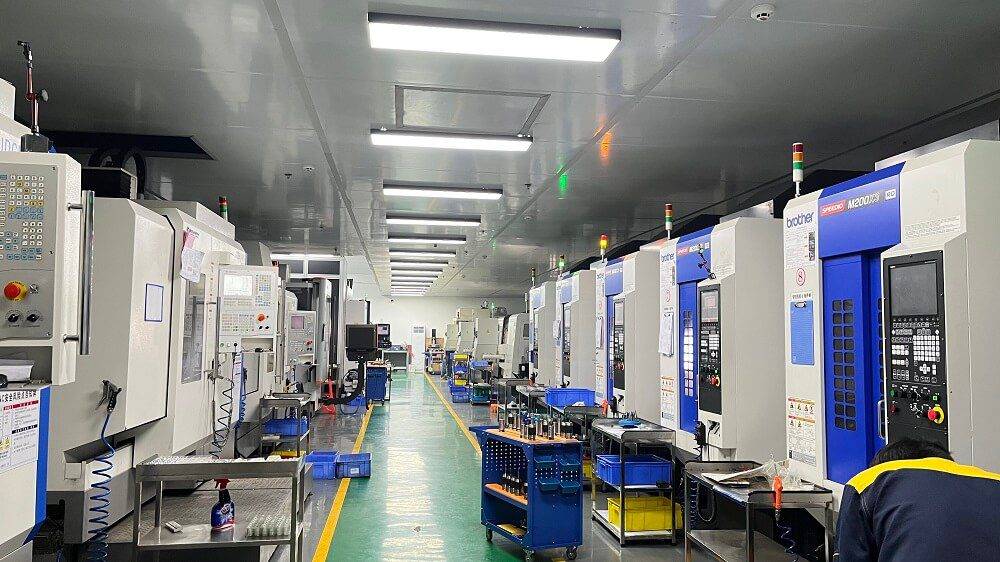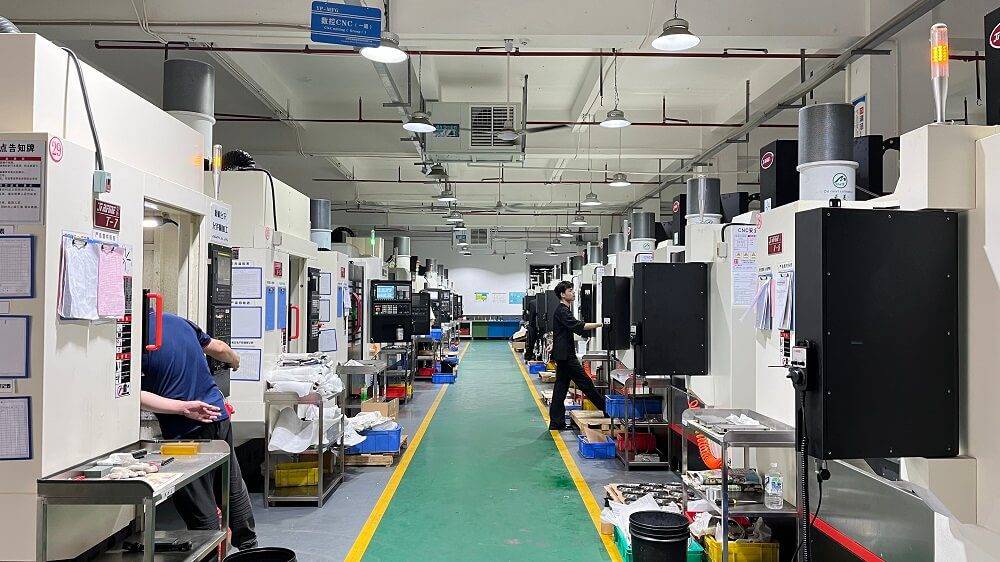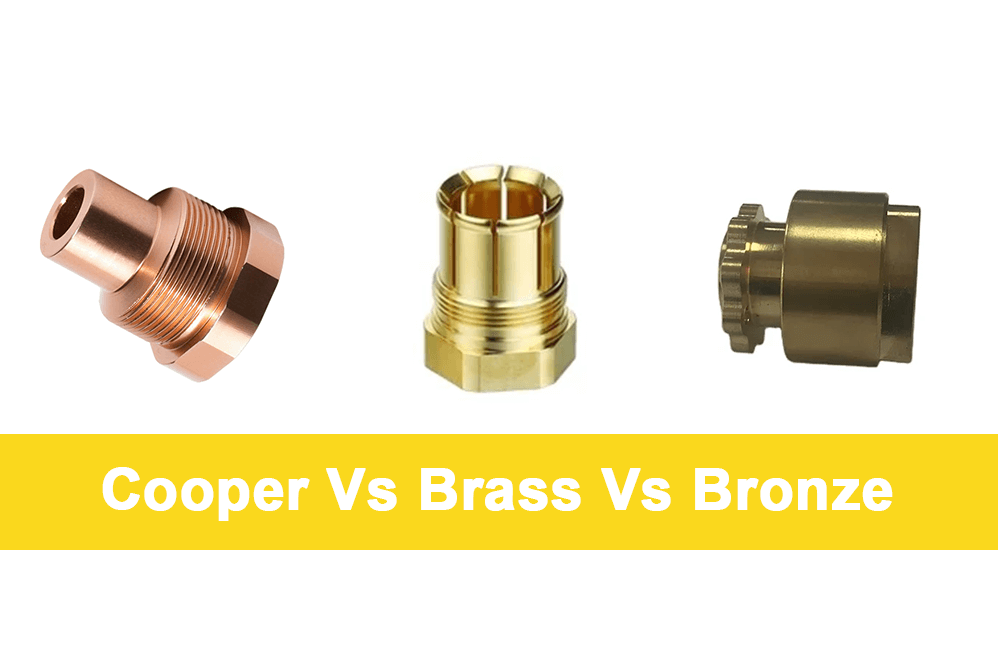
In today's manufacturing industry, the demand for customized parts is growing.
Stainless steel and aluminum alloy are the two major base materials for CNC processing.
The OEM model, that is, OEM production, allows customers to order according to the drawings.
But what is true “customization”?
How to grasp the process logic behind it?
Chapter 1: The causal chain from drawings to objects
An engineering drawing is the "law" of the part.
Without precise drawings, processing is like a blind man touching an elephant.
What is the cause and effect? Design determines the process, and the process determines the cost.
When students first enter this industry, they are often confused by "why the quotations are so different."
The answer lies in tolerances and materials.
Stainless steel 316L has high hardness and rapid tool wear.
Aluminum alloy 6061 is soft and easy to stick to the knife, but it cuts quickly.
These two, just the choice of materials, have set the tone of the processing procedure.
Question: If a customer is looking for low prices, should aluminum be recommended?
No. It depends on the usage scenario: choose stainless steel for corrosion resistance and aluminum for lightweight.
Experimental evidence shows that under the same structure, the processing time of aluminum parts is 40% shorter than that of steel parts.
However, the thread strength of aluminum parts is far inferior to that of steel parts.
Therefore, deductive reasoning: If you want to reduce costs, you must first analyze the force and then determine the materials.
Chapter 2: Game between CNC equipment and cutting parameters
CNC machine tools are not a panacea.
Three-axis, four-axis, five-axis, their capabilities are different.
Students often ask: Why do complex surfaces need five axes?
Imagine an impeller with a curved surface and three axes that cannot be clamped at one time.
Every additional clamping means one more error.
Cause and effect chain: clamping times ↑ → accuracy ↓ → scrap rate ↑.
For stainless steel processing, the line speed should be low and the feed should be slow.
On the contrary, aluminum alloy has high rotation speed and large cutting depth.
The irony is that many workshops increase the speed to cut stainless steel in order to meet deadlines.
As a result, the tool breaks and the workpiece is scrapped, which is not worth the loss.
Common case: A certain batch of valve bodies require Ra1.6 surface.
Factory picture is quick, cutting 304 stainless steel with an aluminum blade.
Among the final hundred pieces, 60% had scratches and 30% had poor dimensions.
This is the consequence of not following process parameters.
Let’s ask: If the parameter table is stored in the computer, why don’t the workers follow it?
Because the assessment is based on "number of pieces" rather than "pass rate".
Therefore, the core of customization lies in process controllability, not speed.
Chapter 3: Rational trade-off between accuracy and cost
Tolerance is the measurement of money.
The price difference between ±0.01mm and ±0.1mm can be five times.
Why? Due to precision, slow wire walking, online measurement, and constant temperature workshops are required.

Students design parts, and the full size is always marked ±0.01.
As everyone knows, non-fitting surfaces do not require this precision at all.
Deductive argument: Only the assembly holes, shaft shoulders, and positioning surfaces need to be strictly controlled.
For the remaining surfaces, free tolerances are sufficient.
Common situation: An aluminum casing is required to have no knife marks on its appearance.
If the mirror polishing standard is used, 20 minutes of additional polishing time will be required for each piece.
If it is changed to sandblasting and then oxidation, the cost will drop by 80%.
Ironic criticism: Many "engineers" make plans behind closed doors and copy manuals.
Don’t ask about materials or equipment, just ask “can it be done?”
It can be done, but the price is shocking to customers.
Therefore, rational persuasion: Communicate with the processing party at the beginning of design.
Provide functional requirements, not rigid tolerances.
(Keywords incorporated here: process design )
Process design is the bridge connecting drawings and machine tools.
For those who are not good at craftsmanship, precision machine tools will be in vain.
Let’s take a look at a simple bracket: four holes and two sides.
If the face is milled first and then drilled, or if the back is drilled first, the order is different.
The amount of deformation is different, and the efficiency is 30% different.
Q: How to determine the best process?
A: According to the state of the blank and tolerance requirements, rough and fine parts are separated to reduce stress release.
Q: Why is the drill bit easy to break when drilling stainless steel?
A: Because the chips adhere to the cutting edge, a cobalt-containing drill bit should be used and the chips should be removed frequently.
Q: How to prevent deformation when processing aluminum parts?
A: It is divided into rough and fine milling, leave a margin for rough milling, and finish milling after releasing the stress.
Chapter 4: The necessity of surface treatment and post-processing
Machined semi-finished products are rarely used directly.
Stainless steel needs to be deburred, passivated and polished.
Aluminum alloys often require anodizing, sandblasting, and chemical nickel.
Causal reasoning: Surface treatment improves corrosion resistance and aesthetics, but also changes dimensions.
The anodized film thickness is 5-15 microns, and a margin needs to be reserved for threaded holes.
Common mistake: The drawing indicates M6 thread, but it will not pass through after oxidation.
Let’s ask: Who is to blame? The designer did not leave the film thickness, and the processor did not remind it.
Both were neglected and ended up being returned by the customer.
Experimental data: The valve body without deburring was cut when assembling the sealing ring.
It will lead to leakage and the entire batch will be scrapped.
Ironically, deburring requires only manual chamfering, which takes seconds.
But saving a few seconds costs tens of thousands of dollars.
Therefore, action suggestions: Every drawing must be marked with "sharp edges, blunt edges."
Chapter 5: The Economic Paradox of Batch and Single Piece
Single piece customization, the unit price is high.
Mass production, unit price plummets.
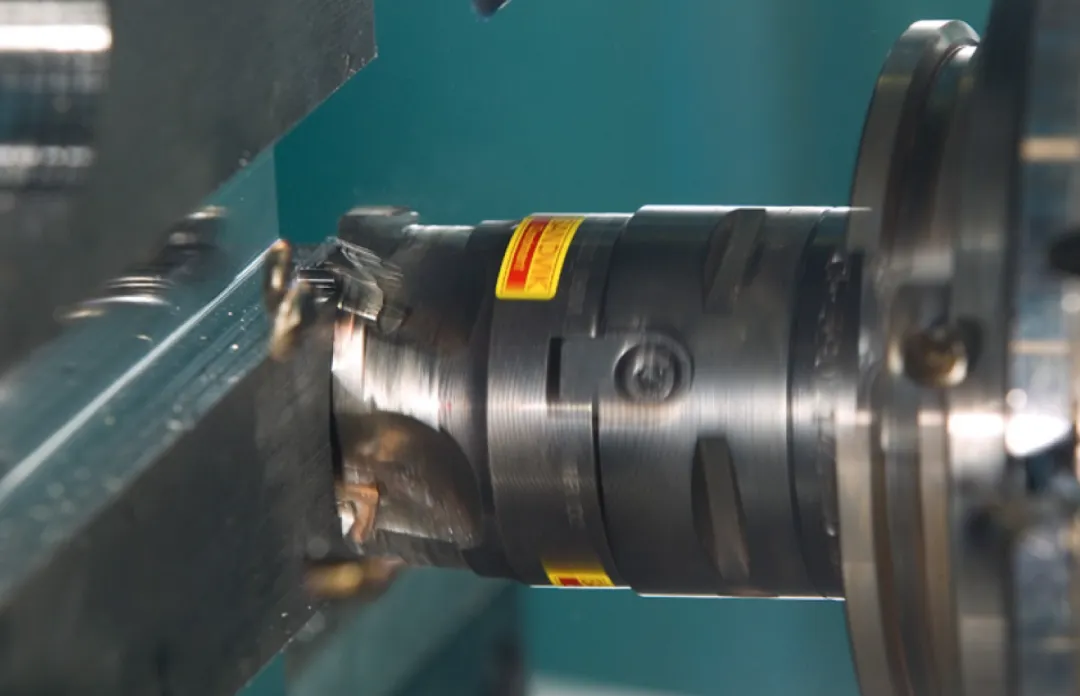
Why? Diluted due to first article programming, fixture, and debugging costs.
Students are puzzled: Why is there a tenfold difference in unit price between ten parts and a hundred parts?
Deductive calculation: Assume that the programming and adjustment cost is 2,000 yuan, and each material is 50 yuan.
Ten pieces: single piece cost=2000/10+50=250 yuan.
One hundred pieces: 2000/100+50=70 yuan.
It can be seen that the larger the batch size, the lower the proportion of non-processing fees.
Common case: A scientific research project requires five pieces of aluminum cavities.
The workshop price is 800 yuan per piece. Customers find it expensive.
Later, he changed to making simple fixtures and processed twenty pieces at a time.
The remaining fifteen items are in stock, and each item is reduced to 350 yuan.
Ironic criticism: Customers often only focus on the unit price and ignore startup costs.
They asked for a "quote based on 800 pieces", but only five pieces were made.
This is tantamount to making the processor lose money.
Rational plan: Sign a framework agreement based on estimated annual usage.
The small batch surcharge is clearly stated and transparent to both parties.
(Insert keywords here: cost control )
Cost control is not just about bargaining, but about optimizing design.
Reduce an unnecessary hole and save a process.
Change the fillet radius and use a standard tool.
Q: How to quickly estimate the cost of CNC parts?
A: Calculate material cost + machine time cost (machine tool yuan/minute × time) + post-processing fee.
Q: Aluminum parts or stainless steel parts, which one is more suitable for rapid prototyping?
A: Aluminum parts, due to fast cutting, low tool wear and short delivery time.
Q: What is the cost difference between surface roughness Ra3.2 and Ra0.8?
A: Ra0.8 requires grinding or precision milling, and the machine time cost increases by 2-4 times.
Chapter 6: Necessary means of quality inspection
The completion of processing is not the end, but the beginning of inspection.
Calipers, micrometers, and coordinates are all indispensable.
Students think that “it doesn’t look bad” as a sign of passing the exam.
That’s ridiculous. A slight difference can lead to a loss of thousands of miles.
Cause and effect chain: Unchecked dimensions → Assembly interference → Abnormal noise from the whole machine → Customer complaints.
A common situation is that there are a batch of stainless steel shafts, and the drawings of the outer diameter are based on φ20, with the lower limit being -0.01 and the upper limit being -0.03.
The worker measured φ19.99, which was considered qualified based on experience.
Unexpectedly, the zero position was not calibrated, and the actual φ19.94 was out of tolerance.
The bearing came loose after assembly and the entire batch was recalled.
Question: Why not do a full-size first article report?
Because it is too troublesome and delays production.
However, the loss caused by one recall can be caused by thousands of first article inspections.
Ironic criticism: The "inspection" of many workshops is visual inspection.
Vernier calipers are useless and report falsified data.
Ultimately, credibility is destroyed and no one dares to customize it anymore.
Chapter 7: The Art of Communication – From Inquiry to Delivery
OEM customization is not a unilateral order, but a collaboration between both parties.
Customers need to provide: 3D drawings, 2D drawings, technical requirements, quantity, and delivery date.
The factory needs feedback: feasibility, process suggestions, quotation, and construction period.
Students often make mistakes: only issue one STP document without paying attention to tolerances.
The processing party guessed and the result was not as expected.
Deductive argument: The more complete the information, the fewer misunderstandings and the higher the pass rate.
Complete information includes: material grade, hardness, surface treatment, packaging requirements.
Another common problem: the requirement that “the sooner the better.”
The factory rushed the work and omitted stress relief, and the parts were deformed the next day.
Both sides blame each other and there will never be peace.
Rational communication method: Sign a technical agreement and clarify the acceptance criteria.
Make a trial run in small batches and make batches after confirmation.
(Insert keywords here: quality inspection )
Quality inspection is the last line of defense for customization.
Keep samples for each batch and archive reports for traceability.
Q: What does the first article inspection include?
A: All dimensions, material reports, surface roughness, visual appearance.
Q: How to verify whether the stainless steel material is 304 or 316?
A: Use a spectrometer to detect the molybdenum (Mo) content. 316 contains 2-3% molybdenum.
Q: How to compensate for the dimensional changes after oxidation of aluminum parts?
A: Before oxidation, the median value is 5-10 microns smaller, depending on the film thickness.
Conclusion: Looking to the future of customization
The future of manufacturing must move toward high response, small batches, and personalization.
Students will be the main force in this change.
However, you need to remember: customization is not a metaphysics, but a science of cause and effect.
Material selection, craftsmanship, inspection, and communication are all closely linked.
One step of laziness will result in a piece of waste.
Repeat the core point: moderate accuracy, reduced costs; complete information, established trust.
Recommended actions are as follows:
Take the initiative to ask the processing method for process limitations when designing.
Drawings specify loose tolerances for non-functional surfaces.
After small batch trial production, a large-scale contract will be signed.
Test reports are required for each batch and archived.
Establish long-term cooperation with professional customizers like YPMFG.
Only by respecting the logic of process can we obtain high-quality and low-priced parts.
Stop using "feeling" instead of "data" and "speed" to cover up "flaws".
On the road to customization, those who are rigorous will win, and those who are impetuous will perish.
I hope everyone can verify the theory of this article in practice.