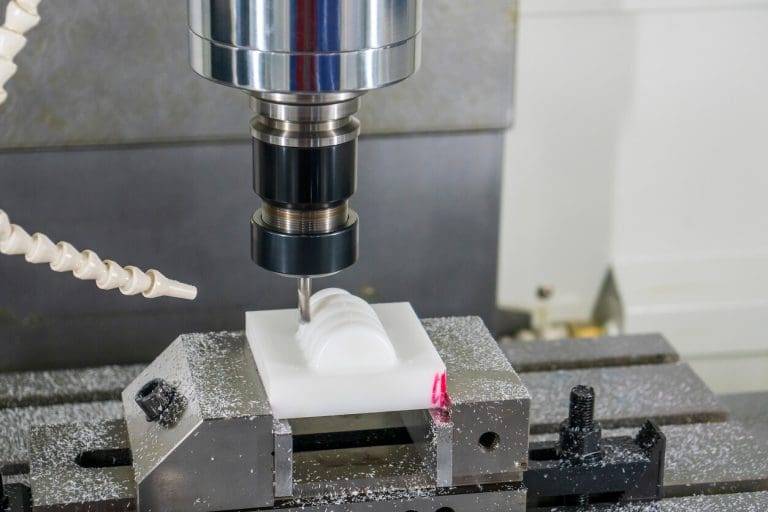
Machining efficiency and part quality are directly determined by the CNC feed rate, which is the Feed Rate. The core formula for correct setting is that F equals n times Z times fz, where F is the feed per minute mm/min, n is the spindle speed rpm, Z is the number of tool teeth, and fz is the feed per tooth mm/tooth. This article explains the calculation and adjustment methods from scratch, and provides a directly applicable parameter table and common troubleshooting solutions.
01The essence and industry standard definition of feed rate
The speed at which the tool moves along the cutting path is the feed rate, and its unit is generally mm/min, which is metric, or in/min, which is imperial. The three elements of cutting are composed of it, spindle speed, and cutting depth. According to the ISO 3685 cutting test standard, if the chips are silvery white or light yellow, the feed rate is reasonable; on the contrary, if the chip is too blue, it means the speed is too high, and if it is black, it means the speed is too low.
The core principle is that the feed rate is so low that it will cause friction hardening of the machined surface and abnormal wear of the tool. If it is too high, it will directly cause chipping or tool breakage. It is necessary to make preliminary settings based on the cutting parameter table provided by the tool manufacturer, and then fine-tune it through trial cutting.
02Two standard calculation formulas for feed rate
Different processing methods use different calculation basis:
1. Milling/drilling (multi-tooth tools):
F = n × Z × fz
The rotation speed of the main shaft is n equal to 8000 revolutions per minute. It is an end mill with 4 cutting edges. The feed amount fz of each tooth is 0.05 mm per tooth.
Then, F is equal to 8000 times 4, then times 0.05, the result is 1600, the unit is mm/min.
2. Turning (single-edged tool):
F = feed per revolution (fr) × spindle speed (n)
The speed value of the rotating spindle is n equal to 1500 revolutions per minute, and the feed amount fr produced by each complete rotation is 0.2 mm per revolution.
Then F = 1500 × 0.2 = 300 mm/min
Recommended feed per tooth for common materials (tungsten carbide tools, for reference only):

The data is synthesized from the cutting manuals of multiple tool manufacturers. It is recommended to take the middle and lower values for first time use.
The core of balancing efficiency and quality is the optimization of cutting parameters. For example, when increasing the depth of cut, the feed per tooth should be appropriately reduced by 10 to 20 percent to prevent the spindle load from exceeding the limit.
03Five core factors affecting feed rate
1. When the tool rigidity is at an aspect ratio greater than 4, the feed rate needs to be reduced by 30% to 50%, otherwise chatter marks will easily occur.
2. In terms of power and rigidity of machine tools: Those old and aging small machine tools cannot withstand the force generated when cutting at high feed rates. There are common cases: for example, in a certain factory, ordinary end milling is used to process 45# steel. When the feed speed is increased from 600 to 900mm/min, an overload alarm occurs directly on the spindle.
3. The cooling method of internal cooling tools can increase the feed rate by more than 20%; in the absence of cooling, the feed rate needs to be reduced by 40%.
4. When performing side milling operations, there are cutting depth (ap) and width (ae). When the width (ae) is 50% of the tool diameter, the feed per tooth (fz) is recommended as the value that is 70% of the recommended value with a punctuation mark after it.
5. In terms of the stability of workpiece clamping, use a vise to clamp thin-walled parts. When the feed rate exceeds 800 mm per minute, parts may fly out.
04Step-by-step operation: Correctly set the feed rate from zero
Step 1: Query the linear speed and obtain the Vc recommended value through the above table or tool packaging based on the material of the workpiece and tool.
Step 2, calculate the rotation speed. The formula is: n represents the rotation speed, n is equal to the result of multiplying Vc by 1000, and then dividing it by the result of multiplying π by D (where D is the tool diameter, the unit is mm).
Step 3: Determine the feed per tooth : similarly look up the table to get the initial value of fz.
Step 4 Calculate the feed rate : F = n × Z × fz
Step 5: Carry out safety verification, multiply the calculated value by 0.7 as the first trial cutting value, and observe the chip shape after 10 seconds. Here is the cutting chip, and that shape.
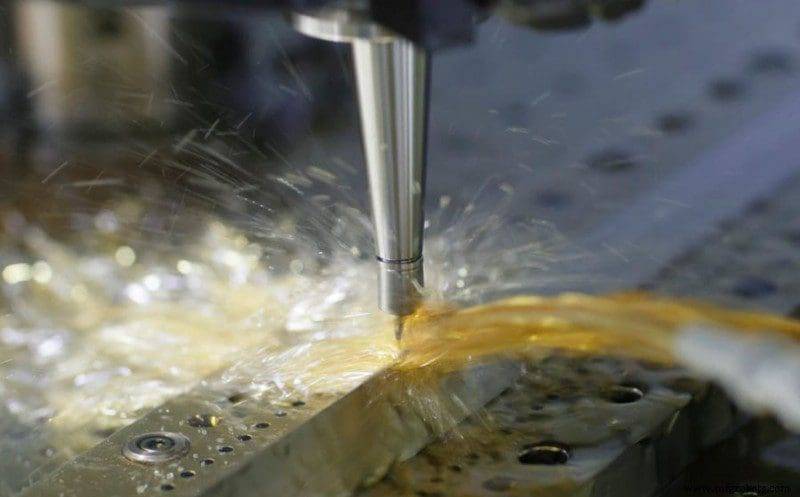
Practical case: Processing an aluminum alloy hole with a diameter of 20mm, using a 10mm three-edged drill bit. Vc=120 m/min → n≈3820 rpm, fz=0.08 → F=3820×3×0.08≈917 mm/min. The first trial cutting was performed at 640 mm/min, and the chips were bright silver, and was finally increased to 850 mm/min.
05Frequently Asked Questions (Q/A)
Q1: How much should the feed rate be set to avoid tool breakage?
If you start cutting from 70% of the calculated value, you have to pay attention to the color and sound of the chips. The chips appear silvery white and the cutting sound remains uniform. This situation is within the safe range.
Q2: What should I do if the surface roughness cannot reach Ra1.6?
For A, let the feed rate decrease by 30%, and at the same time, increase the speed by 20%. When finishing, the feed per tooth should not exceed 0.03 millimeters per tooth.
Q3: How to correct high-frequency howling?
A: Stop immediately. Reduce the feed rate by 20 percent, or change the spindle speed to avoid resonance areas, and check the tool overhang length.
Q4: Why should the feed be particularly conservative when processing stainless steel?
A: Stainless steel has extremely serious work hardening. When the feed is less than 0.05 mm per tooth, a hardened layer will be produced, and this hardened layer will in turn increase the wear of the tool.
Q5: How to quickly verify whether the feed rate is optimal?
A: Observe the chip thickness. The ideal thickness should be consistent with the feed of each tooth (a caliper is needed to measure here). If the deviation exceeds 20%, then it needs to be readjusted.
06Advanced skills: dynamically adjust feed rate
Modern CNC systems are often equipped with a function called "adaptive feed", such as spindle load monitoring. When the load suddenly increases sharply, the system will automatically reduce the speed to 60% to 80%. If there is no such function, you can manually adjust it according to the following principles:
When roughing, priority should be given to increasing the feed rate, that is, increasing it by 30%, rather than increasing the rotational speed, in order to increase the material removal rate.
For finishing, the feed rate is fixed between 600–800 mm per minute, focusing on ensuring surface quality.
When machining deep cavities, the feed is actively reduced by 10% for every 20 mm of depth, in order to compensate for the difficulty in chip removal.
With tool wear monitoring that can effectively extend tool life, once you notice that the machining sound becomes sharper or the chip color changes to blue, you should immediately reduce the feed rate by 15% and check the cutting edge. In daily life, you can set it to force the machine to slow down by 20% for one minute after every ten minutes of processing to help dissipate heat.
07Three serious mistakes that must be avoided
1. Blindly increasing the feed to pursue efficiency, a mold factory increased the roughing feed to 2200mm/min. As a result, the tool holder was deformed, and the finished product size exceeded the tolerance range by 0.2mm. The correct approach is to gradually increase it by 5%, and verify the 10 pieces processed each time.
2. Regardless of the direction of the tool path, when doing down milling, the feed can be 20% higher than that of up milling. However, when there is a gap in the machine tool screw, up milling must be used.
3. Use a fixed percentage to reduce all parameters: the appropriate approach is to keep the feed per tooth roughly unchanged, and give priority to adjusting the speed coordination. For example, when processing thin-walled parts, if the spindle speed is increased by 30%, the feed speed will be reduced by 15%.
08Summary and action suggestions
The core conclusion is that the correct CNC feed rate is determined by the three factors "material-tool-machine tool". The formula F=n·Z·fz is the basis of all calculations. Always start trial cutting from a conservative value (70%), and make fine adjustments according to the chip color and sound, with each adjustment not exceeding 10%.
Three actions to take immediately:
1. For each machine tool in the workshop, construct a parameter table that matches the material and tool, and directly indicate the recommended feed rate range.
2. Carry out a "test cutting verification" every week, using a standard test block (such as 100mm×100mm aluminum alloy), run at 70%, 85%, and 100% of the calculated value, and record the surface quality and tool flank wear values.
3. To carry out training on the operator's ability to "listen to sounds and see chips", it is required that within 5 minutes, the operator can identify the situation where the feed is too high, that is, the situation of screaming sounds and blue chips, and the situation where the feed is too low, that is, the situation of muffled sounds and dark gray chips.
The final evaluation index is the surface roughness control of the feed rate. During finishing, the priority is to ensure that the feed per tooth does not exceed 0.02mm. At this time, even if the spindle speed has a positive or negative deviation of 10%, a surface with a surface roughness of less than or equal to 1.6 can still be obtained. The table provided in this article should be printed and posted next to the machine tool, and the cutting parameters should be reviewed every week.