Turning and machining pieces are fundamental components across automotive, aerospace, medical, and industrial equipment sectors. This article provides proven, actionable guidance to help you achieve high precision, optimal surface finish, and reliable repeatability in turned and machined parts, drawing from real-world shop floor experiences.
01 Why Precision in Turning and Machining Pieces Directly Impacts Your Bottom Line
In any machining operation, the difference between a part that passes inspection and one that fails often comes down to a few microns. A common scenario: a workshop producing 500 stainless steel shafts for a hydraulic system found that inconsistent turning parameters led to 12% rejection due to oversized diameters. After standardizing their approach, rejections dropped to under 2%. This shows that mastering turning and machining pieces isn't just about theory—it's about applying verified techniques.
Core principle for success: Control three variables simultaneously – cutting speed, feed rate, and depth of cut. Adjusting only one without considering the others typically worsens outcomes.
02 Step-by-Step Operational Guide to High-Quality Turned Parts
1. Material Preparation and Setup
Verify material hardness before clamping. Variations above 15 HRC require altered speeds.
Use steady rests for slender parts (length-to-diameter ratio >8). Without support,deflection causes taper errors exceeding 0.05mm per 100mm length.
Clean chuck jaws thoroughly – debris as thin as 0.02mm induces runout.
2. Tool Selection and Geometry
For roughing: choose negative rake carbide inserts with larger nose radius (0.8mm to 1.2mm).
For finishing: positive rake inserts with small nose radius (0.2mm to 0.4mm) produce finer surface textures.
A real case: machining 304 stainless steel, switching from uncoated to TiAlN-coated inserts increased tool life from 45 pieces to 210 pieces per edge.
3. Optimizing Cutting Parameters (The Core of Turning and Machining Pieces)
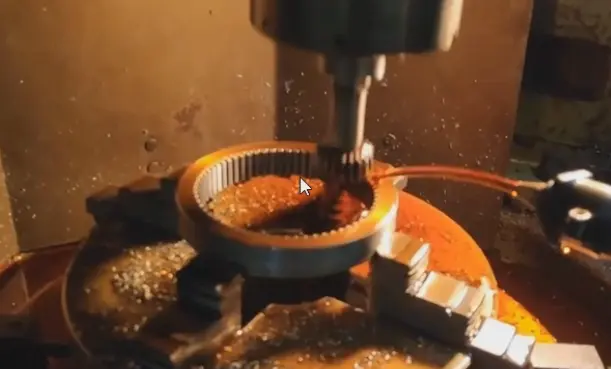
Start with manufacturer's data, then fine-tune based on chip form and surface sound:
Cutting speed (Vc): For steel (HB 200), 180–220 m/min; for aluminum, 350–600 m/min; for stainless, 120–160 m/min.
Feed rate (f): Roughing 0.3–0.6 mm/rev; finishing 0.05–0.15 mm/rev.
Depth of cut (ap): Roughing 2–5 mm; finishing 0.2–0.5 mm.
Optimization – If you hear chatter, reduce depth of cut by 30% before changing speed. If chips are long and stringy, increase feed rate by 20% or use a chip breaker geometry. This practical approach solves 80% of common turning issues without expensive trial-and-error.
4. Coolant and Chip Management
Flood coolant for heat-sensitive materials (titanium, Inconel).
Mist or air blast for cast iron and brass to avoid thermal cracking.
Never let chips recut – install a chip conveyor or manually clear after each pass.
03 Common Problems and Their Solutions (Q/A Format)
Q: How to fix poor surface finish on turned pieces?
A: Increase cutting speed 15-20% and reduce feed rate below 0.1 mm/rev. Also check tool nose radius – use 0.4mm for finishing.
Q: Why does my part diameter vary along the length?
A: Machine leveling or tailstock misalignment. Use a test bar and adjust tailstock offset until taper is under 0.01mm per 100mm.
Q: What causes rapid tool wear on turning operations?
A: Speed too high for the material. Reduce cutting speed by 20% and verify coolant reaches cutting edge directly.
Q: How to eliminate built-up edge on stainless steel parts?
A: Increase cutting speed above 150 m/min or use sharp-edged positive rake inserts with higher coolant pressure.
Q: My chips are dangerous long ribbons – what should I do?
A: Increase feed rate 30% and select inserts with molded chip breakers. Also reduce depth of cut slightly.
04 Quality Assurance for Turned and Machined Components
Every batch must include three inspection layers:
1. First-piece inspection: Complete dimensional check using calibrated micrometers and bore gauges. Record all data.
2. In-process sampling: Measure critical dimensions every 10-20 pieces, especially diameters and concentricity.
3. Final random audit: 5% of batch or minimum 5 pieces, including the first and last piece from production.
Quality control – Implement statistical process control (SPC) charts for high-volume turning jobs. When a dimension trends toward the upper control limit, adjust tool offset proactively. One manufacturer reduced scrap by 34% within two weeks using this method.
05 Real-World Example: Solving Tolerancing Issues on a Hydraulic Spool
A machine shop received an order for 300 turning and machining pieces – hydraulic spools with ±0.005mm tolerance on three diameters. Initial run achieved only 55% within spec. Analysis revealed two causes: thermal expansion from interrupted cuts and inconsistent stock allowance. The solution:
Added a 10-second dwell before finishing pass to stabilize temperature.
Standardized roughing passes to leave exactly 0.3mm stock on all diameters.
Used the same reference point for every tool offset calibration.
Result: 98.7% of parts passed inspection, and cycle time decreased 12% due to reduced rework.
06 Actionable Conclusions and Recommendations
Repeat this core principle: Precision in turning and machining pieces comes from controlling the machine-tool-material triangle. No single adjustment fixes all problems.
Your immediate action steps:
1. Audit your current cutting parameters against the ranges given above. Adjust where deviation exceeds 20%.
2. Train operators on chip interpretation – proper chips (short, C-shaped or 6's and 9's) indicate good parameters.
3. Install a simple data sheet next to each lathe listing material-specific speeds and feeds.
4. Perform a taper test on every lathe monthly and document results.
Final verification: Before quoting any turned part, measure your machine's true capability. Run a 20-piece test at expected tolerances. If CpK is below 1.33, either improve process or adjust your quality promise.
By following these experience-based, data-driven methods, you will consistently produce turning and machining pieces that meet specifications, reduce scrap, and satisfy customers – without relying on any specific brand or tooling supplier.