
01Custom sheet metal processing precision panels: all the core information you need to know
In custom sheet metal processing, what is called "precision plate" is a kind of metal sheet part that uses laser cutting, CNC bending, stamping and other processes to produce metal sheet parts with a tolerance strictly controlled at ±0.1mm or even higher precision according to the requirements of the customer's drawings. This process requires strict control of errors. If you are looking for high-precision, repeatable custom sheet metal parts, then this article will directly give you the most urgently needed operation paths, as well as key tolerance standards, material selection basis, and even common problem avoidance methods. All the information here is based on common industry standards and verifiable process data.
1. What is precision sheet metal custom processing?
The process of taking metal sheets (such as cold-rolled steel, stainless steel, aluminum sheets, galvanized sheets) with a thickness in the range of 0.5 mm to 6 mm, and performing precision sheet metal custom processing on them, goes through the following core processes to achieve the entire process from design to finished product:
Laser cutting : tolerance up to ±0.05mm, no burrs, suitable for complex contours.
For CNC stamping, it is suitable for mass production of things with repeated features such as grids and blinds, but the tolerance is plus or minus 0.1 mm.
When a CNC bending machine is used for precision bending, the angle tolerance is plus or minus 0.5 degrees, while the position tolerance is plus or minus 0.1 mm.
Welding and assembly : spot welding, argon arc welding, etc., thermal deformation needs to be controlled.
Surface treatment : spraying, oxidation, electroplating, etc. to increase corrosion resistance.
The case shows that there is a medical device company that requires a batch of items with specific specifications, specifically 304 stainless steel shells with a thickness of 1.5mm. The shells have corresponding requirements, that is, the tolerance range of the mounting hole spacing is controlled at ±0.1mm, the bending angle is 90°, and the allowable error range is ±0.5°. The company achieved these specifications by first cutting the blanks through laser cutting, then using a CNC bending process, and finally using a series of processes such as three-dimensional coordinate inspection. The final product pass rate was 98.5%.
2. Core accuracy standards and verifiable data
Tolerances in precision sheet metal processing must comply with international standards. The following are the most frequently quoted levels in the industry.
It should be noted that the thickness and hardness of the material, as well as the wear of the mold, will affect the actual tolerance. For high-precision requirements, the "key features" must be clearly marked on the drawings and the corresponding inspection methods must be specified.
(Keyword integration: collaborative process of laser cutting and CNC bending)
3. The direct impact of material selection on accuracy
Different materials have significant differences in rebound and thermal deformation after processing, which directly determines whether the precision level can be achieved.
Steel plates used for cold rolling, such as SPCC or SECC, are relatively low-cost and have little rebound during bending operations. They are suitable for making precision parts. However, their surfaces are prone to rust, so they need to be electroplated or sprayed as soon as possible.
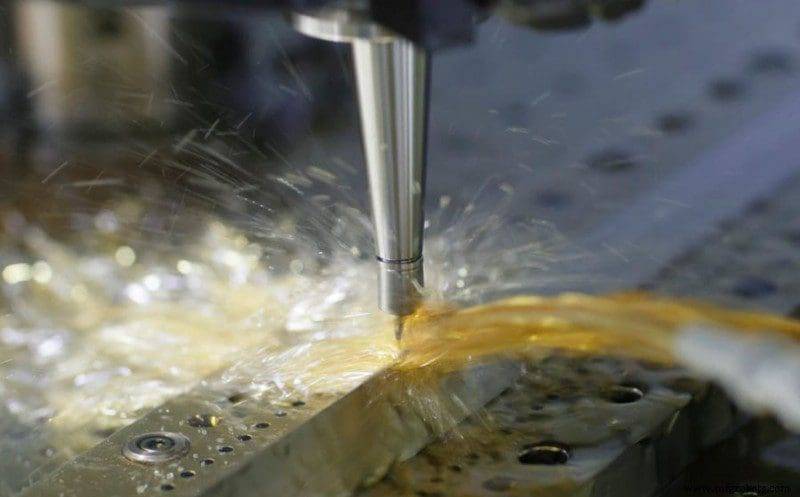
High-strength stainless steel (SUS304/SUS316L) has large bending rebound, with a rebound amplitude of about 2°-3°. The angle needs to be compensated. This kind of stainless steel has a relatively large heat-affected zone during laser cutting, and the thin plate is prone to warping.
Made of aluminum alloy (5052/6061), it has good plasticity characteristics, but its hardness is low and it is prone to cracking during bending operations. Therefore, it is recommended that the inner diameter R used during bending should be greater than or equal to twice the plate thickness.
The coating on the surface of galvanized sheet, also known as SGCC, has anti-rust function. However, toxic fumes will be produced during welding operations, and when bending is performed, the coating may peel off.
There is a common case where a chassis manufacturer uses 2mm aluminum alloy plates to customize precision panels. This manufacturer did not consider the factor of metal rebound, resulting in the assembly gap exceeding the standard. Later, the chassis manufacturer changed the aluminum alloy plate to 5052-H32, and also added 2° of bending compensation, which finally solved the problem.
4. Four accuracy rules that must be followed during the design stage
In order to avoid "what can be drawn on the drawings but cannot be made in the factory", please follow the following design specifications:
1. The minimum bending inner diameter is required, and its value is at least equal to the plate thickness (in the case of mild steel), or twice the plate thickness (in the case of aluminum or stainless steel).
2. The minimum distance between the hole and the bending edge is that the distance from the center of the hole to the bending line must be greater than or equal to 2.5 times the plate thickness plus the bending radius, otherwise the hole will be deformed.
3. To prevent sharp internal angles, the minimum internal angle R during laser cutting must be greater than or equal to 0.5mm, otherwise wire cutting will be used, which will increase costs.
4. Form a unified datum. All dimensioning must start from the same side as the datum, and tolerances must not be accumulated.
The core conclusion is that more than 60% of precision sheet metal scraps originate from the failure to consider process capabilities during the design stage. Before the drawing is issued, a check according to the above 4 items can reduce 80% of modification and rework.
5. Frequently asked questions and solutions (Q/A format)
Q1: What should I do if the center distance between the two holes exceeds 0.2mm after bending?
First, in the design stage, mark the hole position within the plane before bending, or use laser cutting to cut the positioning holes first and then bend them.
Q2: Does the edge of the stainless steel sheet turn yellow and become severely deformed after laser cutting?
For A, using nitrogen-assisted cutting can reduce oxidation and at the same time reduce the amount of heat input. When the plate thickness is less than or equal to 1.5 mm, its deformation can be controlled within the range of 0.1 mm.
Q3: Are the bending angles of individual parts inconsistent during mass production?
For A, it is necessary to check whether the mold is worn and whether there are fluctuations in the hardness of the plate batch. At the same time, the supplier was required to calibrate the back gauge of the bending machine every 200 pieces of products produced.

Q4: How to ensure the verticality of threaded rivet nuts?
In the first step, self-guided riveting tooling is used. In the second step, the dimensional accuracy of the bottom hole must reach IT11 level. In the third step, the aperture of the M3 bottom hole is +0.07/-0.02mm.
Q5: After the surface is sprayed, the precision fitting surface cannot be installed?
For the mating surface, add a mask to protect it during the design process. If it is processed after spraying, leave a gap margin of 0.1 to 0.2mm in parts with tight tolerances.
(Keyword integration: quality inspection method of precision sheet metal)
6. Quality inspection: How to verify whether the supplier meets the accuracy requirements?
You should ask the supplier to provide the following test reports and conduct random inspections yourself:
The report generated by the first article inspection covers all dimensions with tolerances on the drawings. When measuring these dimensions, a coordinate measuring machine or imager is required.
The process control record is that for each batch, 5% of the total parts are extracted, and then the CPK values of the critical dimensions of these parts are measured. This CPK value must meet the process capability index greater than or equal to 1.33 to be judged as qualified.
What can prove the material is the material sheet originally used in the steel mill, that is, MTC, which can guarantee the material grade and mechanical properties.
Possible verification steps :
1. After receiving the sample, use a vernier caliper to measure the margins of 3-5 holes that are most likely to be out of tolerance.
2. Use a protractor to check the bending angle, especially the right angles related to assembly.
3. Actually assemble the two matching parts and observe whether the gap is less than 0.2mm.
7. How to balance cost and accuracy? Action suggestions for you
You don't need the highest accuracy for all features. Please assign tolerances according to the following priorities:
There are high-precision requirements, the range of which is less than or equal to plus or minus 0.05 mm. This requirement only applies to bearing seats, positioning pin holes, and mold mating surfaces, and the number of dimensions involved in this high-precision requirement accounts for no more than 10% of the total dimensions.
It has conventional accuracy, which ranges from plus or minus 0.1 to 0.2 millimeters. This accuracy is used for mounting hole spacing and outline, accounting for 80% of the size.
Loose precision (±0.5mm or more) : non-functional decorative edges and weight-reducing holes.
Suggestions for action :
1. Pass the drawings you drew to no less than three factories that have CNC laser cutting machines and 6-axis bending machines.
2. Clearly require the provision of “first article inspection report” and “material certification”.
3. Produce small batches (5-10 pieces) and measure key dimensions with calipers in person.
4. When establishing a long-term cooperative relationship, sign a "Technical Quality Agreement" to stipulate the tolerance acceptance standards and clarify the handling methods for excessive tolerances.
(Keyword integration: cost optimization strategy for customized sheet metal)
8. Checklist for selecting precision sheet metal suppliers
If you want to ensure that the parts you get meet the conditions called "customized sheet metal processing precision plates", you have to check them one by one.
I have a question, does the factory have a fiber laser cutting machine with an automatic focusing function and a power of more than 2000W, whether it is domestic or imported?
Is the bending machine a digitally controlled electro-hydraulic servo type machine (its angle control accuracy is better than 0.5 degrees)?
[ ] Is there a CMM or projector for first article inspection?
[ ] Can you provide the CPK data report for the last three months?
[ ] Are you clearly aware of the tolerance requirements marked on your drawings and confirmed in writing?
Summary and final conclusion
Let me repeat the core point again: The key to customizing precision sheet metal processing is three links. First, the process specifications must be followed during design; second, tolerance standards must be selected to match the material; third, consistency must be ensured with the help of verified testing methods. If any one of these links is ignored, the finished product will not be able to be assembled or will fail to function.
The final action is to give suggestions, immediately use your own part drawings, optimize them according to the design rules in Article 4, then select suppliers according to the checklist in Article 8, and propose small batch trial production and personal inspection requirements. Only by converting "precision" into measurable tolerance values and executable acceptance processes can you truly achieve high-quality custom sheet metal parts.