For those companies with outsourcing processing needs, finding a trustworthy fabrication service supplier will directly play a decisive role in product quality, delivery cycle, and project cost. This article is based on common cases in the actual production process to sort out the complete operation path for you to select processing services. This path covers the core link of demand clarification, the core link of supplier evaluation, the core link of quality control, and the core link of delivery and acceptance. It also answers high-frequency questions to help you build a reliable processing service cooperation system at one time.
01Clarify your own needs: the first step in choosing processing services
Before getting in touch with any service provider for manufacturing, you need to have your internal requirements sorted out and completed. This is key to preventing subsequent communication inconsistencies, cost overruns and delivery disputes.
Five core messages need to be made clear:
1. Drawings and technical standards: Give complete 2D drawings, give complete 3D drawings, indicate key dimensional tolerances, such as ±0.05mm, indicate surface roughness, that is, Ra value, indicate material grades, such as 6061-T6 aluminum alloy, 304 stainless steel, and indicate heat treatment requirements.
2. Quantity and delivery pace: It is necessary to clarify whether it is a prototype sample, that is, the quantity is between 1 and 10 pieces, or a small batch, that is, the quantity is in the range of 10 to 500 pieces, or it is mass production, that is, the quantity exceeds 500 pieces. Different quantities correspond to completely different process routes and pricing models.
3. In terms of quality certification level, is the product used in general machinery, medical equipment, aerospace, or the automotive industry? ISO 9001 is the most basic requirement, the automotive industry requires IATF 16949, and the medical field requires ISO 13485.
4. The budget and payment method are: determine the target cost of the single piece, as well as the total budget, and find out whether you accept the conventional terms of 30% advance payment and 70% payment after acceptance.
5. For special process requirements, there are some situations, that is, whether welding operations are required, whether heat treatment is required, and whether surface treatment is required. Surface treatments here include anodizing, electroplating, spraying, etc., and whether non-destructive testing is required. Non-destructive testing includes X-ray, penetrant testing, etc.
For example, there is a company engaged in the production of automation equipment. It has a requirement for twenty sets of precision sheet metal frames. However, this company did not provide relevant requirements for welding deformation control before, so the supplier carried out processing according to ordinary processes. After that, a deformation of two millimeters occurred. This deformation directly caused the assembly of the whole machine to fail. Later, the company clarified the requirement at the stage of requesting that stress relief annealing must be performed after welding, and the flatness should be less than or equal to 0.5 mm per meter. In this way, the problem was finally completely solved.
02Supplier capability assessment: five-dimensional screening method from qualification to on-site
To find the right fabrication service provider, don’t just look at the quotation. It is recommended to check one by one according to the following five levels, and verifiable evidence must be obtained at each level.
Dimension 1: Production equipment and processing capabilities
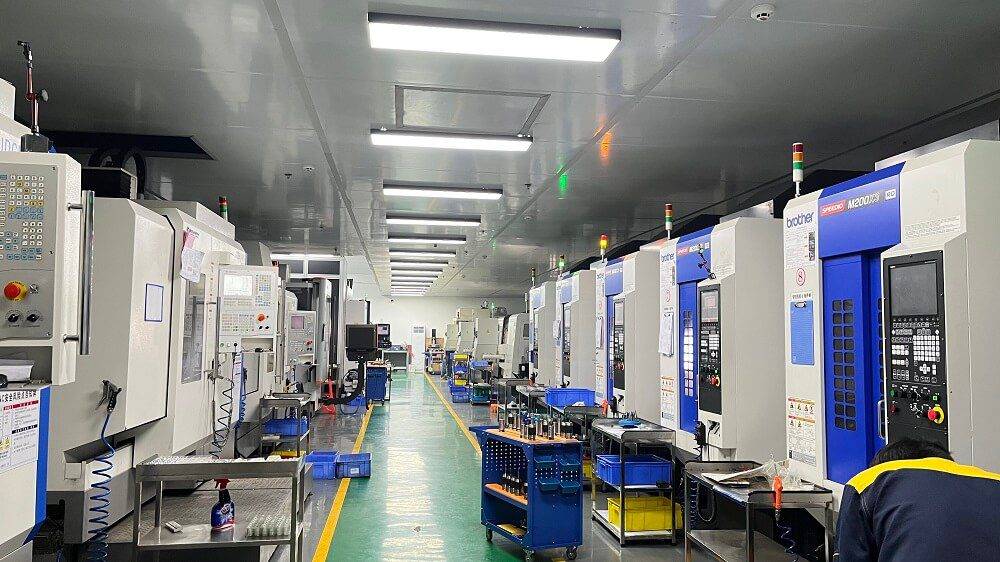
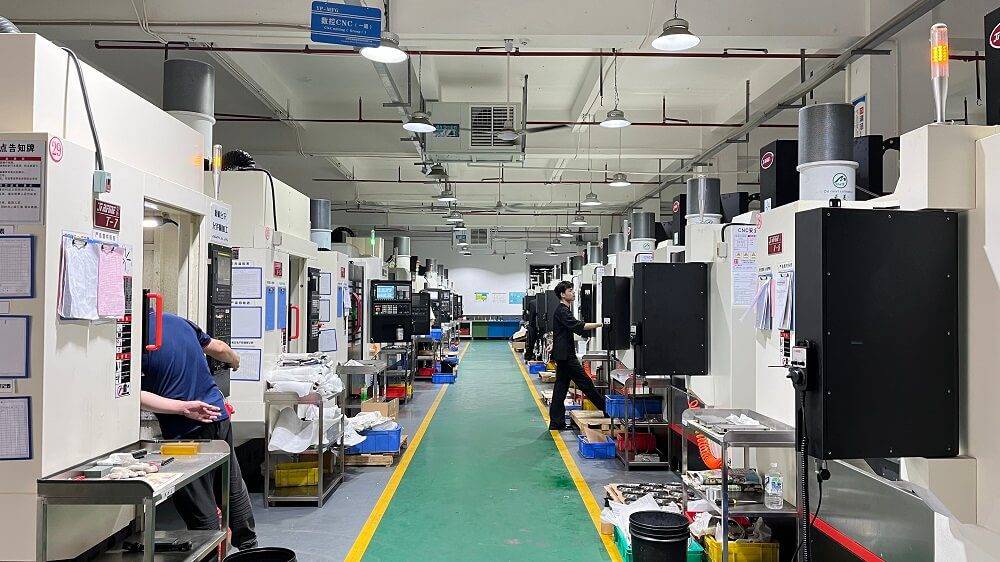
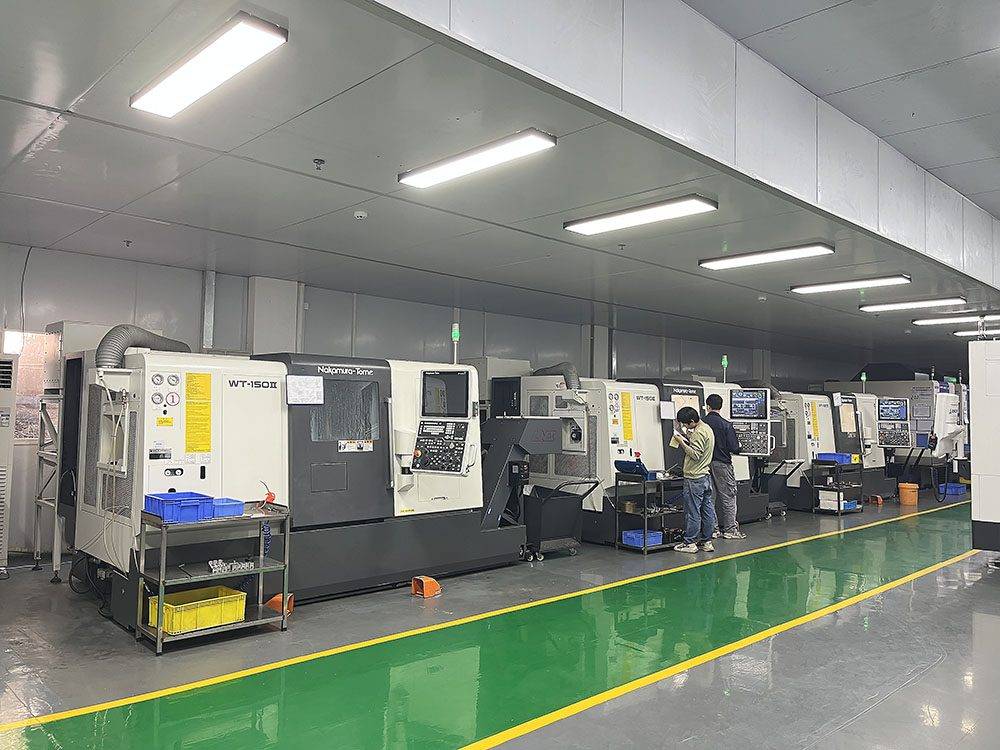
For your process requirements, check whether the supplier's equipment list covers: laser cutting machine, its power, table size; bending machine, its tonnage, accuracy; CNC machining center, its number of axes, spindle speed, tool magazine capacity; welding robot, etc.
The key requirement is that equipment maintenance records for the past year must be complete, and equipment that is older than the specified age and has not been calibrated is not allowed.
Dimension 2: Quality system and testing methods
If you want to provide a certificate that complies with the 2015 version of the ISO 9001 certification standard, you can check and verify its validity on the official website of the Certification and Accreditation Administration.
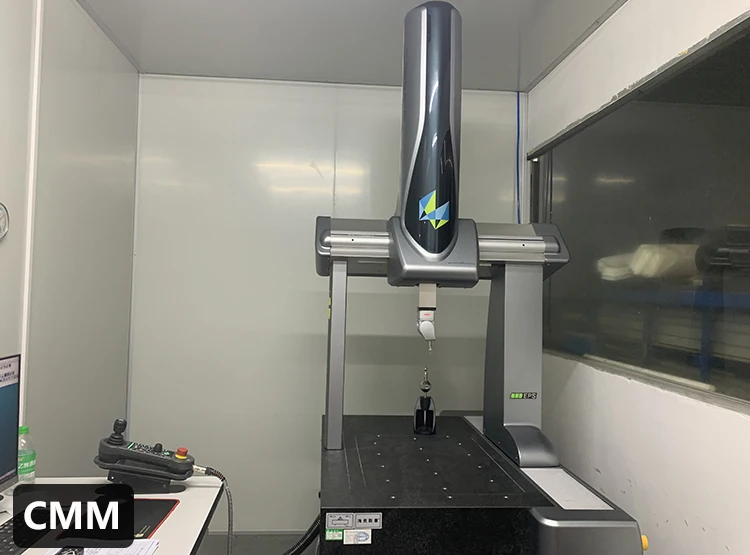
It depends on whether the equipment used for confirmation testing on site, such as three-dimensional coordinate measuring machine (CMM), projector, roughness meter, hardness tester, etc., is within the validity period of measurement.
Example: An electronics company selected a small manual workshop that claimed to have "passed ISO". After the goods arrived, they found that 15 holes out of 100 parts were outside the tolerance range. After investigation, it was found that this workshop did not have any online detection devices and only relied on calipers for random inspections. After that, the company strongly required suppliers to provide first article inspection reports (FAI) and process control charts.
Dimension 3: Industry experience and similar cases
Please provide examples of processing similar to your product type within the past two years (desensitization treatment can be performed). For example: suspension arms used in automobiles, equipment casings used in medical applications, and articulated arms used in robots.
Check the authenticity of the case: Obtain the corresponding shipping inspection documents and customer name (the full name must be hidden), and call to confirm.
Dimension 4: Delivery capability and capacity load
Get the supplier's current production schedule. If its capacity utilization rate is higher than 85%, this means that your order may be inserted or delayed.
General situation: A company selected a smaller processing plant during the peak season, and the processing plant undertook emergency orders from three other companies during the same period, causing the originally promised delivery period of 2 weeks to be extended to 5 weeks, thus causing a serious impact on the project. Countermeasures: Require the supplier to clearly indicate the "daily output" in the contract and "if it is overdue, 0.5% of the total order amount will be compensated daily."
Dimension 5: Price composition transparency
A split quotation will be made upon request, which includes material fees, processing fees based on working hours, surface treatment fees, packaging and transportation fees, and finally taxes.
Compare the quotations from at least three suppliers and eliminate those options that are significantly lower than 30% of the market price, because these options have the risk of cutting corners or adding items later.
03Quality control and process traceability: core actions to ensure output consistency
Assuming that the fabrication service partnership is finalized, a process control mechanism must be established instead of just waiting for the final delivery. The following four actions can cover more than 90% of common quality problems.
Action 1: Make first article inspection (FAI) mandatory
Before mass production, the supplier must complete the processing operation of the first piece and provide an FAI report with actual measurement data. And you need to send personnel to the scene to confirm, or witness it by video.
Core point of view: Mass production cannot be started without passing FAI.
Action 2: Record key process parameters
For special processes such as welding and heat treatment, suppliers are required to record parameters (welding current, voltage, interlayer temperature; heat treatment heating curve, holding time) and provide them with the goods.
The case is: A company engaged in construction machinery noticed cracks in a batch of booms. After retrieving relevant process records, it was discovered that the supplier had privately shortened the post-weld heat preservation time. Without that record, there is absolutely no way to trace it.
Action 3: Process capability index (Cpk) monitoring
For critical dimensions, suppliers are required to calculate the Cpk value. Cpk ≥ 1.33 means that the process is stable and reliable. If it is lower than 1.0, improvements must be made immediately.
The first keyword is naturally integrated here, which is precise matching. When choosing processing services, only when your tolerance requirements accurately match the supplier's equipment accuracy and process control capabilities can you obtain qualified products at the lowest cost. Excessive precision that exceeds actual requirements will only cause a waste of budget, while too low precision will result in scrap products.
Action 4: Third-party sampling and acceptance terms
It is stipulated in the contract that you have the right to conduct random inspections within 7 working days after harvesting the goods, and compensate unqualified products at a ratio of 1:2, that is, if you return 1 product, you will have to pay 2 products, or you can choose to return the entire batch of goods.
A 10% quality deposit is retained for a period of 6 months to cover the risk of early failure.
04Delivery acceptance and long-term cooperation: closed-loop management improves efficiency
Delivery is not the end, but the starting point for optimizing the supply chain.
Four must-check lists during acceptance:
1. In terms of appearance and size, it is necessary to compare it with the drawings, focusing on checking the chamfers, deburring, surface scratches, and welding slag cleaning.
2. The material report needs to be carried out in this way. It is necessary to check the heat number in the material warranty document, check the chemical composition, and also check the mechanical properties to see if they are consistent with the order.
3. In terms of packaging protection, for sheet metal parts, layered isolation operations must be carried out, and stretch films must be used to achieve moisture-proof purposes; as for precision shafts, plastic tubes or independent bubble bags need to be used for protection.
4. In terms of completeness of documents, whether the inspection report is complete, whether the certificate is complete, whether the process records are complete, and whether the FAI report is complete.
Establish a long-term feedback mechanism:
Within 15 days after each delivery, a "Quality Score Card" is sent to the supplier. This score card covers the pass rate, on-time rate, and response speed!
A quality analysis meeting is held every quarter to jointly solve the TOP3 defects.
For those suppliers whose qualification rate reaches 99.5% or more and on-time delivery rate reaches 98% or more for three consecutive months, order inclines or price incentives can be given.
Here, the second keyword is naturally integrated, that is, process control. Excellent fabrication service does not rely on final inspection to select good products, but uses process control to prevent defects in each process. Starting from incoming material inspection, to first piece confirmation, to process parameter monitoring, and final piece comparison, a closed-loop control network is formed.
05Frequently Asked Questions (Q&A)
Q1: How to quickly judge whether a processing factory is reliable?
A: In the first round, it is required to provide the first article inspection report with actual measured values, that is, FAI, and the equipment measurement certificate. If it cannot be provided, or if the data is inconsistent, it will be eliminated directly.
Q2: What should I do if the supplier is unwilling to accept the small batch and multi-variety processing?
A: Take the initiative to offer to bear part of the programming and fixture costs, or promise that subsequent batch orders will be allocated to this supplier first.
Q3: What should I do if the batch size of the processed parts is out of tolerance, but the supplier says it is "within tolerance"?
If the drawing tolerance is marked as an independent principle, check it. If it is out of tolerance, it may have an impact on the assembly even if it does not exceed the tolerance range. It needs to be judged based on the actual use effect.
Q4: How to prevent suppliers from cutting corners on materials?
A: The contract clearly requires that relevant material certificates with spectral analysis reports be provided for each batch, and the right to randomly sample and send to a third party for testing is also reserved.
Q5: What should I do if the supplier always uses "equipment failure" as the reason after delivery is delayed?
Party A proposed that before signing the contract, records of equipment failures within a six-month period need to be submitted. Moreover, in the contract, relevant provisions regarding compensation after delay were agreed upon, and a specific list of "force majeure" was clearly listed. This list did not include situations involving routine failures.
06Conclusions and suggestions for action
The important point is reiterated and brought out again: choosing a trustworthy production service is fundamentally a complex project of a systematic nature that revolves around "clear requirements – verification of capabilities – control of process implementation – realization of delivery to form a closed loop", and is not simply an act of comparing prices.
Action suggestions (please execute in order):
1. Within this week : Complete the standardized list template of internal drawings, quantity, and quality requirements.
2. Within 10 days, we must collect the qualifications of at least three candidate suppliers, their equipment lists, and cases in the past two years, and verify the validity of the ISO certificate.
3. Within the 15-day period, send an inquiry to the selected suppliers, and at the same time, require them to provide FAI report templates and process record samples.
4. Within 30 days, select a company to carry out the first trial production, and throughout the process, implement control according to the four actions in the third part of this article.
5. Long-term : Establish a quarterly scoring mechanism and incorporate core processing services into strategic supplier management.
Then, incorporate the third keyword: data tracing. Every inspection record is the cornerstone of data traceability. Every process parameter is the cornerstone of data traceability. Every material report is the cornerstone of data traceability. Every delivery document is the cornerstone of data traceability. When your fabrication service system has complete data traceability capabilities, the root cause of any quality problem can be accurately located and quickly corrected within the specified 24-hour period. This is a symbolic manifestation of mature procurement management.
Right now, start implementing the action suggestions given above. You can avoid 80 percent of common processing pitfalls simply by completing that first checklist.