01CNC turning titanium alloy customization: analysis of the entire process from material properties to production delivery
Faced with parts that require high precision, high strength and corrosion resistance, CNC turning titanium alloy customization has become the preferred solution in many aerospace, medical and high-end industrial fields. Titanium alloys are in high demand for the production of customized parts due to their excellent specific strength and biocompatibility. However, their processing is difficult and costly. Based on many years of front-line production experience and industry standards, this article completely sorts out the core process, quality control points and supplier selection logic of CNC turning titanium alloy customization for you, so as to help you obtain qualified parts efficiently.
Why is titanium alloy CNC turning customization challenging?
The physical properties of titanium alloy make it difficult to process. First, its thermal conductivity is poor. The degree of difference is about one-seventh that of steel. Second, its elastic modulus is low, which will cause the knife to deform easily. Third, its chemical activity is high, so high that it easily reacts with the tool material at high temperatures. Among the common cases, there is a situation where a medical orthopedic device factory failed to control the cutting temperature when trial-producing titanium alloy bone plates. As a result, a work-hardened layer appeared on the surface of the part, which caused subsequent thread inspection to fail. Therefore, successful customized processing must be systematically solved from the three dimensions of cutting tools, parameters, and cooling.
Keyword integration: titanium alloy turning parameters
The key to success lies in reasonable cutting parameters. The linear speed needs to be controlled at 30 to 60 meters per minute. The specifics depend on the grade of titanium alloy such as TC4 and Gr5. The feed rate is 0.05 to 0.15 mm per revolution. It is recommended that the amount of back cutting should be greater than the hardening depth of the material, generally greater than or equal to 0.2 mm. Avoid using extremely low cutting depths, otherwise severe friction and hardened layers will occur on the processed surface.
Four core technical requirements necessary for the production line
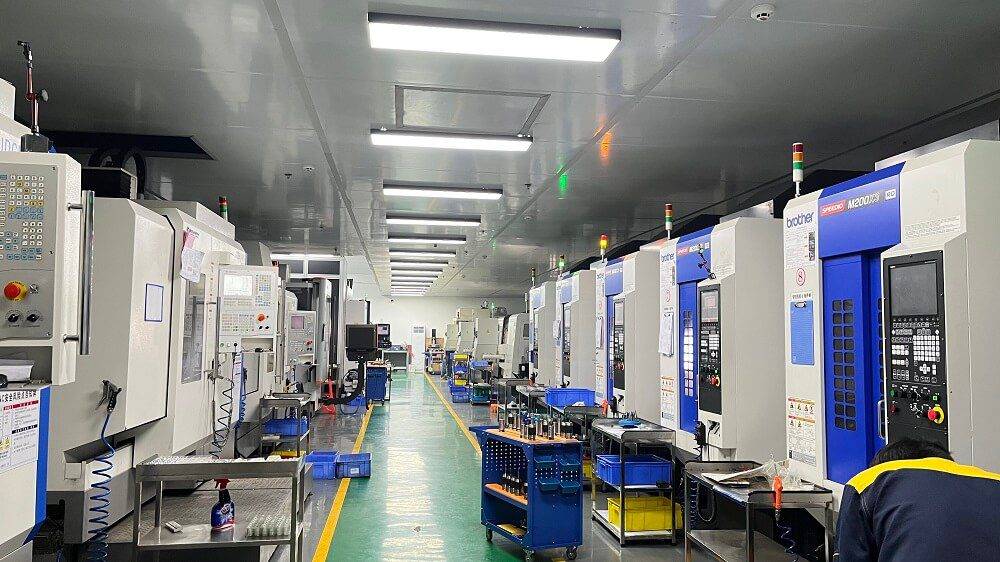
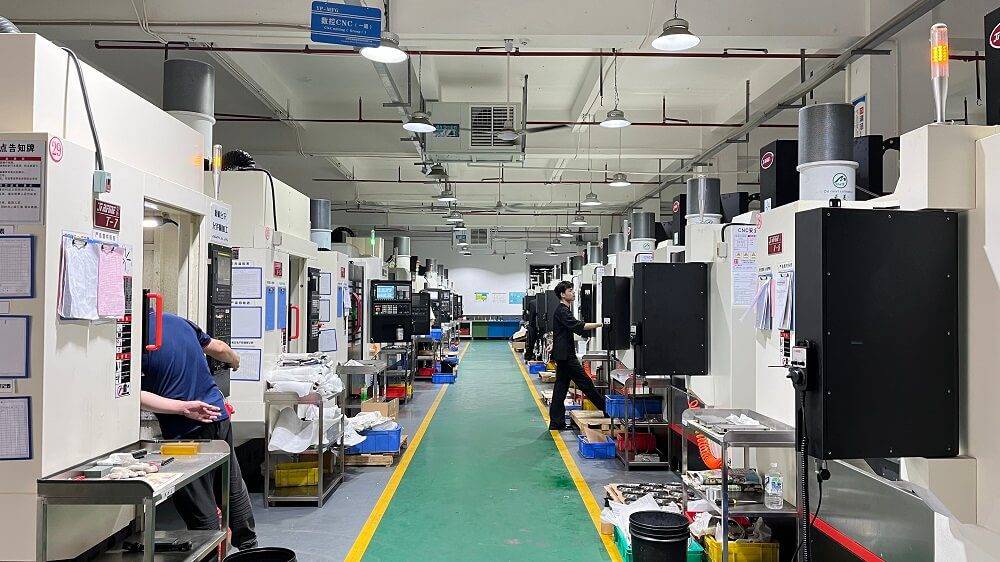
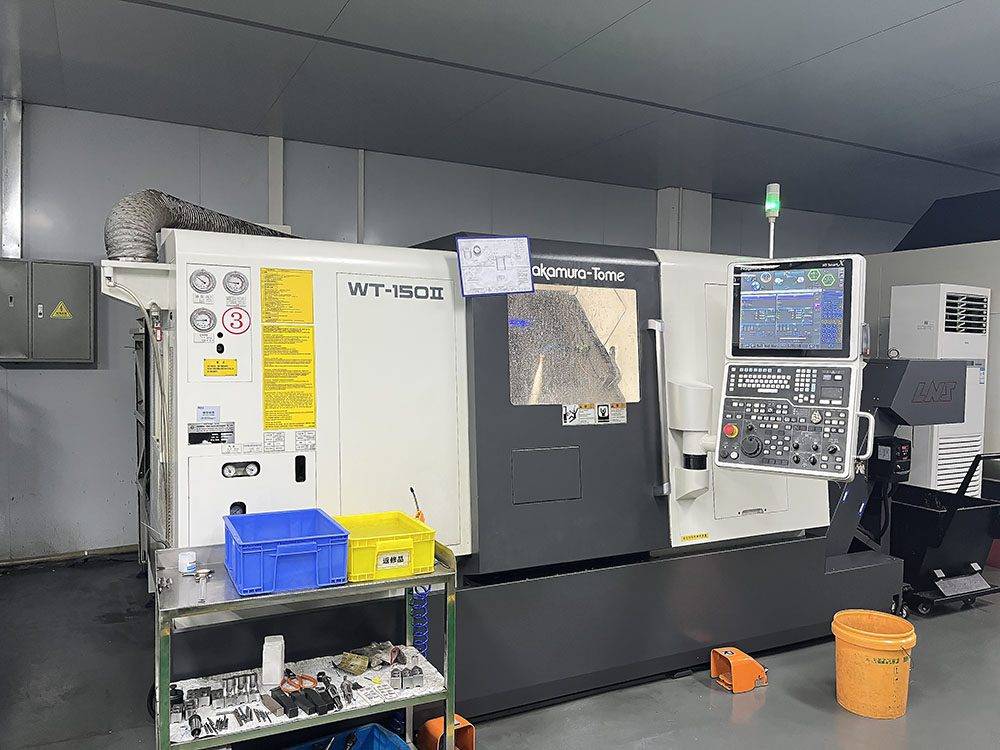
1. Machine tools with excellent rigidity must use CNC lathes or turning-milling centers that have relatively large spindle torque and good vibration resistance. Among the relatively common practical examples, a relatively small workshop engaged in production and processing tried to use ordinary CNC lathes to process titanium alloy thin-walled rings. The end result was that the machine tool used was insufficient in rigidity, resulting in the roundness of the processed parts exceeding the specified standard by 0.05 mm. As a result, the entire batch of processed parts could not be used and could only be scrapped.
2. For special tool systems, it is recommended to use carbide inserts with physical coatings (such coatings include AlTiN, TiAlN, etc.), and control the tool tip arc radius within the range of 0.2 to 0.4mm, and use a positive rake angle geometry to reduce cutting forces.
3. For the high-pressure internal cooling system, the coolant pressure is recommended to be greater than or equal to 5MPa, and it will be sprayed directly into the cutting area. In this way, it can not only take away the heat, but also wash away the chips, thus preventing secondary cutting.
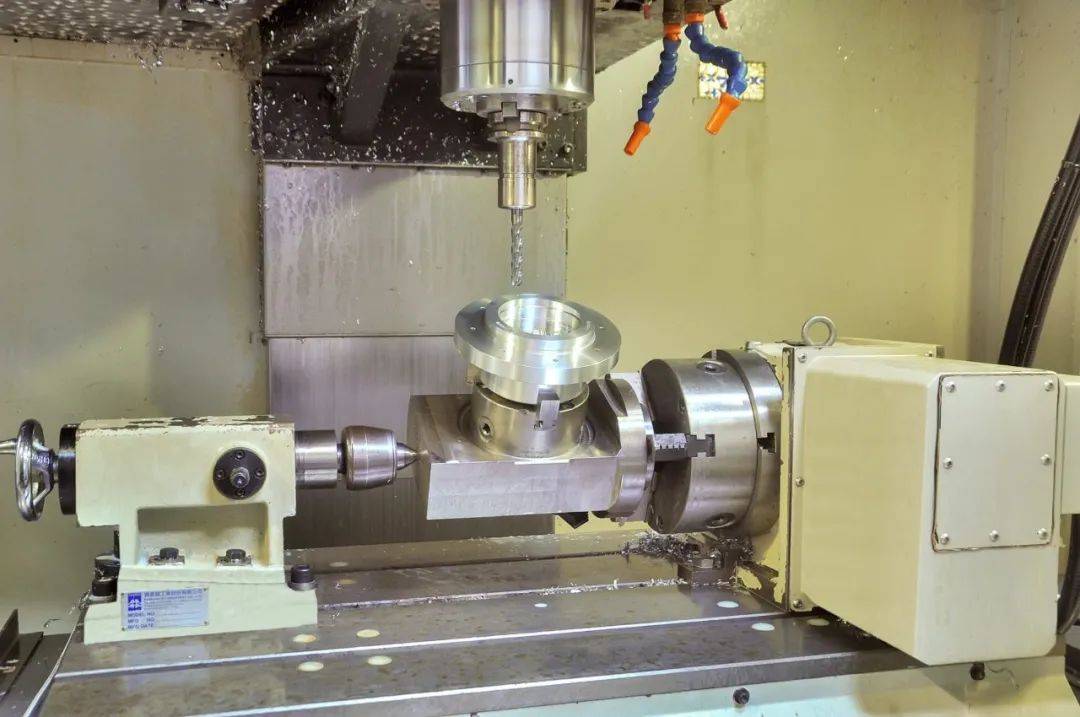
4. Among the dynamic programming strategies, climb milling is used, provided that turning refers to profiling or milling features, and a constant volume removal rate must be used. At the same time, emergency stops of the tool must be avoided, and sharp cuts of the tool must be avoided.
How to ensure consistent quality of custom parts?
From raw materials to finished product, the following verifiable control steps must be performed:
For material certification, it is required that suppliers provide original material reports and conduct spectral analysis and review. The standard is based on ASTM B348 or GB/T 2965.
The first piece is inspected. After the first part is processed, all important dimensions are inspected by using a three-dimensional coordinate measuring machine, or CMM, and then an inspection report is issued.
Process monitoring: A sampling inspection is performed every 20 to 50 pieces, focusing on monitoring tool wear. This monitoring can set early warnings based on cutting force or processing time.
To obtain the final acceptance result, the roughness inspection must be carried out according to the requirements specified in the drawing (the common standard is Ra≤1.6 μm), and the hardness inspection and non-destructive inspection must be carried out (the specific method can be penetrant or ultrasonic).
Keyword integration: tool wear management
After every ten to fifteen minutes of processing, the flank wear of the blade should be checked. Once the wear band width VB exceeds 0.3 mm, it must be replaced immediately. If not replaced, it will cause deviations in the size of the part and tears on the surface.
Customer frequently asked questions (Q/A)
Q1: What is the minimum order quantity for titanium alloy CNC turning customization?
Normally, the minimum order quantity is 1 piece. However, the cost of programming and fixtures that can be spread out for a single piece is relatively high. If it is 5 pieces or more, the unit price will be more economical.
Q2: How to avoid cracks in processed titanium alloy parts?
The cutting fluid concentration needs to be strictly controlled, sufficient cooling must be achieved, and stress relief annealing must be performed, that is, processing in a vacuum furnace at 500 to 650°C.
Q3: The drawing tolerance is ±0.01mm, can it be achieved by CNC turning titanium alloy?
A: It can be done, but it requires the use of high-rigidity machine tools, brand-new tools and thermal deformation compensation operations, and it is best to add a finishing process.
Q4: What additional processes are required for surface roughness Ra0.8?
A. It is necessary to use a smaller feed, which ranges from 0.03 to 0.05 mm per revolution, and to use a polishing blade, or to use subsequent rolling and grinding processes.
Q5: How long is the delivery time?
For simple parts, the time required is three to five working days, while for complex parts or parts requiring heat treatment and special inspections, the time required is 10 to 15 working days.
Avoid three common pitfalls when choosing a supplier
Trap No. 1: The quoted price is significantly lower than the average market price. A customer once chose a merchant that supplied goods at a low price. However, the other party used ordinary carbide tools and emulsion, which ultimately resulted in severe burns on the surface of the parts. In actual situations, the overall cost becomes higher due to scrapping.
There is another trap, which is the inability to provide a process inspection report. Suppliers who only make verbal promises like "no problem" and lack data records are likely to have no way to trace quality.
Trap Three: Completely ignorant of the characteristics of titanium alloys. If the other party cannot tell you the commonly used grades (TC4, TA15), or cannot give recommended cutting parameters, then replace it as soon as possible.
Keyword integration: surface finish optimization
Specifically designed for titanium alloy cutting, it uses positive-angle inserts and adds sulfur and chlorine extreme pressure additives to the cutting oil, which can greatly reduce built-up edge, causing Ra to be reduced from 3.2 to less than 0.8.
Take action now: Customize your high-quality titanium turned parts
To successfully obtain CNC-turned titanium alloy custom parts that meet the requirements, you only need to follow the following three steps:
1. Provide complete drawings, including tolerances, material grades, and hardness requirements, as well as surface treatment, such as anodizing or passivation.
2. Request a process plan. To achieve this requirement, the supplier must list the machine tool model in writing, clearly list the tool brand, state the cutting parameters, and formulate an inspection plan.
3. Confirm the sample process : first trial-produce 1-3 pieces and pass the full inspection before entering mass production.
We once again emphasize that high-rigidity machine tools, special tools, high-pressure cooling, and strict process control are the four key supports for the success of titanium alloy CNC turning customization. Never abandon any link just because of the current cost. If you are looking for a partner with all the above capabilities, then please get in touch with YPMFG. We specialize in customized processing of difficult-to-machine materials such as titanium alloys, and will provide full-process traceability reports from samples to mass production. If you send your drawings now, we will provide free process evaluation and optimization suggestions.