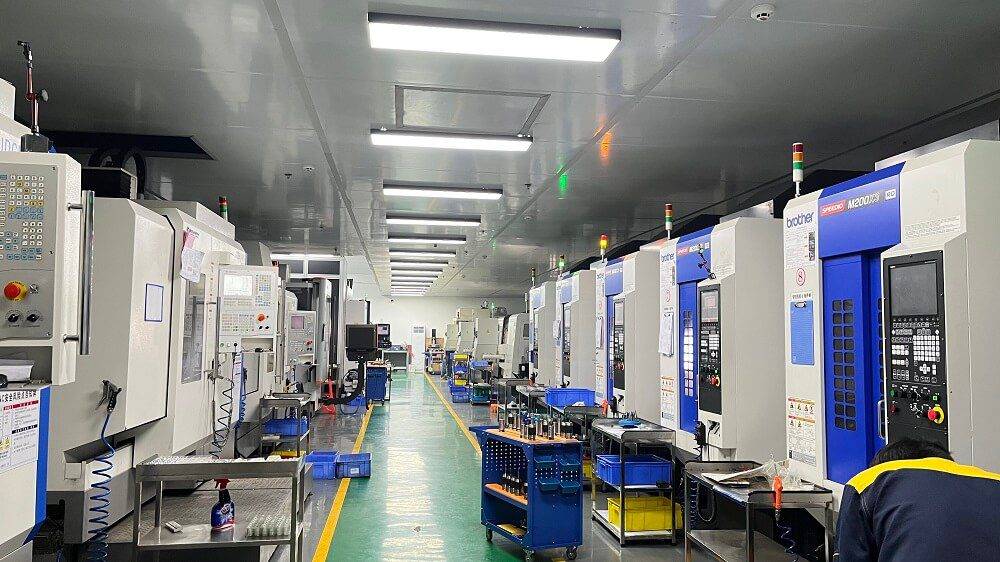
What is CNC machining? CNC (Computer Numerical Control) machining is a subtractive manufacturing process where pre-programmed computer software dictates the movement of factory tools and machinery. This technology replaces manual control with automated, high-precision operations, enabling consistent production of complex parts from solid blocks of material.
01 Core Definition and Working Principle
CNC machining begins with a computer-aided design (CAD) model. This 3D digital file is converted into a series of machine-readable commands, most commonly G-code. The CNC machine then follows these instructions to remove material layer by layer from a workpiece—such as metal, plastic, or wood—until the final part is formed. Unlike additive manufacturing (3D printing), CNC machining is subtractive: it carves away excess material to achieve exact specifications.
The typical workflow involves three main steps:
1. Design : Create a CAD model of the desired part.
2. Programming : Convert the model into G-code using CAM (Computer-Aided Manufacturing) software.
3. Machining : Load the code into the CNC machine, secure the workpiece, and execute the automated cutting process.
02 Types of CNC Machines
Different applications require different machine configurations. Common types include:
CNC Milling Machines : Use rotary cutting tools to remove material from a stationary workpiece. Ideal for creating slots, holes, and complex 3D shapes.
CNC Lathes : Rotate the workpiece against a stationary cutting tool. Perfect for cylindrical parts like shafts and bushings.
CNC Routers : Similar to mills but designed for softer materials like wood, foam, and plastics. Widely used in woodworking and sign-making.
CNC Plasma Cutters : Use a high-temperature plasma torch to cut through electrically conductive metals.
CNC Laser Cutters : Employ a focused laser beam for extremely fine cuts on metal, wood, glass, and acrylic.
For example, a small machine shop producing custom brackets might use a 3-axis CNC mill. In contrast, a medical device manufacturer requiring intricate titanium implants would opt for a 5-axis CNC machine, which can approach the workpiece from multiple angles without repositioning.
03 Materials Suitable for CNC Machining
CNC machining works with a vast range of materials, each offering distinct properties:
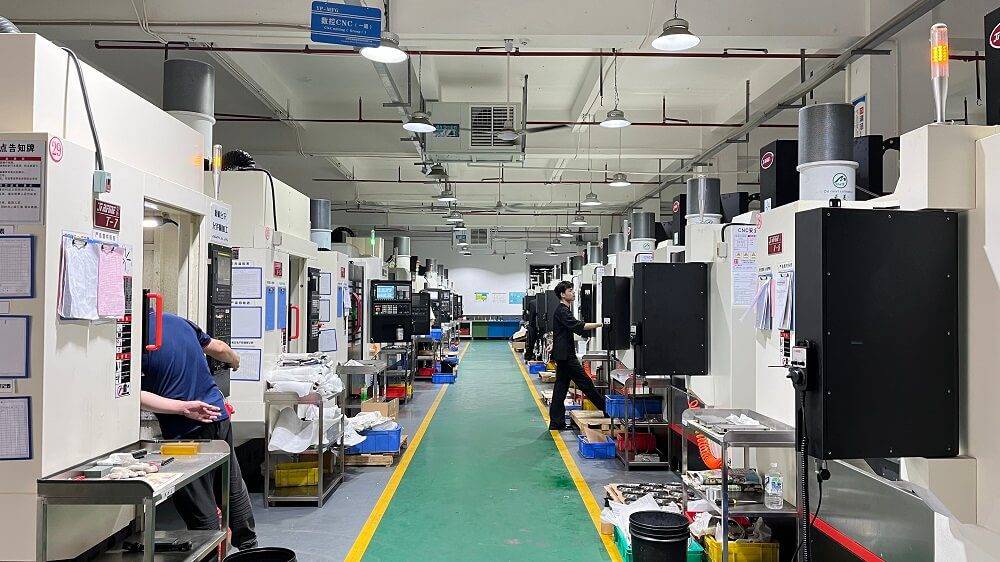
Process automation is a key advantage when working with these materials. Once the G-code is verified and the machine is set up, CNC systems can run unattended for hours or even days, producing hundreds of identical parts with minimal human intervention. This automation drastically reduces labor costs and eliminates human error.
04 Key Advantages of CNC Machining
Understanding “cnc machining what is it” requires recognizing why it dominates modern manufacturing:
1. Unmatched Precision and Accuracy – Typical CNC tolerances range from ±0.005″ to ±0.0002″ (±0.127 mm to ±0.005 mm). This level of accuracy ensures parts fit perfectly in assemblies without post-processing.
2. Repeatability – Once a program is validated, every subsequent part is identical. For high-volume production runs (thousands or millions of units), this consistency is indispensable.
3. Complex Geometry Capability – CNC machines can produce intricate shapes—such as undercuts, angled surfaces, and internal cavities—that are impossible or cost-prohibitive with manual machining.
4. Reduced Labor Dependency – One skilled operator can manage multiple CNC machines simultaneously, increasing output per worker.
5. 24/7 Operation – With proper tool management and automatic coolant systems, CNC machines can run lights-out shifts, maximizing equipment utilization.
A common real-world scenario: An automotive supplier needs 5,000 aluminum engine brackets with tight bore tolerances. Using manual machining, each bracket would take 15 minutes and risk human variation. With CNC milling, once the first piece is qualified, the machine produces the remaining 4,999 units flawlessly, each within two ten-thousandths of an inch.
05 Limitations and Considerations
No process is perfect. CNC machining has inherent constraints:
High Initial Investment – Industrial CNC machines range from $50,000 to over $500,000. Small workshops often start with used equipment or outsource production.
Material Waste – Subtractive processes generate chips and scrap. For expensive materials like titanium, this waste adds significant cost.
Tool Wear – Cutting tools dull over time and must be monitored and replaced. Tool breakage can ruin parts and damage the machine.
Setup Time – Programming, fixturing, and first-article inspection can take hours or days, making CNC inefficient for single, simple parts.
06 Common Applications Across Industries
CNC machining is everywhere. Here are concrete use cases:
Aerospace : Turbine blades, landing gear components, structural ribs (machined from solid aluminum or Inconel).
Medical : Surgical instruments, bone plates, dental implants (requiring biocompatible materials and sterile tolerances).
Automotive : Engine blocks, transmission housings, custom intake manifolds.
Electronics : Heat sinks, enclosures, PCB drilling and routing.
Consumer Goods : Smartphone cases, aluminum watch bodies, kitchen utensils prototypes.
Quality control must be integrated into every CNC machining workflow. Regular in-process inspections using calipers, micrometers, and coordinate measuring machines (CMMs) ensure that parts stay within specification. For critical applications like aerospace, statistical process control (SPC) charts are maintained to detect any drift before defects occur.
07 Step-by-Step Guide: From Idea to Finished Part
If you are new to CNC machining, follow this practical sequence:
1. Create or obtain a CAD model – Use software like Fusion 360, SolidWorks, or FreeCAD.
2. Select the right material – Consider mechanical properties, cost, and machinability.
3. Generate toolpaths – CAM software decides where the tool moves, how deep to cut, and at what speed.
4. Simulate the process – Virtual testing prevents crashes and wasted material.
5. Set up the machine – Install the workpiece, load tools, and set zero points.
6. Run a test piece (first article) – Measure critical dimensions before full production.
7. Execute production run – Monitor chip evacuation and coolant flow; swap tools as needed.
08 Frequently Asked Questions (Q/A)
Q: What is the difference between CNC machining and 3D printing?
A: CNC is subtractive (removes material from a solid block), while 3D printing is additive (builds layers). CNC offers better precision and material strength; 3D printing excels at complex internal geometries.
Q: Can I learn CNC machining without formal education?
A: Yes. Start with online tutorials (YouTube, Coursera), free CAM software (Fusion 360 for hobbyists), and benchtop CNC machines under $5,000. Hands-on practice is the fastest teacher.
Q: How long does a typical CNC machining order take?
A: Simple parts with existing programs: 1-3 days. Complex parts with programming and setup: 5-10 days. Rush services may cut time by 50% but cost triple.
Q: What is the most common mistake beginners make?
A: Incorrect tool selection. Using a high-speed steel drill on stainless steel or a dull end mill leads to broken tools and scrapped parts. Always consult speed/feed charts.
Q: Is CNC machining eco-friendly?
A: No. It produces material waste (chips) and consumes significant electricity. However, most metal chips are recyclable, and modern machines use energy-efficient drives.
09 Conclusion and Actionable Recommendations
CNC machining is the backbone of precision manufacturing. Its ability to produce identical, complex parts with sub-millimeter accuracy makes it irreplaceable for industries from aerospace to consumer electronics. To recap the core point: CNC machining uses computer-controlled tools to subtract material from a solid workpiece, achieving repeatable precision that manual methods cannot match.
If you are considering adopting CNC machining for your project or business, take these steps immediately:
1. Define your part's critical specifications – Tolerances, surface finish, and material must be locked before programming.
2. Compare in-house vs. outsourcing – For low volumes (1-100 units), job shops are cost-effective. For high volumes (1000+), owning a CNC machine may pay off within 18 months.
3. Invest in training – A skilled programmer is worth more than an expensive machine. Cross-train operators on multiple machine types.
4. Start with a simple pilot project – Machine a basic bracket or fixture to test your workflow before tackling complex geometries.
By following these guidelines, you will harness the full potential of CNC machining—turning raw blocks into high-value finished products with confidence and efficiency.