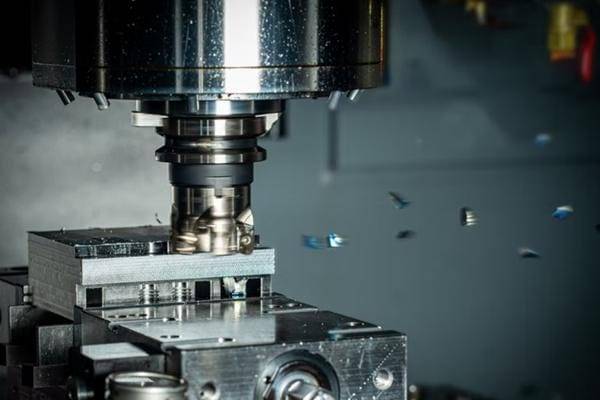
When you need CNC metal parts for your project, choosing the right manufacturing partner like YPMFG ensures you get consistent quality, tight tolerances, and reliable delivery. This guide covers everything you need to know about CNC machined metal components – from common materials and achievable precision to critical quality checks – so you can make informed decisions and avoid costly mistakes.
01 What Are CNC Metal Parts?
CNC (Computer Numerical Control) metal parts are components produced by removing material from a solid metal block using automated cutting tools. The process follows programmed instructions to achieve exact shapes, holes, threads, and surface finishes. Unlike manual machining, CNC delivers repeatable accuracy within microns – essential for industries such as automotive, aerospace, medical devices, and industrial equipment.
Example: A common case is a motor mount bracket for a small factory automation line. Using CNC machining, the bracket holds positional tolerances of ±0.005 inches over hundreds of identical units. Without CNC, manual milling would produce inconsistent hole locations, leading to assembly failures.
02 Core Materials for CNC Metal Parts
Selecting the right metal directly affects part strength, weight, corrosion resistance, and cost. Below are the most frequently specified materials with their typical applications.
Tip: If corrosion is a concern in your environment, choose stainless steel or anodized aluminum. For weight-sensitive moving parts, aluminum 6061 is the industry standard.
03 Precision Tolerances You Can Expect
Standard CNC machining holds tolerances of ±0.005 inches (±0.127 mm) for normal production. For tighter requirements:
Fine machining: ±0.001 inches (±0.025 mm) – suitable for bearing housings and mating shafts
High-precision machining: ±0.0005 inches (±0.0127 mm) – for critical aerospace or medical tools
Real-world case: A manufacturer producing pneumatic cylinder housings specified a bore tolerance of ±0.001 inches. The CNC process achieved this consistently across 5,000 parts, whereas traditional manual machining produced 12% out-of-tolerance rejects. With YPMFG , you get documented inspection reports for every critical dimension.
04 Surface Finishes for CNC Metal Parts
Raw machined parts often require additional finishing to improve appearance, corrosion resistance, or wear properties. Common options include:
As-machined – Visible tool marks, typical 32–63 Ra microinch surface roughness. Lowest cost.
Bead blasting – Uniform matte finish, hides tool marks. Adds $2–5 per part.
Anodizing (Type II or III) – For aluminum only. Increases surface hardness and corrosion resistance. Type II adds color; Type III (hard anodizing) yields 50–70 HRC.

Powder coating – Thick, durable color finish. Good for outdoor equipment.
Passivation – Removes free iron from stainless steel surfaces, prevents rust.
Electropolishing – Smooths and brightens stainless steel, excellent for medical and sanitary applications.
Example: A food-grade conveyor roller made from stainless steel 304 requires both passivation and electropolishing to meet FDA hygiene standards. Skipping these steps leads to bacterial traps and rust spots.
05 Quality Control – What Must Be Verified
To ensure your CNC metal parts function correctly, always request these QC measures:
1. First Article Inspection (FAI) – The first part off the machine is fully measured against the drawing. Any deviation is corrected before production runs.
2. In-process checks – Operators measure critical features every 20–50 parts to catch drift.
3. CMM (Coordinate Measuring Machine) reports – For complex geometries, a CMM provides 3D accuracy validation.
4. Material certificates – Confirm the metal grade matches your requirement (eg, 6061-T6 vs. 6061-O). Look for EN 10204 3.1 certification.
Industry practice: A common cause of field failure is using 6061-T4 (half-hard) instead of T6 (full-hard) temper. Always specify temper in your drawing, and ask your supplier for mill test reports.
06 How to Select a CNC Metal Parts Supplier – Actionable Checklist
Based on frequent client mistakes, follow these steps to avoid delays and defective parts:
Step 1 – Verify machine capabilities
Ask: What is the maximum part size? (eg, 3-axis vs 5-axis machining) Do they have live tooling for milling and turning in one setup? Lack of 5-axis may require multiple setups, reducing accuracy.
Step 2 – Review material sourcing
Ensure they use certified domestic or ISO 9001-traceable bar stock. Off-spec recycled material causes unpredictable hardness and tool wear.
Step 3 – Confirm inspection equipment
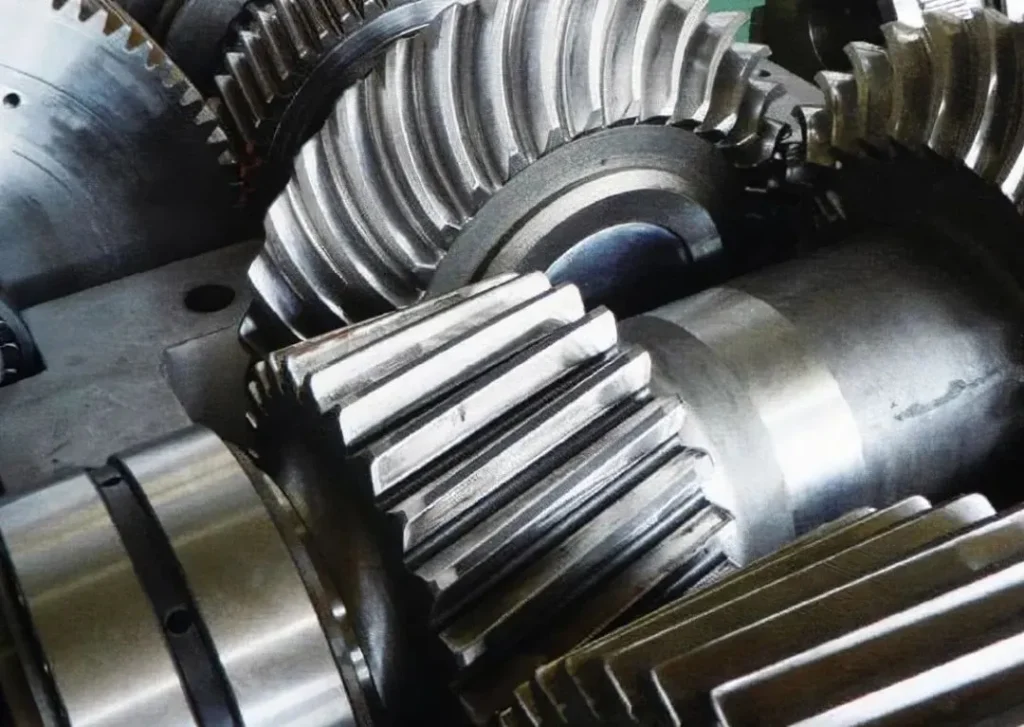
Without a calibrated CMM or optical comparator, tight tolerances are guesswork. Request photos of their QC lab.
Step 4 – Check lead times and communication
Typical CNC production takes 5–15 business days for low volumes (1–200 parts). Rush services may add 30% cost.
Step 5 – Request a sample or reference case
A reputable supplier will share a similar past project. Ask about the biggest challenge they solved – for example, holding ±0.0005 inches on a thin-walled aluminum sleeve.
Why experienced buyers choose YPMFG: They combine advanced 5-axis machining centers with rigorous ISO 9001:2025 quality systems. Every order includes free dimensional inspection reports and material certifications – no hidden fees. Their engineering team reviews your design for manufacturability before quoting, saving you from costly redesigns.
07 Common Defects and How to Avoid Them
Even with CNC, problems occur when design or process is flawed. Recognize these three frequent issues:
Burrs on edges – Caused by dull tools or incorrect toolpaths. Solution: Specify a secondary deburring operation or vibratory finishing.
Surface chatter marks – Due to insufficient rigidity or excessive cutting speeds. A good supplier will re-tool and adjust feed rates.
Thread misalignment – Happens when tapping after anodizing (anodized layer changes thread pitch). Best practice: mask threads before anodizing or tap after finishing.
Case study: A hydraulics company ordered 500 valve bodies with 1/4 NPT threads. The supplier tapped before hard anodizing, resulting in threads up to 0.003 inches undersized – all parts leaked. Switching to YPMFG with post-anodize thread grinding eliminated the issue entirely.
08 Cost Drivers for CNC Metal Parts
Understand what increases price so you can design efficiently:
Material cost – Stainless steel 316 costs 4× more than mild steel per pound.
Machining time – Complex pockets, deep holes, and tight tolerances require slower feeds, increasing cycle time.
Setup complexity – Parts needing multiple fixture changes add labor. 5-axis machining reduces setups but costs more per hour.
Surface finish requirements – Anodizing and powder coating add $5–20 per part depending on area.
Quantity – Unit price drops significantly from 1 to 50 parts; less drop from 100 to 500. Typical pricing: 1 part $200, 10 parts $45 each, 100 parts $18 each.
Action advice: To reduce costs, simplify non-critical features, use standard hole sizes (eg, 0.250 inch instead of 0.247 inch), and increase tolerances from ±0.001 to ±0.005 where possible.
09 Frequently Asked Questions
Q: What is the minimum order quantity for CNC metal parts?
A: Most suppliers, including YPMFG , accept as low as 1 piece for prototyping. Production runs start at 10–50 pieces for economical per-part pricing.
Q: How long does CNC machining take for 100 parts?
A: Typical lead time is 8–12 business days including material sourcing, machining, and basic inspection. Complex parts with special finishing add 3–5 days.
Q: Can CNC produce parts with undercuts or internal threads?
A: Yes. Undercuts require T-slot cutters or live tooling. Internal threads are made with thread mills or taps. Provide a clear 2D drawing with thread callouts (eg, M6×1.0).
Q: What file formats do I need to send?
A: 3D STEP (.stp) or IGES for geometry, plus a 2D PDF drawing with tolerances and surface finish annotations.
10 Summary and Final Recommendation
CNC metal parts deliver unmatched precision and repeatability when you select the correct material, specify realistic tolerances, and enforce quality control. Always validate your supplier's machining capabilities, inspection tools, and material certification process.
To get reliable CNC metal parts for your next project:
Start with a complete 2D drawing that includes tolerances, finish, and material temper.
Request a first article inspection report before full production.
Avoid the common pitfalls of wrong thread timing and missing passivation.
For consistent, high-quality results, choose YPMFG. With over a decade of CNC experience, in-house CMM inspection, and a dedicated engineering support team, YPMFG delivers precision metal parts that meet your specifications – on time and within budget. Contact YPMFG today to upload your CAD file and receive a same-day quote.