
When precision matters at the scale of millimeters, CNC machining delivers the accuracy watchmakers trust. At YPMFG , we specialize in high‑tolerance CNC machined watch components for both prototypes and full production runs. This guide explains everything you need to know – from why CNC is ideal for watch parts to how to select the right manufacturing partner.
01 What Is CNC Machining for Watches?
CNC (Computer Numerical Control) machining is a subtractive manufacturing process where pre-programmed software controls the movement of factory tools and machinery. For watches, this means cutting, drilling, milling, and turning raw materials (metals, brass, titanium, or even precious alloys) into precise components such as cases, bezels, crowns, buckles, and movement plates.
Unlike manual machining, CNC offers repeatable accuracy down to ±0.005 mm – essential for parts that must fit together perfectly inside a tiny watch case.
02 Why Choose CNC Machining for Watch Components?
CNC machining addresses the three critical needs of watch manufacturing:
A common example: a micro‑brand developing a 40 mm dive watch case with integrated crown guards. Using CNC, they can produce 100 identical cases where every lug hole aligns perfectly with the strap – something impossible with manual machining or low‑end casting.
03 Types of Watch Parts Made with CNC
CNC machining is used for both external and internal watch components:
Watch cases – from simple round shapes to complex tonneau or cushion forms.
Bezels – including unidirectional dive bezels with precise detent notches.
Case backs – threaded or snap‑fit, with engraved text or windows.
Crowns and pushers – with internal threading and sealing grooves.
Buckles and clasps – deployant buckles, pin buckles, and folding clasps.
Movement components – bridges, main plates (for prototypes or custom movements), and decorative gears.
04 Step‑by‑Step: How a Typical CNC Watch Part Is Made
1. Design – Create a 3D CAD model (eg, STEP or IGES) with all critical dimensions.
2. CAM programming – Convert the model into toolpaths, selecting appropriate end mills, drills, and taps.
3. Material selection – Choose a certified bar stock or plate (eg, 316L stainless steel for corrosion resistance).
4. Machine setup – Secure the material in a vice or fixture on a 3‑, 4‑, or 5‑axis CNC mill or Swiss lathe.
5. Machining – Roughing passes remove bulk material, then finishing passes achieve final tolerances.
6. Deburring & finishing – Remove sharp edges; apply bead blasting, brushing, or polishing.
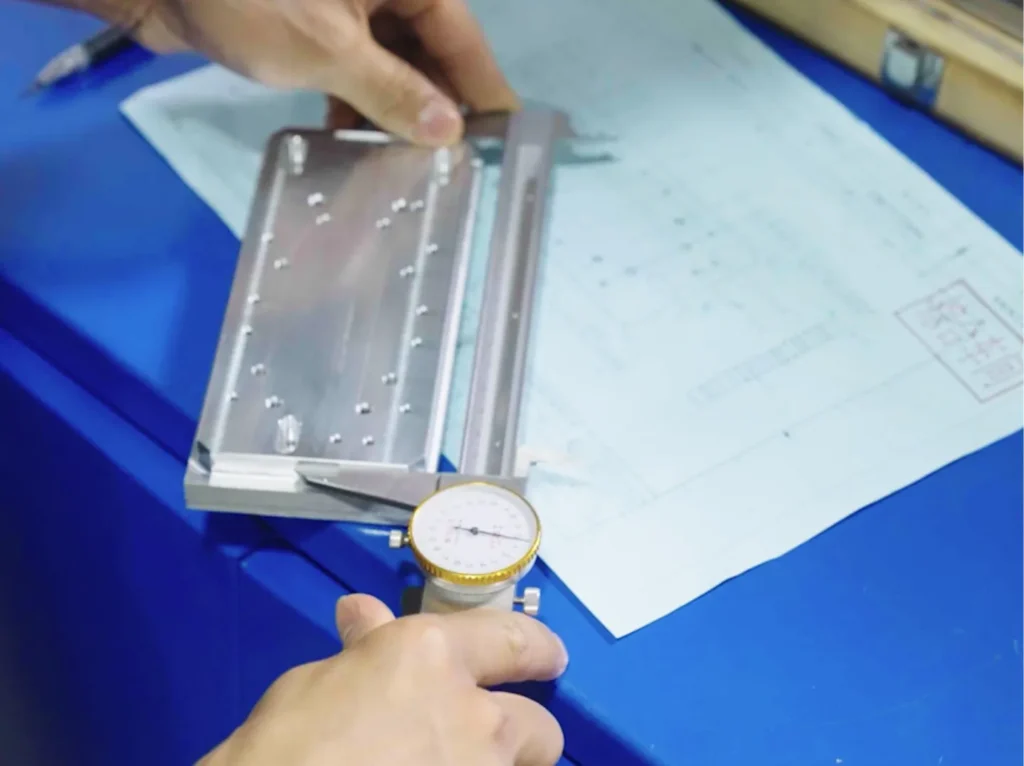
7. Inspection – Use CMM (coordinate measuring machine) or optical comparators to verify every critical dimension.
8. Assembly – Fit the part into the watch to confirm function (eg, thread engagement, gasket compression).
05 Real‑World Example: A Small Batch of Custom Watch Bezels
A watch enthusiast wanted 50 custom bronze bezels for a popular Seiko mod. The bezels required 120 external coin‑edge teeth and an internal snap‑ring groove with a depth tolerance of ±0.02 mm. The hobbyist initially tried 3D printing, but the teeth were inconsistent and the groove failed to hold the crystal. Switching to CNC machining at YPMFG solved the problem: we programmed a 4‑axis toolpath, cut the bezels from CuSn8 bronze, and delivered all 50 units within three weeks. Each bezel passed a 30 N pull‑test on the snap ring. This case proves that when functional precision is non‑negotiable, CNC is the only reliable method.
06 Critical Design Considerations for CNC Machined Watch Parts
To avoid costly mistakes, follow these rules:
Minimum wall thickness – Keep above 0.4 mm for metals like 316L; below that risk distortion or breakage.
Thread specifications – Use standard watch threads (eg, M3 × 0.35 for crowns) and specify class of fit (6H for internal, 6g for external).
Surface finish – Machined parts have a Ra 0.8‑1.6 µm surface straight from the cutter. Specify if you need polished, brushed, or bead‑blasted finishes.
Undercuts – Require T‑slot cutters or 5‑axis indexing. Not all shops support them.
Edge breaks – Always add 0.1‑0.2 mm chamfers or fillets to prevent sharp edges that can cut gaskets or wrists.
07 How to Choose a CNC Machining Partner for Watch Components
When evaluating a supplier, ask these five questions:
1. Do you have experience with watch‑sized parts? – Watch components are small (often under 50 mm). Many general machine shops only handle larger parts.
2. What tolerances can you hold on thin walls? – They should guarantee ±0.01 mm on features like snap‑ring grooves.
3. Can you provide inspection reports? – A full CMM report with ASME Y14.5 or ISO 2768 standards is mandatory.
4. What surface finishes do you offer in‑house? – Outsourcing finishing adds lead time and risk.
5. Do you support low MOQs? – For prototypes or small brands, a MOQ of 10‑50 pieces is ideal.
YPMFG meets all these criteria: we specialize in micro‑machining (parts from 2 mm to 100 mm), provide free DFM feedback, and deliver full inspection packages with every order. Whether you need 5 prototypes or 5,000 production units, we tailor the process to your volume.
08 Common Mistakes When CNC Machining Watch Parts
Ignoring tool access – Designing a deep cavity with a diameter smaller than the required end mill. Always check tool reach.
Specifying unrealistic tolerances – ±0.002 mm on a 10 mm face increases cost 3‑5× with no functional benefit.
Forgetting residual stress – Machining a thin bezel from a rolled plate can cause warping when you release the clamps. Solution: rough, stress‑relieve, then finish.
No sample fit test – Always machine one sample and test it on a real movement or case before full production.
09 Cost Factors for CNC Machined Watch Parts
Setup & programming – One‑time fee ($150‑$500 per part number).
Material – Small bars are inexpensive, but exotic alloys (eg, 904L, Damascus steel) cost more.
Machine time – 3‑axis is cheapest, 5‑axis costs 2‑3× more but reduces secondary ops.
Quantity – Per‑unit price drops dramatically from 1 to 50 pieces, then gradually from 50 to 500.
A typical example: a stainless steel case back (diameter 38 mm, thickness 3 mm, with engraved text) costs around $35‑$50 per piece for 10 units, but falls to $8‑$12 per piece for 200 units.
10 Actionable Recommendations to Get Started
1. Prepare a dimensioned drawing – Include all critical tolerances, thread specs, and surface finish requirements.
2. Request DFM (Design for Manufacturing) feedback – Ask your CNC partner to review the design before cutting metal. YPMFG provides free DFM analysis within 24 hours.
3. Start with a small prototype run – Machine 5‑10 pieces to validate fit, finish, and assembly.
4. Test everything – Assemble the prototype into a watch, measure crown torque, bezel rotation force, and water resistance (if applicable).
5. Scale with confidence – Once the design is proven, release a production order with the same supplier to avoid tooling re‑setup.
11 Reinforcing the Core Message
CNC machining is the gold standard for producing accurate, repeatable, and durable watch components. It outperforms casting (which lacks fine detail), 3D printing (poor surface finish and strength), and manual machining (inconsistent across batches). For any watch brand – from micro‑startups to established manufacturers – CNC delivers the precision that mechanical timekeeping demands.
When you partner with YPMFG , you get engineering support, in‑house finishing, and rigorous quality control – all tailored to the unique needs of watchmaking. Repeat the key principle: design for machinability, verify with prototypes, and choose a specialist who understands micro‑precision.
12 Final Call to Action
Stop compromising on fit and finish. Send your CAD file to YPMFG for a free quote and DFM review. Whether you need watch cases, bezels, crowns, or custom movement parts, we deliver CNC machined components that meet or exceed industry standards – on time and on budget.