
CNC milling and turning services are essential for producing high-precision metal and plastic parts. Whether you need a prototype or a production run, understanding how these processes work and what to look for in a service provider can save you time, money, and quality headaches. This guide gives you the key facts, real‑world examples, and actionable steps to make the right choice.
01What Is CNC Milling and Turning Service?
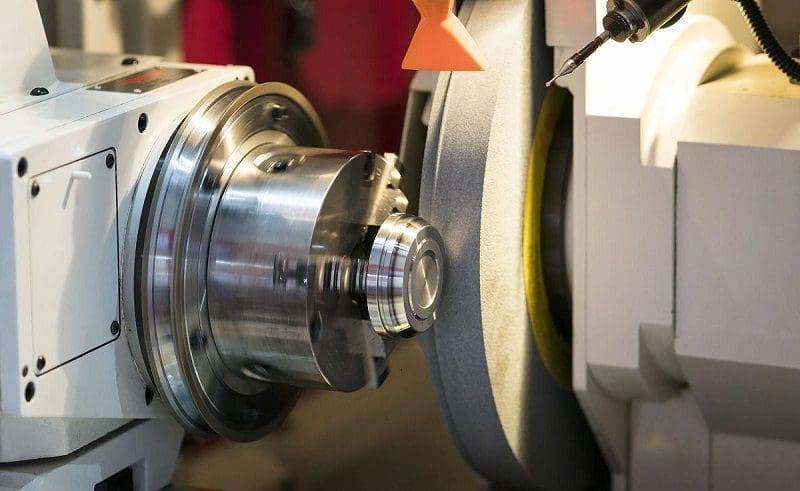
CNC (Computer Numerical Control) milling and turning are subtractive manufacturing processes. Milling uses rotating cutting tools to remove material from a stationary workpiece, creating complex shapes, slots,and flat surfaces. Turning spins the workpiece against a fixed cutting tool to produce cylindrical parts like shafts, bushings, and threaded components.
Many service providers combine both capabilities (sometimes called mill‑turn services) to deliver finished parts in one setup. This reduces handling errors and lead times.
02Why Choose a Combined Milling and Turning Service?
Precision, repeatability, and efficiency are the main reasons. A typical example: a small engineering firm needed a custom motor housing with both flat mounting faces (milled) and a central cylindrical bore (turned). By using a single supplier offering both services, they avoided the cost and risk of shipping parts between two shops. The result was ±0.005 mm tolerance and 40% faster delivery.
Key benefits you can expect:
Tighter tolerances – Down to ±0.0025 mm on advanced machines
Complex geometries – Undercuts, threads, helical features, and off‑axis holes
Material versatility – Aluminum, steel, stainless, brass, titanium, engineering plastics
Scalability – From 1 prototype to 10,000+ production parts
Reduced secondary operations – Many parts come off the machine ready to use
03Common Applications and Real‑World Cases
Case 1 – Medical device component
A startup developing a surgical instrument needed a small, complex bone screw with a hexagonal recess (milled) and a precision thread (turned). Using a single CNC mill‑turn service, the supplier held tolerances of ±0.01 mm on 300 parts. The client avoided a costly second setup and passed FDA inspection on the first try.
Case 2 – Automotive suspension part
An aftermarket parts manufacturer required 5,000 steel control arm bushings with an internal oil groove. A dedicated milling‑turning service programmed the groove using live tooling on a turning center, cutting cycle time by 30% compared to separate milling and turning steps.
Case 3 – Robotics joint housing

A robotics company needed a lightweight aluminum housing with four threaded mounting holes (milled) and a precise bearing seat (turned). The service provider completed all features in one clamping, achieving concentricity within 0.008 mm. The customer reported zero assembly rejects.
These examples show that combining milling and turning under one roof directly improves quality and schedule reliability.
04How to Evaluate a CNC Milling Turning Service Provider
To ensure you get reliable results, check these five factors before placing an order.
1. Machine Capabilities
What is the maximum part size (diameter and length) for turning? For milling?
Does the shop have live tooling (allows milling on a turning machine) or full 5‑axis milling?
Minimum and maximum spindle speeds – critical for different materials.
2. Quality Certifications
ISO 9001:2015 is the baseline for systematic quality.
AS9100D for aerospace or ISO 13485 for medical parts adds extra rigor.
Ask for a recent dimensional inspection report (e.g., from a CMM) on a similar part.
3. Material and Tolerances
Confirm they stock or can source your required material with mill certificates.
Ask for their standard tolerance range. Most reliable services hold ±0.025 mm as default, with tighter available.
4. Lead Time and Communication
Standard lead times: 5–10 business days for prototypes, 15–25 for production.
Do they provide design for manufacturability (DFM) feedback? This prevents costly errors.
5. Secondary Services
Deburring, anodizing, plating, heat treatment, or assembly – having these in‑house or through trusted partners saves you coordination work.
05Cost Factors You Should Know
Pricing for CNC milling and turning services typically follows this formula:
Total cost = (Machine time × hourly rate) + (Setup cost) + (Material cost) + (Finishing)
Machine time – Complex parts with many tool changes cost more. Turning is usually faster than milling for cylindrical features.
Setup cost – One‑time programming and fixturing. For small batches (1–50 parts), setup can dominate cost. For larger runs (500+), it spreads out.
Material cost – Titanium and Inconel are 5–10× more expensive than aluminum 6061.
Finishing – Anodizing adds ~15–25% to part cost; passivation of stainless adds ~10%.
A real example: A machined 6061 aluminum flange (50 mm diameter, 30 mm height) with four drilled holes and a turned boss cost $18 per part for 100 pieces, including deburring and anodizing. The same part would cost $45 each for a single prototype due to setup charges.
06Common Mistakes and How to Avoid Them
Mistake 1 – Overlooking material certificates
Without mill test reports, you risk unknown alloy properties. Always ask for certs before production.
Mistake 2 – Ignoring GD&T (Geometric Dimensioning and Tolerancing)
Vague tolerances like “standard machine tolerance” lead to arguments. Specify critical features with ISO 2768 or ASME Y14.5.
Mistake 3 – Choosing the cheapest quote without vetting
A low quote may mean old machines, no inspection, or outsourced work. One customer saved $500 on a batch but received 30% out‑of‑tolerance parts – rework cost $2,000. Check references or request a sample part first.
07Frequently Asked Questions
Q: What’s the difference between CNC turning and CNC milling?
A: Turning spins the workpiece against a stationary tool – ideal for cylinders. Milling spins the tool while the workpiece is fixed – ideal for flats, pockets, and complex 3D shapes.
Q: Can one service do both on the same part?
A: Yes. Many shops have mill‑turn machines (or separate turning centers with live tooling) that complete both operations without moving the part to another machine. This improves accuracy.
Q: How do I send my design for a quote?
A: Provide a 3D CAD file (STEP or IGES) plus a 2D drawing with tolerances, material, surface finish, and quantity. Most services quote within 24‑48 hours.
Q: What is the minimum order quantity (MOQ)?
A: Most CNC milling turning services accept 1 piece. However, per‑part cost drops significantly at 10, 50, or 100 pieces due to amortized setup.
Q: How can I be sure the parts will meet my specs?
A: Request a First Article Inspection (FAI) report – a full dimensional check of the first piece. Reputable suppliers provide this at no or low cost for first orders.
08Core Takeaway
Reliable CNC milling and turning service directly improves your product’s precision, reduces assembly problems, and shortens time‑to‑market. The key is matching your part’s geometry, material, and tolerance needs to a provider with proven capabilities, proper certifications, and clear communication.
09Actionable Next Steps
1. Document all requirements – Create a complete drawing with tolerances, material spec, and surface finish.
2. Request quotes from three pre‑vetted shops – Use the evaluation checklist above to shortlist.
3. Order a sample batch – Start with 5–10 pieces to verify quality and lead time before full production.
4. Audit the first inspection report – Confirm every critical dimension before approving mass production.
By following this guide, you avoid costly surprises and get functional, accurate parts delivered on schedule. Choose a service that combines technical skill with transparent quality processes – that is the foundation of successful CNC milling and turning.