
Selecting the right CNC machining tools directly affects part quality, production speed, and tooling cost. Many shops deal with broken tools, poor surface finish, or long cycle times not because the CNC machine is faulty, but because the tool does not match the material, operation, or cutting parameters.
In real machining work, tool selection should not be based only on price or general recommendations. Roughing, finishing, drilling, tapping, and chamfering all require different tool materials, coatings, edge geometries, and holders. At YPMFG, CNC machining projects are usually reviewed by material, tolerance, surface finish, and toolpath before the tooling plan is confirmed. This guide explains how to choose, set up, and use CNC machining tools properly, helping reduce tool wear, improve efficiency, and keep part quality more consistent.
01Core Rule: Match the Tool to the Material and Operation
A common mistake: using a general-purpose end mill on stainless steel and wondering why the tool fails in 20 minutes. The right approach is simple but strict.
For aluminum and non-ferrous metals → Use tools with polished flutes, high helix angles (35°–45°), and uncoated or ZrN-coated carbide. These prevent chip welding and allow high speeds.
For steel and stainless steel → Use tools with AlTiN or TiSiN coatings, lower helix angles (30°–35°), and stronger core diameters. This handles heat and work hardening.
For hardened materials (HRC 45–65) → Use micro-grain carbide with AlCrN coating, variable flute geometry to reduce chatter, and always run with flood coolant or air blast.
For roughing → Choose tools with chip breakers or serrated flutes (roughing end mills). They reduce cutting forces and allow deeper cuts.
For finishing → Use tools with more flutes (4–6 for steel, 3 for aluminum) and higher radial engagement but low axial depth.
Case example: A job shop was machining 316 stainless steel brackets using standard 2-flute uncoated end mills. Each tool lasted only 25 minutes. After switching to a 4-flute AlTiN-coated variable helix end mill, tool life increased to 110 minutes per tool, and surface finish improved from Ra 1.6 to Ra 0.8.
02Critical Parameters You Must Set Correctly (No Guessing)
Your CNC machining tools will fail fast if speed and feed are wrong. Use these baseline starting points, then adjust based on machine rigidity and coolant.
D = tool diameter. Always start at 70% of these values for new setups.
03Tool Holding and Runout – The Hidden Killer

Many shops spend thousands on premium CNC machining tools but mount them in worn collets or cheap holders. The result: runout of 0.0005″–0.001″ destroys tool life by 50–80%.
Mandatory actions for tool holding:
Use shrink-fit or hydraulic holders for finishing operations – runout below 0.0002″
Use collet chucks (ER series) only with new collets and torque wrench set to manufacturer spec
For roughing, use side-lock holders with set screws on the tool flat
Measure runout at the tool tip after every tool change – reject if >0.0004″ for carbide tools under 3/8″ diameter
Real example: A mold shop experienced inconsistent tool life on a 1/4″ ball end mill – sometimes 2 hours, sometimes 20 minutes. Inspection found runout varied from 0.0003″ to 0.0012″ because the operator never tightened collets consistently. After implementing a torque wrench and runout check before every job, tool life became predictable at 2.5 hours average, saving $800 per week in tooling costs.
04Tool Path Strategies That Double Tool Life
Even with the best CNC machining tools, a poor tool path will cause premature failure. Avoid full-width slotting whenever possible.
Use trochoidal milling (dynamic milling) for deep slots and hard materials. This maintains constant chip load and reduces heat.
Climb mill only – never conventional mill on CNC unless finishing cast skin.
Keep radial engagement under 30% of tool diameter for roughing steel and stainless.
Use ramp-in or helix entry instead of plunging – plunging kills end mills instantly. Ramp angle: 2°–5° for steel, 5°–10° for aluminum.
Avoid full retract moves – use stay-down linking where possible to reduce air cutting.
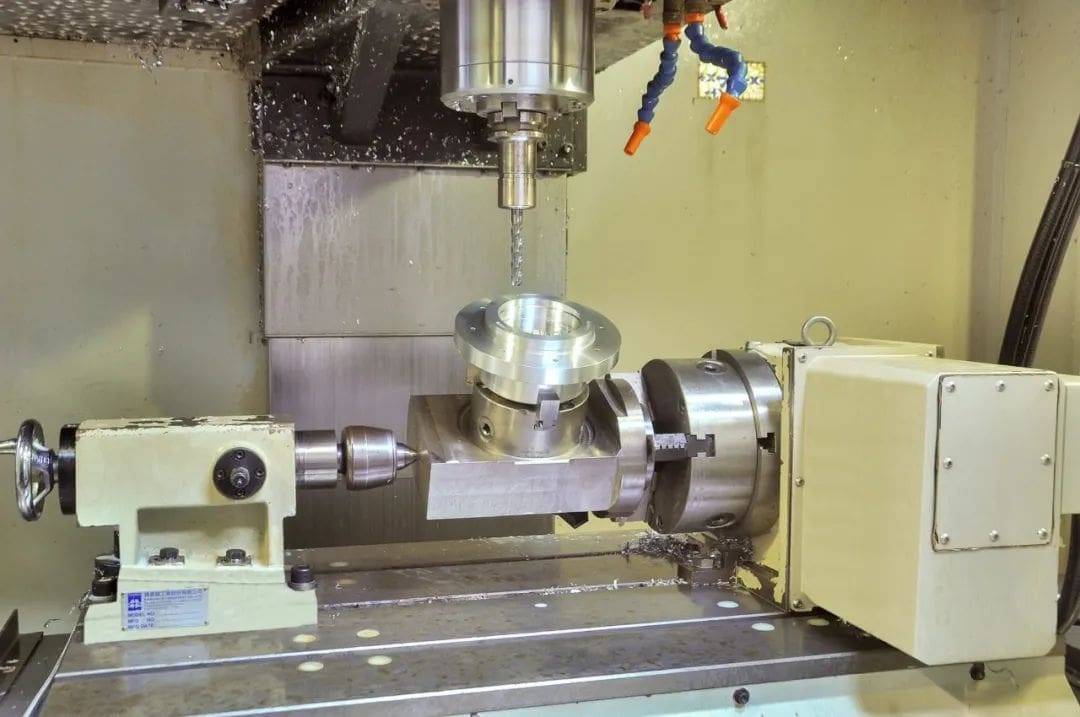
05Tool Wear Monitoring – When to Change Before Failure
Running a tool past its useful life ruins parts and damages the machine spindle. Learn to read wear patterns.
Action rule: For finishing passes, change the tool when flank wear reaches 0.004″. For roughing, you can go to 0.012″. Never let wear reach 0.020″ – the tool will break catastrophically.
06Coolant and Chip Evacuation – Most Overlooked Factor
Heat and re-cutting chips are the top two reasons CNC machining tools fail early.
For aluminum and plastics: Use mist or air blast with minimum quantity lubrication (MQL). Flood coolant can cause thermal shock cracks.
For steel and stainless: Use high-pressure flood coolant (300–1000 PSI) directed exactly at the cutting zone. Ensure chips are flushed away – a chip that stays in the cut can triple cutting temperature.
For hard milling (HRC >50): Use air blast or dry cutting with AlCrN-coated tools. Coolant causes thermal cracking.
Chip management: Stop the machine if you see bird nests or long stringy chips. Change feed or use a chip breaker tool to produce 6’s and 9’s shaped chips.
Common case: A CNC turning center kept breaking grooving tools every 40 parts. Inspection showed chips were not breaking – long ribbons wrapped around the tool and pulled it into the cut. After adjusting feed from 0.003 IPR to 0.008 IPR, chips broke cleanly, and tool life jumped to 200 parts per edge.
07Daily Checklist for Every CNC Machining Tools User
Repeat these actions before every production run. This checklist alone eliminates 90% of tooling-related failures.
1. Inspect tool for visible wear or edge chipping – use a 20x loupe.
2. Measure tool runout at the tip – pass if <0.0004″ for tools under ½”.
3. Confirm holder cleanliness – no chips or debris inside collet or bore.
4. Set speeds and feeds using the table in section 2 – reduce by 30% for first part.
5. Check coolant direction – aim nozzles at the cut entry point, not at the tool shank.
6. Run first part at 50% feed override – listen for chatter, watch for chip formation.
7. Measure first part dimensions – compare to nominal. If tool deflection is visible (taper on walls),reduce radial engagement.
08Conclusion and Action Plan
Choosing and using CNC machining tools is not guesswork. It is a repeatable process based on material, part geometry, coating, and cutting parameters. The most useful step you can take today is to stop using generic tools for “similar” materials. 6061 aluminum, stainless steel, brass, and engineering plastics do not behave the same in the cut.
A better approach is to match the tool to the exact operation, set feeds and speeds from a proven table, measure runout after every setup, and replace tools based on real wear, not hours or feel. At YPMFG, tooling, material, and cutting parameters are reviewed together because many surface defects and tool failures start with a poor tool match.
Immediate next steps for your shop:
Create a tool library in your CAM system with material-specific speeds and feeds.
Buy a runout gauge and torque wrench – train every operator to use them.
For your next three jobs, document tool life before and after applying this guide. You will see at least 50–100% longer tool life.
Follow this framework, and your CNC machining tools will deliver consistent, predictable, and profitable results – job after job.