
Selecting the right CNC parts manufacturer directly affects product quality, lead time, and total cost. Do not judge a supplier only by price or website claims. Focus on five verifiable points: quality management certification, machining capability, material traceability, measurement equipment, and documented process controls.
A reliable CNC parts manufacturer should clearly explain which materials it can machine, what tolerances it can hold, how critical dimensions are inspected, and whether each batch includes material and inspection records. At YPMFG, CNC parts projects are reviewed for drawings, material, tolerances, and inspection requirements before production to avoid dimensional issues, delivery delays, or unclear responsibility later. This guide helps you evaluate suppliers through real-world scenarios and reduce sourcing risk.
01Start with Certified Quality Systems – Not Just Promises
A manufacturer’s quality management system (QMS) must be third-party certified to an international standard. For most industrial CNC parts, ISO 9001:2015 is the minimum requirement. For aerospace, medical, or defense components, look for AS9100D or ISO 13485.
Real-world case: A Midwest automotive supplier once chose a non-certified shop because of lower per-part pricing. After 3,000 parts, they discovered 12% had out-of-tolerance bores. The shop had no in-process inspection records and no corrective action system. The buyer spent $47,000 reworking parts and missed their launch deadline. In contrast, another buyer working with an ISO 9001:2015 certified manufacturer received full inspection reports for every batch and could trace each part’s cutting tool, operator, and machine.
Verifiable source: ISO 9001:2015 is published by the International Organization for Standardization (). AS9100D is managed by the International Aerospace Quality Group (IAQG).
Action step: Request the manufacturer’s current certificate. Verify its validity on the accreditation body’s website (e.g., IAF CertSearch). Never accept “we follow ISO practices” without a valid certificate.
02Match Machine Capabilities to Your Part Geometry
Not all CNC machines deliver the same accuracy or surface finish. A manufacturer must list their equipment by:
Number of axes (3-axis, 4-axis, 5-axis)
Spindle speed range (e.g., 15,000 RPM for aluminum; lower for titanium)
Positioning accuracy (µm or tenths of thou)
Maximum part size (travel in X/Y/Z)
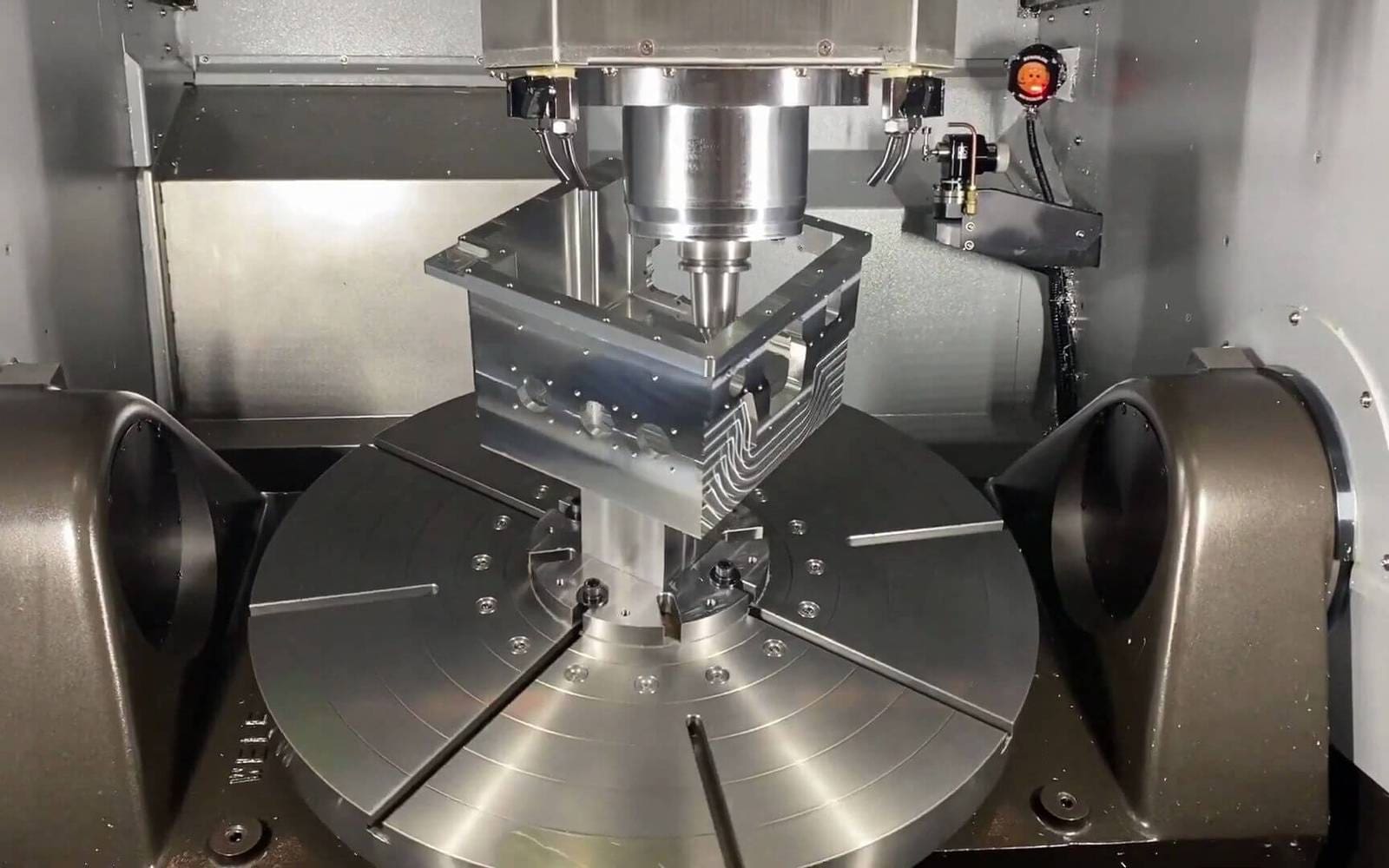
Example scenario: A robotics company needed complex impeller parts with undercut features. They contacted three manufacturers. One had only 3-axis mills and claimed they could index the part manually. The second had 5-axis machining centers and provided a cutting simulation within 24 hours. The third also had 5-axis but refused to share any process documentation. The company selected the second manufacturer, received first-article inspection within two weeks, and achieved 0.02 mm profile accuracy across 500 parts.
Why this matters: A 5-axis machine allows machining complex geometries in one setup,eliminating tolerance stack-ups from refixturing. If your part requires undercuts, angled holes, or contoured surfaces, 3-axis-only shops will either reject the job or produce unreliable parts.
Action step: Send your CAD model and ask: “Which specific machine will run this part? What is its published positioning accuracy? Please share the last calibration certificate.”
03Demand Material Traceability from Mill to Finished Part
Counterfeit or mislabeled material is a growing risk. A trustworthy CNC parts manufacturer must provide full material traceability – from the original mill test report (MTR) to the final part.
Required documents:
MTR per EN 10204 3.1 (for Europe) or ASTM/ASME standard (for North America)
Heat number stamped on raw stock
Incoming material inspection log (dimensions, hardness, composition spot check)
Traceability transfer: heat number → job traveler → finished part label
Real-world failure: A hydraulic equipment manufacturer received steel fittings that passed dimensional inspection but failed after three months in service. Investigation revealed the CNC shop had used 12L14 free-machining steel instead of specified 4140. The shop had no material receiving records – they bought from an untrusted local supplier without MTRs. The equipment maker incurred a recall costing $210,000.
Action step: In your purchase order, write: “Supplier shall provide MTR per EN 10204 Type 3.1 matching heat number stamped on each bar. Finished parts shall be traceable to heat number via traveler and packing slip.” Reject any shop that cannot comply.
04Verify In-Process and Final Inspection Equipment
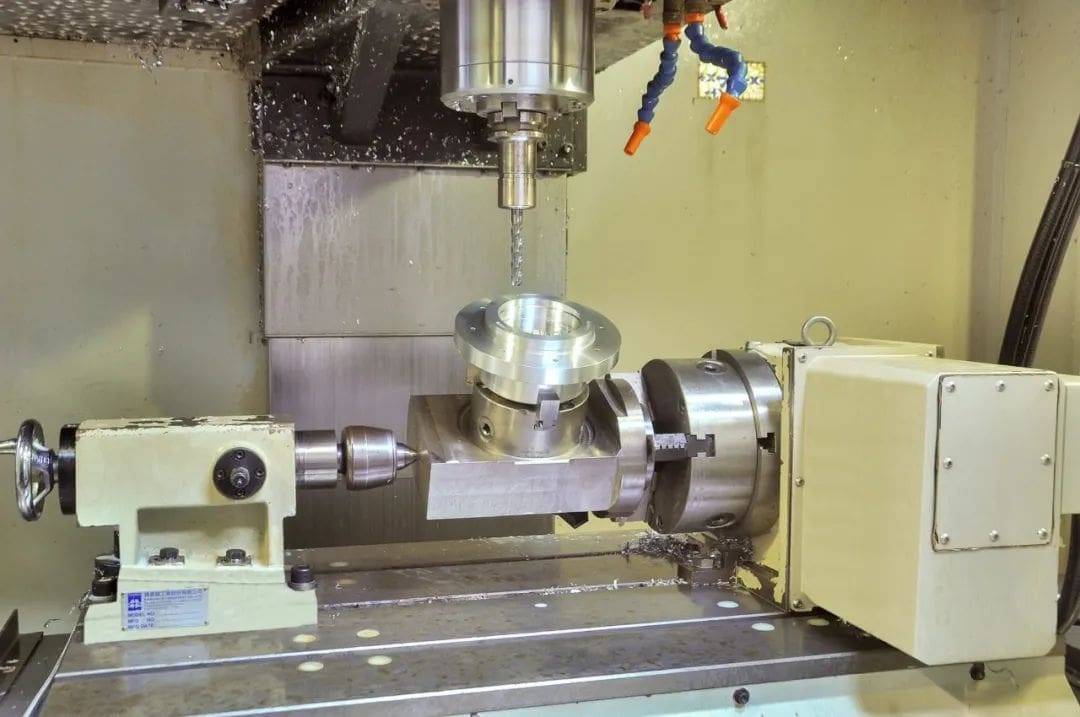
A CNC parts manufacturer’s inspection capability determines whether they can detect defects before shipping. At minimum, they must have:
Digital calipers and micrometers (calibrated annually, traceable to NIST or national standard)
CMM (coordinate measuring machine) – for complex geometries and GD&T callouts
Surface roughness tester (if Ra or Rz is specified)
Hardness tester (Rockwell, Brinell, or Vickers)
Case example: A medical device startup needed 100 titanium bone screws with thread profile tolerance of ±0.01 mm. One manufacturer only had handheld micrometers and a visual comparator. They could not measure thread flank angle or root radius. Another manufacturer had a Zeiss CMM with a rotary table and a thread-scanning probe. They provided a full dimensional report including thread profile charts. The startup chose the second manufacturer – all 100 parts passed functional testing.
Red flag: If a shop says “we trust our operators” but cannot show you a calibration certificate for their instruments, walk away.
Action step: Request a sample inspection report for a part similar to yours. Look for: measurement device serial number, calibration due date, actual measured values, and tolerance limits.
05Require Documented Process Controls – Not Heroic Efforts
Consistent quality comes from repeatable processes, not individual machinist skill. A professional CNC parts manufacturer will have:
Setup sheets – tool lists, fixture photos, machine parameters
In-process inspection plan – what to measure, how often, using which gauge
SPC (statistical process control) data for critical dimensions
Non-conformance report (NCR) system with root cause analysis
Illustrative scenario: Two manufacturers quoted the same aluminum housing. Manufacturer A said, “Our lead machinist has 20 years of experience – he’ll get it right.” Manufacturer B provided a 12-page control plan showing every operation, inspection point, and contingency for tool wear. The buyer chose Manufacturer B. After 10,000 parts, Manufacturer B’s rejection rate was 0.4%. Manufacturer A (chosen by a different buyer for a similar part) had a 5.2% rejection rate and missed delivery twice because the “experienced machinist” was on vacation.
Action step: Ask for a sample control plan or process flow diagram. If they cannot produce one, they are not running a controlled process.
06Core Conclusion: Verify, Then Trust
Selecting a CNC parts manufacturer is not about finding the lowest price or fastest promise. It is about verifiable evidence of quality systems, machine capability, material traceability, inspection equipment, and process controls. Every failure case above – from out-of-tolerance bores to counterfeit steel – could have been avoided by applying these five criteria before issuing a PO.
07Immediate Action Recommendations
- Create a supplier scorecard using five criteria: ISO certification, machine capability match, material traceability, inspection equipment, and documented process controls. Give each item 20 points. Suppliers below 85/100 should not move to the next stage.
- Request a first-article inspection, or FAI, based on AS9102 for the first production part. Do not approve mass production until the FAI is passed.
- Visit the shop if possible, or ask for a live video walkthrough. Check whether the machines, gauges, material storage, and shop-floor control match what the supplier claims.
- Start with a pilot order of 10–50 parts. Measure every critical dimension yourself or through a third-party lab. The goal is not just to test price, but to verify real process capability.
- Add quality clauses to the contract, including audit rights, certificate of conformance with every shipment, and clear responsibility for non-conforming material.
This evidence-based approach helps you choose a CNC parts manufacturer based on facts, not promises. At YPMFG, CNC parts projects are also reviewed through capability, documentation, and inspection controls before long-term production begins. For sourcing teams, the key is simple: do not hope a supplier is reliable; verify it with measurable proof.