Selecting the right precision CNC machining company directly affects part quality, delivery time, and overall project success. A poor supplier choice can lead to out-of-tolerance parts, rework costs, and delayed assembly or launch schedules. A reliable CNC machining company should not be judged by price alone, but by machining capability, quality control process, inspection equipment, and technical communication.
Before placing an order, check material experience, tolerance capability, machine capacity, inspection reports, delivery records, and DFM feedback. At YPMFG, precision CNC machining projects are reviewed for drawings, critical dimensions, and surface requirements before production to identify risks early. This guide provides a practical framework to help you choose a precision CNC machining partner that can meet your exact specifications.
Table of Contents
Toggle01Core Capabilities: What a Precision CNC Machining Company Must Deliver
Before contacting any supplier, define your non-negotiable requirements. A qualified precision CNC machining company must demonstrate:
Tolerance capabilities: Standard precision machining holds ±0.005 inches (±0.127 mm). High-precision work requires ±0.001 inches (±0.0254 mm) or tighter. Ask for their documented minimum tolerance.
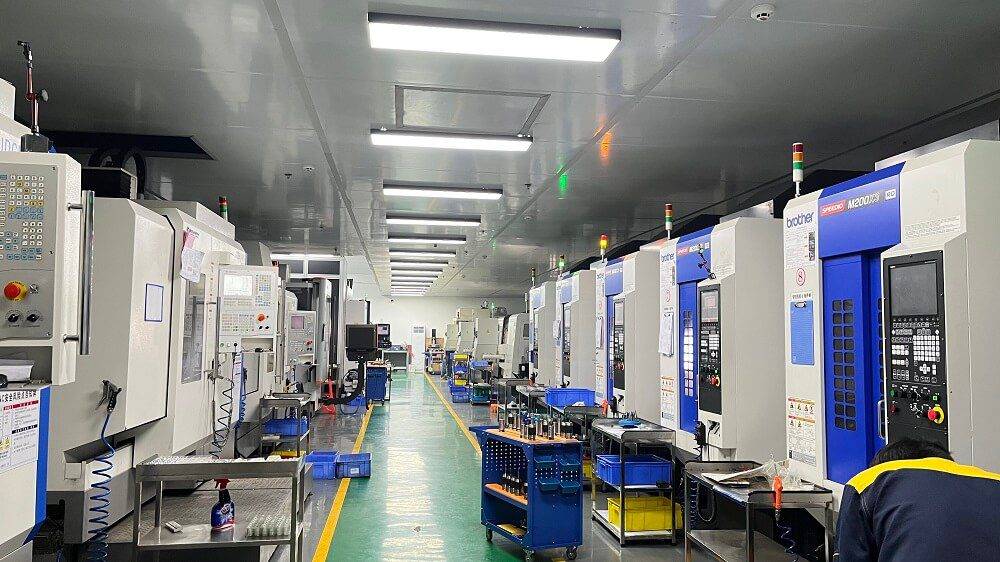
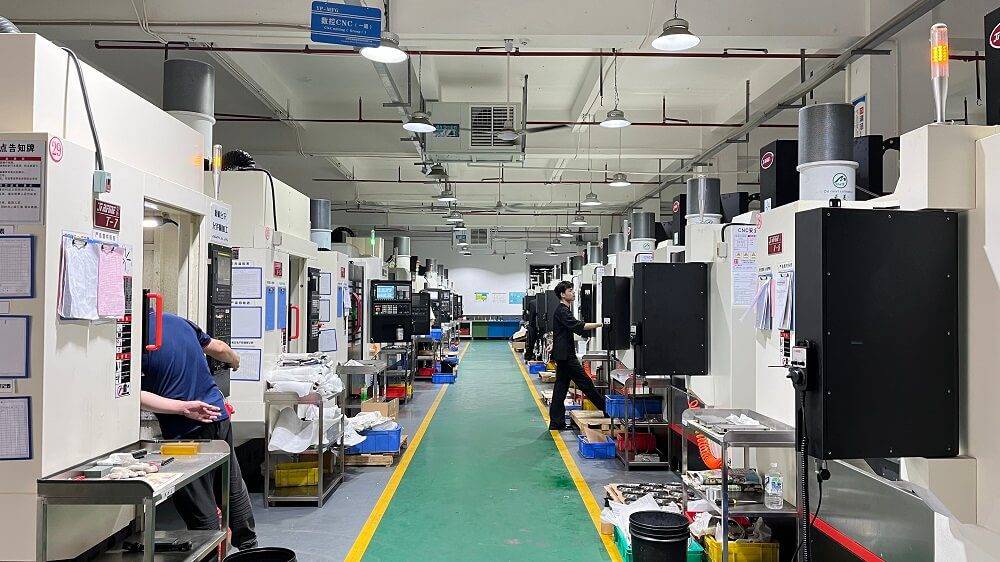
Machine fleet: Modern 3-axis, 4-axis, and 5-axis CNC mills and lathes from recognized brands (e.g., Haas, DMG Mori, Mazak). Older machines cannot consistently hold tight tolerances.
Inspection equipment: In-house CMM (Coordinate Measuring Machine), optical comparators, and surface finish testers. Without these, they cannot verify your parts.
Material range: Aluminum 6061/7075, stainless steel 303/304/316, brass, copper, titanium, engineering plastics (PEEK, Acetal, Nylon). Confirm they regularly machine your required material.
Common pitfall: A company claims “precision machining” but only guarantees ±0.005″. For aerospace or medical components requiring ±0.0005″, this is unacceptable. Always request their standard tolerance sheet in writing.
02Quality Management Systems: The Non‑Negotiable Foundation
Quality certifications are not badges—they are proof of process control. Look for these credentials:
| Certification | What It Means | Required For |
|---|---|---|
| ISO 9001:2015 | Basic quality management system. Minimum acceptable standard. | All industries |
| AS9100D | Aerospace-specific requirements, traceability, and risk management. | Aerospace & defense |
| IATF 16949 | Automotive quality standard with emphasis on defect prevention. | Automotive supply chains |
| ISO 13485 | Medical device manufacturing quality. | Medical instruments and implants |
Real-world example: A medical startup chose a non-certified shop to save 15% on prototyping. The parts passed visual inspection but failed sterile packaging adhesion due to undocumented surface residue. The re-qualification cost exceeded the original budget by 300%. Always verify current certification status via the provider’s registrar (e.g., NSF, SGS, TÜV).
03Inspection and Reporting: How to Verify Parts Before Delivery
A trustworthy precision CNC machining company provides full inspection documentation without extra negotiation. Required deliverables:
First Article Inspection (FAI) report – per AS9102 or customer-specified format. Includes all critical dimensions with measured values.
In-process inspection logs – for high-volume orders, showing sample checks every 50–100 parts.
Final CMM report – for all dimensionally critical features.
Material certifications – mill test reports (MTRs) traceable to heat/lot numbers.
Actionable test: Ask the company for a sample inspection report from a past project similar to yours. Look for:
Actual measured values (not just “PASS”)
Date stamps and inspector signatures
Gauge IDs and calibration due dates
If they cannot provide a real report within 24 hours, consider that a red flag.
04Lead Times and Production Capacity: Matching Your Schedule
Precision machining is not fast machining. Realistic lead times for precision parts:
| Part Complexity | Typical Lead Time (prototype, 1–10 pcs) | Production (100–1000 pcs) |
|---|---|---|
| Simple (block with holes) | 5–7 business days | 10–15 business days |
| Moderate (multi-face features) | 7–10 business days | 15–20 business days |
| Complex (5-axis, tight GD&T) | 10–15 business days | 20–25 business days |
Expedite fees of 25–50% can reduce lead time by 30–40%, but never sacrifice inspection steps. A company that promises 3-day delivery for a complex 5-axis part is either misrepresenting capability or skipping quality checks.
Capacity check: Ask for their current spindle utilization percentage. Above 85% indicates risk of schedule slippage. Below 60% may suggest lack of orders (potential quality issues). Ideal range: 70–80% with a documented queue system.
05Pricing Transparency: Understanding What You Pay For
Precision CNC machining quotes typically include:
Machine setup – fixed cost per part number (usually $100–$500)
Programming & tooling – CAM time, fixture design, custom tools ($150–$1000)
Per-part machining – based on cycle time ($20–$200+/hr depending on machine type)
Inspection – CMM programming and measurement ($50–$300 per batch)
Material – raw stock + saw cutting (market price + 15–30% markup)
Shipping & handling – packaging and freight
Red flag warning: A quote that lists only a “per-piece price” without separating setup or inspection costs often hides rework fees later. Request an itemized quote before placing a PO.
Cost-saving reality: Switching to a cheaper shop without verifying their tolerance capability leads to 2–5× higher total cost when 20–50% of parts fail incoming inspection. A case study from an industrial equipment manufacturer showed that paying 18% more for an ISO 9001:2015 certified shop reduced scrap rate from 12% to 0.8%, paying back the premium in three months.
06Communication and Technical Support: The Hidden Success Factor
Even the best machine shop fails if they misinterpret your drawing. Evaluate their engineering support:
GD&T review: Do they flag ambiguous or over-toleranced features before quoting?
DFM feedback: Do they suggest design changes that reduce cost without affecting function?
Response time: Average email reply within one business day; phone support during working hours.
Language and units: Confirm they work in your required units (inches or millimeters) and language fluency.
Simple test: Send them a sample drawing with one intentional minor error (e.g., missing radius callout). A competent precision CNC machining company will ask for clarification. A poor one will quote blindly and deliver non-conforming parts.
07Step‑by‑Step Selection Process: From Search to First Order
Follow this sequence to minimize risk:
1. Shortlist 3–5 companies using technical criteria (tolerances,certifications, machine list, materials).
2. Request capability statement – a document listing their equipment, quality processes, and typical industries served.
3. Submit a sample RFQ – use a real or representative part drawing. Include material, quantity, tolerance requirements, and needed finish.
4. Compare quotes – not just total price, but itemized breakdown, lead time, and inspection deliverables.
5. Check references – ask for two clients with similar part complexity. Call them and ask: “What went wrong on your last order and how did the shop resolve it?”
6. Place a trial order – start with 5–20 pieces of a non-critical but representative part. Measure everything upon receipt.
7. Audit before scaling – after successful trial, request a virtual or on-site quality system audit.
08Common Mistakes to Avoid
Choosing solely by lowest price – leads to rejected parts and production delays.
Ignoring material certifications – without traceability, you cannot prove compliance for regulated industries.
Skipping first article inspection – even for “simple” parts, tolerance stack-ups cause assembly failures.
Assuming all CNC shops are equal – a job shop optimized for rapid prototyping may lack the process controls for production repeatability.
No written quality agreement – define acceptance criteria, inspection frequency, and non-conformance handling in your PO.
09Actionable Conclusion: Your Next Steps
The right precision CNC machining company should work like an extension of your engineering team, not just a vendor. The core point is simple: verify real tolerance capability, request current certifications, with ISO 9001:2015 as a minimum, and require full inspection reports for every order. Do not rely only on website claims. Test the supplier with a standard RFQ and a trial part.
Start with four actions today: download a standard RFQ template that includes tolerance, material, quantity, and quality requirements; prepare one representative part drawing in both PDF and STEP formats; send it to three shortlisted CNC machining companies; then compare their DFM feedback, inspection report format, and technical response quality. At YPMFG, we also recommend validating supplier capability with a sample part before moving into full production.
This structured approach helps remove guesswork and makes it easier to find a CNC machining partner that delivers parts on time and to specification.