Quick answer:
5-axis CNC machining is a manufacturing process where a cutting tool or part moves along five axes simultaneously, allowing complex geometries to be machined in a single setup. Unlike traditional 3-axis machining, which works in X, Y, and Z linear directions, 5-axis adds two rotational axes (typically A and B or C), enabling access to nearly any angle of the workpiece. This capability reduces setups, improves surface finish, and makes it ideal for aerospace, medical, and automotive components that require tight tolerances and intricate shapes.
If you are evaluating whether 5-axis CNC machining is right for your project, the decision often comes down to part complexity, required precision, and total production cost. Many buyers assume 5-axis is always more expensive, but when you factor in reduced fixturing, shorter lead times, and fewer manual operations, it can actually lower overall project cost.
What Is 5-Axis CNC Machining? A Practical Overview for Buyers and Engineers
When you search for “what is 5 axis CNC machining,” you are likely looking for a clear,technical explanation that helps you decide whether this process fits your manufacturing needs. You may be comparing it to 3-axis or 4-axis methods, wondering about cost, or trying to understand what parts benefit most from this approach. This article answers those questions directly.
How 5-Axis Machining Works
A 5-axis CNC machine moves a cutting tool or workpiece along five different axes at the same time. The three linear axes are X (left-right), Y (front-back), and Z (up-down). The two additional rotational axes are typically A (rotation around X) and B (rotation around Y), or sometimes C (rotation around Z). This simultaneous movement allows the tool to approach the workpiece from any direction without repositioning the part manually.
The key advantage is that complex features—such as undercuts, angled holes, and contoured surfaces—can be machined in one setup. That eliminates the errors and time associated with moving parts between multiple machines or fixtures.
Types of 5-Axis CNC Machines
There are two main configurations:
Trunnion-style machines: The workpiece rotates on a tilting table. These are common because they offer good rigidity and are widely available.
Head-head or swivel-head machines: The cutting tool rotates, while the workpiece stays stationary. These are often used for very large or heavy parts.
Each type has trade-offs in terms of workpiece size, rigidity, and cost. Trunnion machines are generally more affordable, while head-head designs handle heavier components better.
When Do You Actually Need 5-Axis Machining?
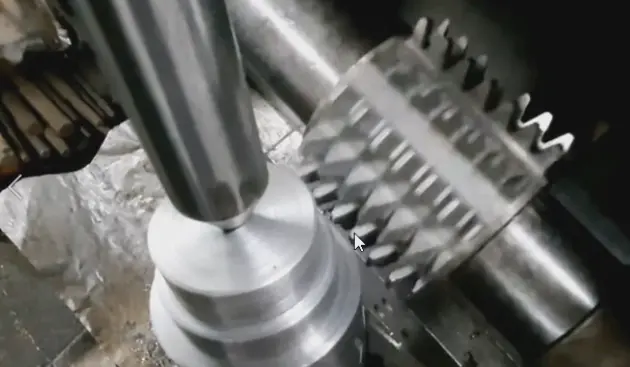
Not every part requires 5-axis. The table below helps you compare 3-axis, 4-axis, and 5-axis methods based on common decision factors.
If your part has complex curves, tight tolerances, or requires machining from multiple angles, 5-axis machining typically delivers the best result with fewer operations.
Common Applications Across Industries
5-axis CNC machining is widely used in sectors where precision and geometry matter most:
Aerospace: Engine components, turbine disks, structural brackets — parts that must withstand extreme stress and fit within tight assemblies.
Medical: Implants, surgical instruments, and orthopedic devices often require biocompatible materials and complex freeform surfaces.
Automotive: Prototype parts, intake manifolds, and performance components that need lightweight design and high strength.
Mold and die making: Cores and cavities with deep sidewalls or intricate details benefit from the tool’s ability to reach difficult angles.
Cost Considerations and Common Misconceptions
A frequent question is whether 5-axis machining is always more expensive. The answer depends on how you measure cost. The hourly machine rate is higher than 3-axis, but the total cost per part can be lower because:
Fewer setups reduce labor and fixture costs.
Shorter cycle times improve throughput.
Better surface finish reduces secondary operations like polishing.
However, for simple parts that could be machined in one or two 3-axis setups, moving to 5-axis adds unnecessary expense. A good rule of thumb: if your part requires three or more 3-axis setups, consider evaluating 5-axis.
If you are unsure about the right approach, YPMFG can help buyers compare both methods during the quoting stage, using your actual part geometry to determine the most cost-effective process.
Key Considerations When Choosing a 5-Axis Machining Partner
Not all 5-axis shops are the same. When evaluating a supplier, ask about:
Machine type and age — newer machines typically hold tighter tolerances.
Post-processor capability — CAM software must match the specific machine kinematics.
Experience with your material type — aluminum, titanium, stainless steel, and plastics behave differently under 5-axis cutting.
Inspection equipment — 5-axis parts often require CMM or white-light scanning.
Documentation and certifications — especially for aerospace or medical work.
Questions Buyers Often Ask About 5-Axis CNC Machining
Can 5-axis machining hold tighter tolerances than 3-axis?
In many cases, yes. Because the part is machined in one setup, errors from re-clamping are eliminated. Typical tolerances range from ±0.005″ to ±0.001″, depending on material and geometry.
How long does it take to program a 5-axis part?
Programming is more complex than 3-axis. Simple parts may take a few hours; complex aerospace components can require days. Simulating tool paths is essential to avoid collisions.
What materials can be machined with 5-axis?
Almost any machinable material, including aluminum, titanium, stainless steel, brass, copper, plastics, and composites. Tool selection and speeds must be optimized for each material.
Is 5-axis machining suitable for prototypes?
Yes, especially if the prototype has complex geometry. The single-setup approach reduces lead time and allows engineers to validate form and fit faster.
Does 5-axis always require CAM software?
Virtually always. Manual programming is impractical for simultaneous 5-axis moves. Most shops use software like Mastercam, Siemens NX, or HyperMill.
How do I know if my part needs 5-axis?
If your part has undercuts, angled features, or surfaces that cannot be reached with a straight tool path in three axes, 5-axis is likely required. Send your 3D model to a qualified shop for evaluation.
What is the difference between 3+2 and full 5-axis machining?
3+2 machining locks two rotational axes and machines in a fixed plane, while full 5-axis moves all axes simultaneously. Full 5-axis is better for complex contours; 3+2 is often faster for simpler angled features.
Can 5-axis reduce the need for EDM or manual finishing?
Often yes. The tool’s ability to reach deep cavities and maintain a consistent cutting angle reduces or eliminates secondary processes, especially in mold work.
Choosing the Right Approach for Your Next Project
Deciding between 3-axis, 4-axis, and 5-axis depends on your part’s geometry, tolerance requirements, and production volume. If you are evaluating a complex component, it is worth asking a trusted machining partner to review your design before committing to a method.
At YPMFG, we support projects that require precise 5-axis CNC machining, from initial engineering review to final inspection. You can send your specifications to us for an unbiased assessment of the best process for your part. Whether you need custom solution guidance, a detailed quote, or help comparing your current setup to a more efficient alternative, our team can help you make a confident, cost-informed decision.